
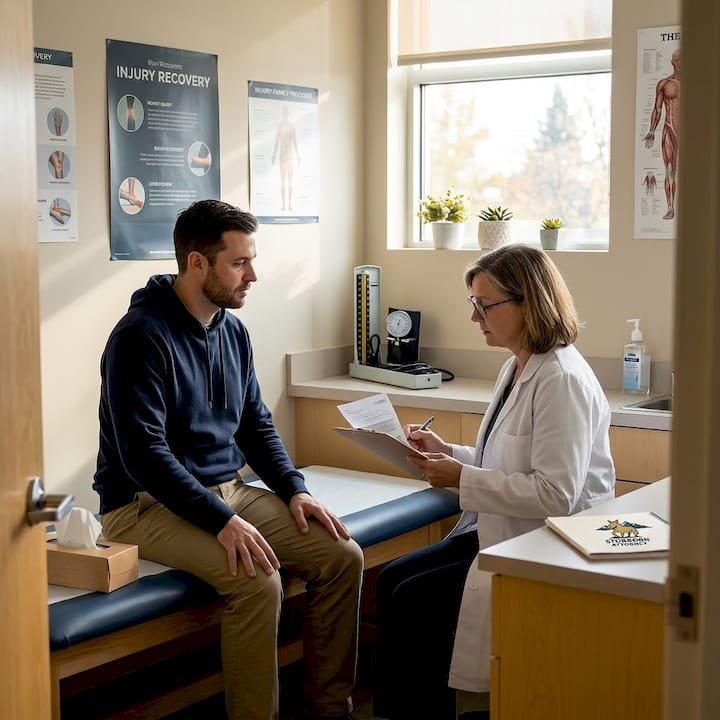
Why Seek Medical Treatment After an Accident
You walked away from the crash. Nothing feels broken. You figure you’re fine and that going to a doctor can wait. This is one of the most costly assumptions accident victims make. Understanding why seek medical treatment after an accident matters comes down to two realities: your body is not an accurate pain reporter in the hours after a collision, and the decisions you make in those first days shape both your physical recovery and any legal claim you pursue. This article covers the health risks of waiting, the legal consequences of delayed care, how to choose the right facility, and how to document your recovery in a way that actually protects you.
Table of Contents
- Why timely medical evaluation matters even when you feel fine
- Legal and insurance reasons to seek care after an accident
- Choosing the right care facility after an accident
- The power of consistent ongoing treatment
- What I’ve seen after a decade of injury cases
- How Stubbornattorney fights for you after an accident
- FAQ
Why timely medical evaluation matters even when you feel fine
The instinct to wait and see is understandable. You’re shaken, you’re busy, and you genuinely don’t feel hurt. But adrenaline is a powerful masking agent. In the minutes and hours after an accident, your body floods with stress hormones that suppress pain signals. You may feel completely normal while carrying a soft tissue injury, a hairline fracture, or a concussion that is quietly developing.
Several of the most common post-accident injuries are specifically designed by biology to hide from you:
- Whiplash often produces no immediate pain. Stiffness and severe neck pain typically emerge 24 to 48 hours after impact, sometimes longer.
- Concussions may present with only mild fogginess or a slight headache at first, symptoms easy to dismiss as stress. Untreated concussions can lead to post-concussion syndrome that lasts months.
- Soft tissue injuries to muscles, tendons, and ligaments rarely show on standard X-rays. Chiropractic and rehabilitation care restore function to soft tissues often overlooked in basic screenings.
- Internal bleeding can develop slowly with minimal initial symptoms before becoming life-threatening.
- Spinal misalignments may cause no immediate pain but create chronic nerve compression if left untreated.
The medical case for early evaluation is straightforward. Most physical recovery happens in the first three to six months post-accident, and early treatment leads to better outcomes. Initial improvements often occur within two to four weeks of consistent care. The window to set yourself on the right recovery path is narrow. Miss it, and you’re often looking at a longer, more expensive road back.
There is also a documentation layer that matters just as much. The medical records generated by your first evaluation create a timestamped link between the accident and your injuries. Without that early record, insurers and opposing attorneys will argue the injuries came from somewhere else entirely, or that they are not serious enough to warrant compensation.
Pro Tip: Even if you feel fine, go get checked within 24 to 72 hours of the accident. Tell the physician exactly what happened and describe every symptom, no matter how minor it seems. Small details in that early record can carry significant weight later.
Legal and insurance reasons to seek care after an accident
Here is where procrastination gets genuinely expensive. The legal and insurance implications of why seek medical treatment after an accident are not abstract. They are spelled out in deadlines, claim rules, and adjuster practices that work against you the moment you delay.
Consider one concrete example. In Colorado Springs , the personal injury protection (PIP) insurance system requires accident victims to seek treatment within 14 days of the crash or forfeit coverage entirely. Miss that window and you lose up to $10,000 in no-fault benefits regardless of how serious your injuries turn out to be. While Colorado operates differently, every jurisdiction has its own deadlines and statutes of limitations that can eliminate your right to compensation if you wait too long.
Beyond deadlines, here is how the insurance claim process actually works when you delay treatment:
-
The adjuster notes the gap. Insurance adjusters are trained to scrutinize treatment frequency and consistency. If you waited two weeks before seeing a doctor, the first question they ask is: how badly could you really have been hurt?
-
Your injuries get attributed elsewhere. Without an early medical record tying your injuries to the accident, the insurer will argue your condition is pre-existing, unrelated, or exaggerated.
-
Your settlement offer drops. Gaps in care are interpreted as evidence of recovery, which gives adjusters justification to reduce what they offer you.
-
Your attorney’s leverage weakens. Personal injury attorneys build cases around medical evidence. Thin or delayed records mean a thinner case, even if your injuries are real and significant. Understanding how pre-existing injuries impact claims becomes especially important when your documentation timeline has gaps.
-
You lose the ability to prove causation. Courts and insurers both require a clear causal chain from accident to injury to treatment. A delay in that chain introduces doubt, and doubt costs you money.
The benefits of post-accident care extend far beyond your health. Consistent, documented medical treatment is one of the most powerful tools in a personal injury claim. Settlement amounts are directly influenced by the quality and consistency of your medical records.
Pro Tip: After every appointment, ask your provider for a copy of the visit notes. Keep them in one folder, physical or digital. Your attorney will need this paper trail, and having it organized from the start saves time and protects your claim.
Choosing the right care facility after an accident
Not every accident requires an emergency room. Not every urgent care clinic is equipped to catch what matters. Choosing the right facility is one of the questions to ask about treatment that few people think about in the chaos following a crash. Here is a practical breakdown.
| Facility Type | Best For | Limitations |
|---|---|---|
| Emergency Room | Serious injuries, loss of consciousness, chest pain, suspected fractures, internal bleeding | Long wait times, higher cost, may not address soft tissue issues |
| Urgent Care | Minor cuts, sprains, mild symptoms with no red flags | Limited diagnostic tools; may refer you to ER anyway |
| Primary Care Physician | Follow-up care, referrals, ongoing symptom management | Often not available same-day; may not specialize in trauma |
| Chiropractor | Soft tissue injuries, whiplash, spinal alignment issues | Not appropriate for acute or life-threatening injuries |
| Neurologist | Head injuries, concussion symptoms, nerve-related complaints | Requires referral in most cases; specialist scheduling can take time |
ER visits provide the most comprehensive diagnostics and documentation but are more expensive than urgent care. The right choice depends on your symptom profile. If you lost consciousness, have severe head pain, chest tightness, or can’t move a limb normally, go to the ER. Full stop. Those symptoms require advanced imaging and specialist access that urgent care simply cannot provide.
For accidents with no obvious serious trauma, starting at urgent care is reasonable, but follow up quickly with your primary care physician and ask for referrals to specialists based on your symptoms. If you have any neck pain, back pain, or headaches in the days after the crash, a neurologist referral may be exactly what you need.
A few practical considerations when choosing where to go:
- Confirm the facility accepts your insurance before you arrive when possible.
- Ask specifically whether the provider has experience treating accident-related injuries.
- Request written documentation of every test performed and every diagnosis made at each visit.
- Do not minimize your symptoms to the provider. Describe everything, even what feels trivial.
The power of consistent ongoing treatment
Getting evaluated once and never going back is almost as damaging as not going at all. Insurance companies pay close attention to patterns. A single visit followed by silence tells them the same story as no visit: you must be fine.

The importance of medical attention does not end at the first appointment. Consistent medical care and detailed documentation are what separate strong claims from weak ones. Patients who delay care due to fear of cost or underestimating injury severity typically prolong their recovery and increase overall treatment expenses. The short-term savings of skipping appointments almost always cost more in the long run, both physically and financially.
Ongoing care also addresses dimensions of recovery that people rarely anticipate. Accident trauma has psychological effects. Anxiety, sleep disruption, and symptoms consistent with PTSD are common after serious crashes. These are legitimate, compensable injuries, but only if they are documented by a treating provider. Your mental health and functional recovery are part of the full picture.
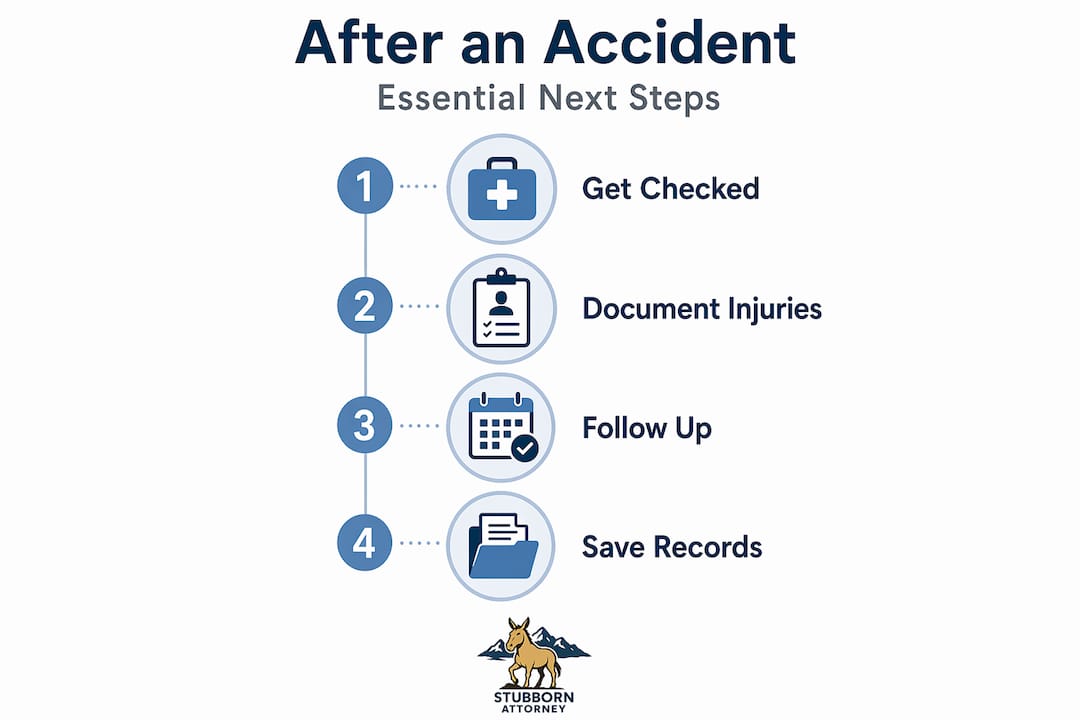
Here is how to document your recovery effectively from day one:
- Keep a daily symptom journal. Note your pain levels, what activities you could or could not do, and how symptoms change. A symptom diary helps prevent insurance claim disputes about injury severity.
- Attend every scheduled appointment. Missing sessions gives insurers exactly the evidence they want to reduce your offer.
- Track medication and treatment costs. Keep receipts for everything: prescriptions, co-pays, physical therapy, and mileage to appointments.
- Note how injuries affect daily life. Missed work, activities you had to give up, help you had to hire. These details feed directly into the damages calculation.
- Ask your providers specific questions. Questions to ask about treatment include: Is this injury likely to be permanent? Will I need future care? What are the long-term implications if this goes untreated?
Pro Tip: Take photos of any visible injuries (bruising, swelling, cuts) throughout your recovery, not just immediately after the accident. Progressive photo documentation showing the arc of your injury often tells a more compelling story than a single set of pictures taken at the scene.
What I’ve seen after a decade of injury cases
I’ve sat across from hundreds of accident victims in Colorado, and the pattern I see most often is not greed or exaggeration. It’s underestimation. People genuinely believe they are fine. They go home, take some ibuprofen, and figure they’ll sleep it off. Then three weeks later, they can’t turn their head without pain, they’re not sleeping, and the insurance adjuster has already started building a case that their injuries are unrelated to the crash.
Soft tissue injuries are the great underestimated injuries in personal injury law. They don’t show on a standard X-ray. They don’t look dramatic. But delayed care consistently results in more complex, costly recoveries and diminished quality of life. I’ve watched clients who waited just two weeks to seek care receive significantly lower settlement offers than clients with nearly identical injuries who got evaluated within 48 hours. The injuries were the same. The documentation was not.
The other thing I see constantly is patients afraid to “seem dramatic” with their providers. They underreport symptoms because they don’t want to waste the doctor’s time. That hesitation is understandable, but it costs them. Every symptom you do not report is a gap in your record. Every gap is a gift to the adjuster on the other side of your claim.
My advice is simple: treat going to the doctor after an accident the same way you would treat any serious legal deadline. It is not optional. It is not something you do only if the pain gets bad enough. It is something you do immediately, thoroughly, and consistently. Your body and your claim will both be better for it.
— Ryan
How Stubbornattorney fights for you after an accident
Medical treatment is the foundation. But it’s only half the equation. The other half is making sure the insurance company pays what your injuries actually cost, and that is where having the right legal representation from the start changes everything.
At Stubbornattorney, we represent only injured victims across Colorado. We know exactly how insurers evaluate claims because attorney Ryan Malnar spent years as a federal claims adjudicator before switching sides to represent the people those agencies were evaluating. That inside knowledge is not something most law firms can offer. You can explore common personal injury case types to see how cases like yours are typically handled, or review what affects your settlement to understand what documentation you need to protect your claim value. If you are ready to talk, request a free case review and we’ll tell you exactly where you stand.
FAQ
Why seek medical treatment after an accident if I feel fine?
Adrenaline masks pain in the hours after a crash, and injuries like whiplash, concussions, and internal bleeding often have delayed symptoms. Getting evaluated within 24 to 72 hours creates the medical record needed to diagnose hidden injuries and support any future insurance claim.
How does delayed medical care affect my insurance claim?
Insurance adjusters interpret gaps in treatment as evidence that you were not seriously hurt, which they use to justify lower settlement offers or outright denials. Consistent, well-documented treatment prevents these denials and preserves the full value of your claim.
What type of doctor should I see after a car accident?
Go to the emergency room for serious or potentially life-threatening symptoms. For moderate symptoms, urgent care followed by a primary care physician works well. Specialist care such as chiropractic or neurology is often necessary for soft tissue and head injuries that standard screenings miss.
How long does physical recovery take after an accident?
Most physical recovery occurs within the first three to six months, with initial improvements often appearing within two to four weeks of consistent treatment. Starting care early gives you the best chance at a full recovery within that window.
What should I document during my recovery?
Keep a daily symptom journal, attend every medical appointment, save all receipts for treatment costs, and photograph visible injuries throughout your recovery. These records directly support your insurance claim and give your attorney the evidence needed to represent you effectively.
| Key Takeaway | Details |
|---|---|
| Adrenaline hides injuries | Pain and symptoms from whiplash, concussions, and soft tissue damage often appear days after the accident, not immediately. |
| Early care builds your legal case | A medical record created within the first 72 hours creates the causal link between the accident and your injuries that insurers require. |
| Gaps in treatment cost you money | Adjusters use missed appointments and delayed care to argue your injuries are minor or unrelated, reducing settlement offers. |
| Choose your facility based on symptoms | Serious symptoms require an ER; soft tissue and spinal issues often need specialist follow-up beyond the initial visit. |
| Documentation is a daily job | Symptom journals, appointment records, and cost receipts build the evidence base that protects your claim from start to finish. |
Recommended
- Paying for Medical Treatment After a Car Accident: What You Need to Know – Malnar Injury Law
- What to Do Immediately After a Car Accident in Colorado – Malnar Injury Law
- Concussion Symptoms After a Car Accident in Colorado: Why Seeing a Neurologist Matters – Malnar Injury Law
- When Should You Hire An Automobile Accident Attorney? – Malnar Injury Law