
What Is a Police Accident Report: Your Full Guide
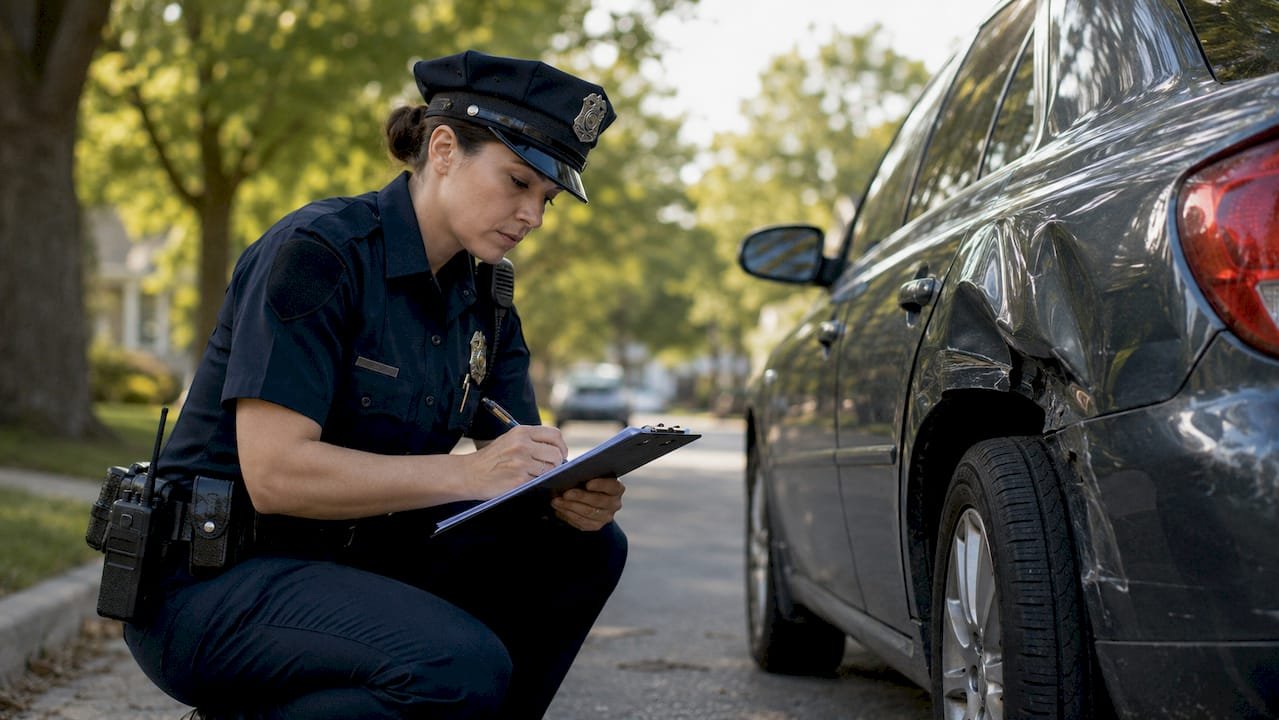
A police accident report is the official document a law enforcement officer prepares at the scene of a vehicle collision, recording the facts, parties involved, and contributing factors. Also called a crash report or traffic collision report, this record becomes the foundation for insurance claims and legal proceedings. Insurance adjusters treat it as the first independent account of what happened. Understanding what it contains, how to get it, and what it can and cannot prove gives you a real advantage when navigating the aftermath of a crash.
What is a police accident report and what does it contain?
A police accident report is a structured, standardized document that captures every measurable detail of a vehicle collision. Officers complete it at the scene or shortly after, following the Model Minimum Uniform Crash Criteria (MMUCC) standards set by the National Highway Traffic Safety Administration (NHTSA). These standards exist to make crash data consistent across all 50 states, which matters when insurers and courts compare reports from different jurisdictions.
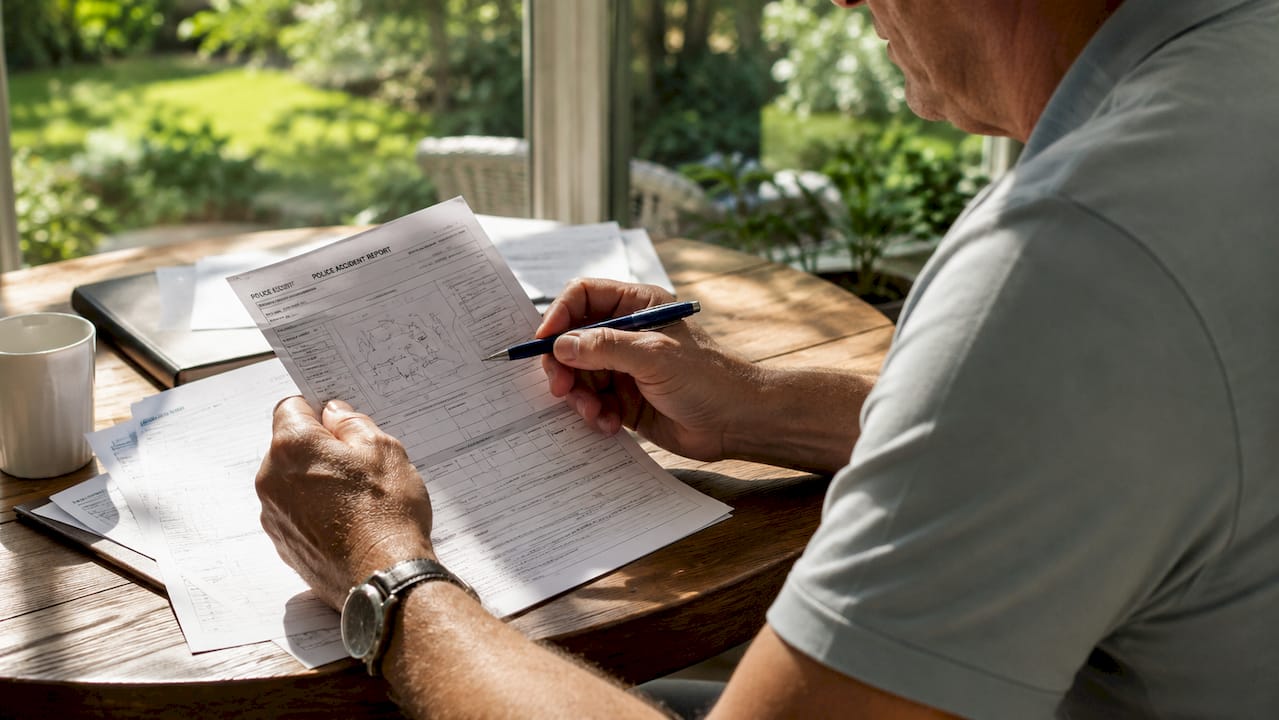
The report covers far more than names and license plate numbers. Environmental conditions like weather, lighting, road surface, and traffic control devices are routinely documented. That level of detail supports accident reconstruction and helps determine whether road conditions contributed to the crash.
Here is what you will typically find in a standard crash report:
- Incident identification: Date, time, exact location, and the assigned report number
- Driver and vehicle data: Full names, driver’s license numbers, vehicle make, model, year, and insurance policy information for all parties
- Passenger and witness information: Names and contact details for anyone else present
- Environmental and road conditions: Weather, visibility, lighting, pavement type, and traffic control status at the time of the crash
- Officer’s narrative: A written summary combining witness statements, physical evidence like skid marks, and the officer’s own observations to describe the accident sequence
- Collision diagram: A sketch showing vehicle positions, direction of travel, and the point of impact
- Fault-contributing factor codes: Standardized codes following MMUCC that identify behaviors or conditions that contributed to the crash
- Injury severity ratings: Coded using the KABCO scale, which classifies injuries from fatal (K) to no injury (O)
- Citations issued: Any traffic violations cited at the scene
The table below shows how the KABCO injury scale works, since you will see these codes on your report:
| Code | Classification | Meaning |
|---|---|---|
| K | Fatal | Death resulting from the crash |
| A | Incapacitating injury | Prevents normal activity |
| B | Non-incapacitating injury | Visible but not incapacitating |
| C | Possible injury | Complaint of pain, no visible injury |
| O | No injury | No injury reported |
Knowing these codes lets you read your own report accurately instead of guessing what the officer recorded about your condition.
How to obtain a police report after a car accident
Getting a copy of your crash report is straightforward, but the timeline and cost vary by state and jurisdiction. Most police accident reports are available online within 5–14 days after the incident, at a cost ranging from $5 to $25 through state DMV or DOT portals. That fee is small compared to the value the document holds for your claim.
Here is the standard process for requesting your report:
- Locate the report number. The responding officer typically gives you a card or slip with the report number at the scene. If you did not receive one, note the officer’s name and badge number, the date, and the exact location of the crash.
- Visit the correct agency portal. Most states allow online requests through the state DMV, DOT, or the specific law enforcement agency that responded. Search for your state’s official crash report portal.
- Provide required information. You will need the report number, date of the accident, location, and your name or vehicle information to verify your identity as a party to the crash.
- Pay the fee and download. Online requests typically cost $5–$25. Processing takes 5–14 days, though some agencies release reports faster.
- Use a FOIA request if needed. The Freedom of Information Act (FOIA) allows you to request the report at no cost, but FOIA requests typically take 2–4 weeks. Use this route only if the standard request fails or the cost is a barrier.
Some jurisdictions still require in-person or mail requests. Call the responding agency directly if the online portal does not list your report within 14 days.
Pro Tip: Request your report as soon as it becomes available. Errors are far easier to correct shortly after the incident than months later when memories fade and officers move on to other cases.
For a detailed walkthrough of the accident report request process in every state, Stubbornattorney has a dedicated guide covering timelines, costs, and agency contacts.
What a police report can and cannot determine about fault
The police accident report is not a legal ruling on fault. It is a preliminary, independent account. That distinction matters enormously when you are dealing with an insurer or preparing for litigation.
Insurance adjusters treat the police accident report as a key independent document in their initial liability assessment and settlement value determinations. The officer’s narrative and the MMUCC fault-contributing factor codes carry significant weight in that process. An adjuster who sees a code indicating “failure to yield” next to the other driver’s name will factor that directly into their liability decision.
What the report cannot do is equally important to understand:
- It does not bind a court. A judge or jury makes the final determination of legal fault. The report is evidence, not a verdict.
- It reflects one officer’s interpretation. The narrative is based on what the officer observed and what witnesses said at the scene. New evidence can contradict it.
- It may contain errors. Officers handle multiple incidents. Mistakes in vehicle descriptions, locations, or narrative details happen more often than most people expect.
- It does not replace your own evidence. Photos, dashcam footage, and independent witness statements can support or challenge what the report says.
“The police accident report is the first independent evaluation insurers rely on for fault and liability assessments. It is not legally binding, but its influence on early claim decisions is substantial. An error in the narrative or a missing contributing factor code can shift thousands of dollars in settlement value before you even speak to an adjuster.”
Reviewing your report promptly and challenging inaccuracies early protects your claim from the start. Waiting months to dispute a narrative error gives insurers reason to question why you did not act sooner.
How does a police report differ from a driver self-report?
Many accident victims assume the police report covers all their legal reporting obligations. That assumption is wrong and can cost you your license or your claim.
A police accident report is created by the responding officer and filed with the law enforcement agency. A driver self-report, often called an SR-1 form, is a separate document you file directly with your state DMV. These are two distinct filings with two different agencies serving two different legal purposes.
State laws require driver self-reports when property damage or injuries exceed specific thresholds, even when a police officer already responded and filed a report. Damage thresholds vary widely by state, ranging from a few hundred to several thousand dollars. The table below shows how the two documents compare:
| Feature | Police accident report | Driver self-report (SR-1) |
|---|---|---|
| Who creates it | Responding law enforcement officer | The driver involved in the crash |
| Filed with | Law enforcement agency | State DMV |
| When required | When police respond to the scene | When damage or injury exceeds state threshold |
| Cost to obtain | $5–$25 typically | Free to file |
| Legal consequence of omission | N/A (officer’s responsibility) | License suspension, claim disputes |
Failure to file the driver self-report, even when a police report exists, can result in license suspension and complications with your insurance claim. Check your state’s specific threshold immediately after any significant crash.
Pro Tip: Search your state DMV website for “accident self-report” or “SR-1 form” within 24 hours of your crash. Filing deadlines are typically 10 days in California and vary by state. Missing the deadline creates a separate legal problem on top of your accident.
How to use your police report for insurance and legal purposes
Getting the report is only the first step. Using it correctly determines how much it helps you.
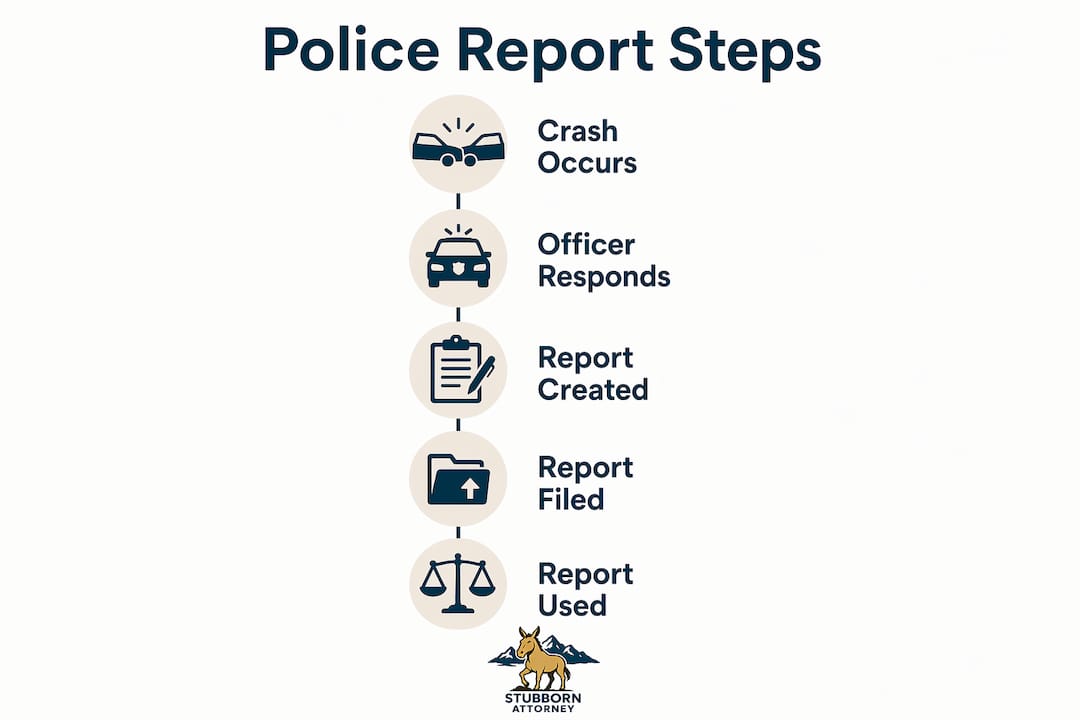
Requesting and reviewing your report quickly increases your leverage to correct inaccuracies and strengthen your insurance claim. The officer’s narrative is the section that carries the most weight with adjusters and attorneys. Read it carefully against your own memory of events.
Here is what to check and how to act on what you find:
- Verify all identifying details. Confirm that your name, address, license number, vehicle make and model, and insurance information are correct. A wrong policy number can delay your claim.
- Check the location and time. An incorrect intersection or timestamp can create doubt about which jurisdiction handles the report.
- Read the narrative word by word. Look for misattributed statements, missing witnesses, or a sequence of events that does not match what happened. Narrative errors can substantially affect insurance settlements if left uncorrected.
- Review the contributing factor codes. If a code assigns a behavior to you that you did not exhibit, that is grounds for a correction request.
- Request a supplement or amendment. Contact the reporting agency directly. Most departments allow you to submit a written request for a supplemental report or a factual correction. Bring documentation: photos, witness contact information, or dashcam footage.
- Pair the report with corroborating evidence. Photos from the scene, medical records, and independent witness statements all support the report’s accurate details and challenge any errors.
The report also plays a direct role in settlement negotiations. Adjusters use it to set initial reserve values on your claim. A report that accurately reflects the other driver’s fault and your injuries supports a higher opening offer. A report with errors does the opposite.
Pro Tip: If the officer’s narrative contains a significant error that the agency refuses to correct, an attorney can submit a formal challenge with supporting evidence. Do not accept an inaccurate report as final.
Why the police report is the document I fight hardest to get right
After more than a decade representing injured people in Colorado, I have seen one pattern repeat itself more than any other: clients who waited too long to read their crash report. By the time they came to me, the insurer had already built its liability position around a narrative that contained errors. Fixing that narrative after the fact is possible, but it takes more work and more time than simply catching the mistake early.
The officer’s narrative is where cases are won or lost before they ever reach a courtroom. I have seen a single misattributed statement shift an insurer’s fault determination from the other driver to my client. I have also seen accurate, detailed narratives lock in liability so clearly that the insurer settled quickly rather than fight.
What surprises most people is how little weight the report carries on its own in court, and how much weight it carries with adjusters before litigation begins. Insurers use it to set the value of your claim in the first weeks. That early number becomes the anchor for every negotiation that follows. If the report is wrong, that anchor is set in the wrong place.
My advice is always the same: get the report the day it becomes available, read every line, and call me if anything looks wrong. The accident evidence you gather in the first two weeks after a crash, including a verified and corrected police report, is worth more than anything you can collect six months later.
— Ryan
Stubbornattorney is ready to fight for your claim
A police accident report shapes your insurance claim from day one. Getting it right, reading it accurately, and acting on errors quickly are the steps that protect your recovery. At Stubbornattorney, Ryan Malnar and his team have spent years using crash reports to build strong personal injury cases for Colorado accident victims. As a former federal claims adjudicator, Ryan knows exactly how insurers read these documents and where they look for reasons to reduce your payout. If you have been in a crash and need help understanding your report or building your claim, review common personal injury case examples to see how cases like yours are handled, then contact Stubbornattorney for a free case evaluation.
FAQ
What is a police accident report used for?
A police accident report is used by insurance adjusters to assess fault and set initial claim values, and by attorneys and courts as evidence in personal injury cases. It is the primary independent record of a vehicle collision.
How do I get a copy of my police accident report?
Request your report through your state DMV or DOT online portal, typically within 5–14 days of the crash, for a fee of $5–$25. You can also submit a FOIA request at no cost, though that process takes 2–4 weeks.
Does a police report determine who is at fault?
A police report is not a legally binding fault determination. It is an independent account that heavily influences insurer decisions, but a court makes the final ruling on legal liability.
What is the difference between a police report and a driver self-report?
A police report is filed by the responding officer with the law enforcement agency. A driver self-report, such as an SR-1 form, is filed by the driver with the state DMV and is a separate legal requirement when damage or injuries exceed state thresholds.
Can errors in a police accident report be corrected?
Yes. Contact the reporting agency and submit a written correction request with supporting documentation such as photos, dashcam footage, or witness statements. Acting quickly after the report is released makes corrections significantly easier.