

What to Expect in a Legal Consultation Before You Hire
A first legal consultation is a 30 to 60 minute meeting with one job: the lawyer figures out if you have a case worth pursuing, and you figure out if this is the right lawyer to trust with it. That’s what to expect in a legal consultation, in plain terms, and initial consultations typically run 30 to 60 minutes because that’s roughly how long it takes to cover the facts, ask real questions, and get a read on each other.
Before you walk in or log on, do three things. Confirm whether the meeting is free. Write a short timeline of what happened, in order. Pick three questions you actually want answered, not generic ones you found online.
Priorities for the meeting:
- Confirm the fee status before you book (free or paid)
- Bring documents organized by date
- Write a one-page timeline of events
- Prepare three specific questions about experience and process
Time estimate: Plan for 30 to 60 minutes. Anything shorter usually means a quick screening call; anything longer often signals a complex case that needs a second meeting.
Table of Contents
- How Should You Prepare for a Legal Consultation?
- What Happens During the Consultation Itself?
- What Are the Fee Structures You Should Understand?
- When Does Attorney-Client Privilege Actually Start?
- Which Questions Should You Ask the Lawyer?
- What Mistakes and Red Flags Should You Watch For?
- After the Consultation: What Comes Next?
- How to Request a Consultation With Stubbornattorney
- Sources
- FAQ
How Should You Prepare for a Legal Consultation?
Preparation is the single biggest factor in whether your consultation is genuinely useful or a wasted 45 minutes. Lawyers can only assess what you show them, and strong preparation makes consultations faster and more productive for both sides.

Start with documents. Bring police or incident reports, medical records, contracts, insurance correspondence, photos, and any letters or emails tied to the matter. Organize them by date, not by type. A folder that goes from the day of the incident forward lets an attorney trace the story in minutes instead of reconstructing it from scattered papers.
Next, write your timeline. List dates, what happened, who was involved, and any calls or letters exchanged. Even rough notes beat memory alone, especially if it’s been months since the event.
Before you book, confirm the logistics: is the meeting free, who will actually be in the room (the attorney or a paralegal doing intake), and if it’s virtual, test your camera and audio ahead of time. Firms vary widely here, and some charge for the initial meeting while others don’t, so ask directly instead of assuming.
Pro Tip: Write a two to three sentence summary of your problem before the meeting: what happened, when, and what you want to happen next. Lead with that, and the lawyer can jump straight to the legal issue instead of untangling the narrative themselves.
What Happens During the Consultation Itself?
The meeting follows a fairly predictable rhythm, even though every case looks different on paper.
- Intake and questions. The attorney or intake staff asks you to walk through what happened, often more than once, in slightly different ways.
- Facts review. They dig into specifics: dates, injuries, damages, prior communications, anything documented.
- Legal assessment. The attorney identifies which legal issues actually apply and whether you have a viable claim.
- Timeline and next steps. You discuss what happens if you move forward, roughly how long it might take, and what’s needed from you.
Repetitive questions aren’t a stall tactic. Attorneys ask the same thing from different angles to check consistency and spot gaps in the evidence before those gaps become a problem in front of a judge or insurance adjuster. A consultation is diagnostic, not exhaustive. The meeting identifies issues and outlines options; it typically won’t replace the deeper review that comes after you’ve signed on.
Virtual consultations run the same content but need extra setup. Have digital copies of documents ready to screen-share, and find a private space since you’ll be discussing sensitive details out loud.
What Are the Fee Structures You Should Understand?
Lawyers get paid a few different ways, and knowing which model applies to your case changes how you evaluate everything else in the meeting.
- Hourly billing — common for business disputes, family law, and general litigation.
- Flat fees — typical for defined tasks like drafting a will or handling an uncontested matter.
- Contingency fees — standard in personal injury, where the attorney takes a percentage of any settlement or verdict, often 33 to 40 percent depending on the case, and you owe nothing if there’s no recovery.
Fees and costs aren’t the same thing. Fees pay the attorney; costs cover filing fees, expert witnesses, and administrative expenses, and someone has to decide upfront whether the firm advances those or bills you directly.
Ask plainly: is this consultation free, how does billing work, and are costs advanced or passed to me? Then ask for it in writing.
Pro Tip: Request a short written fee summary before you sign anything. A one-page estimate protects you far more than a verbal promise you’ll remember differently in six months.
When Does Attorney-Client Privilege Actually Start?
Confidentiality protections generally apply from the moment you start discussing your case as a prospective client, even before you’ve signed anything. That said, confirm it out loud at the start of the meeting rather than assuming.
Before any real discussion happens, most firms run a conflict check, screening your name and the other parties involved against their client database. This step exists because firms are ethically required to screen for conflicts of interest, and if one turns up, the firm has to decline the case on the spot.
- Confidentiality protections generally begin once you’re discussing your case as a prospective client.
- Conflict checks happen before detailed discussion, not after.
- Formal representation begins when you sign a retainer or engagement agreement, not at the handshake.
A consultation is not the same as representation. Until you sign an engagement agreement, no attorney-client relationship exists in the way most people assume, and clarifying that early avoids confusion about what’s protected and what isn’t.
If you’re worried about a conflict before the meeting, mention the other party’s name early so the firm can check before you share anything sensitive.
Which Questions Should You Ask the Lawyer?
The questions you ask reveal more about fit than almost anything the lawyer volunteers on their own.
- How many cases like mine have you handled, and what were the outcomes?
- What are the realistic next steps, and what’s the likely timeline?
- Who will actually work on my case day to day, you or someone on your team?
- What are your billing rates for each person who touches this file?
- How often will you update me, and through what method (calls, email, portal)?
- What documents do you need from me, and by when?
The answers to those last two matter more than most people realize. A lawyer who’s vague about who does the work or how often they’ll communicate is telling you something about how the next several months will feel. Asking who handles the day-to-day work and how billing splits between attorney and staff is one of the clearest ways to gauge fit before you commit.
What Mistakes and Red Flags Should You Watch For?
Clients hurt their own cases in predictable ways. Withholding an embarrassing or damaging fact is the biggest one, because the other side’s lawyer will find it eventually, and it’s far worse discovered later than disclosed upfront. Guessing at dates instead of saying “I’m not sure” plants inaccuracies that follow the case. Arriving without documents wastes the meeting. Posting about your situation on social media while it’s active can undercut you badly.
On the lawyer’s side, watch for guarantees of a specific outcome (no ethical attorney promises a result), evasive answers about fees, or pressure to sign a retainer on the spot before you’ve had time to think.
If you don’t know an answer, just say so. “I don’t know” is a fine response. Guessing is not.
After the Consultation: What Comes Next?
Walking out, ask yourself four things: Did the strategy make sense? Were fees explained clearly? Do you trust this person? And do you know who’s actually handling your file?
Insist that scope, fees, costs, communication expectations, and termination terms are all in writing before you sign anything, a point that engagement agreements are specifically designed to spell out. A good consultation ends with clear next steps for both sides, whether or not you hire that firm.
- Expect an engagement letter within days if you decide to move forward.
- Ask when work actually begins after signing.
- Comparing two or three lawyers before deciding is normal and often smart.
What Lawyers Wish Clients Knew Going In
Bring everything, even documents that feel irrelevant. Attorneys are quietly checking for deadlines, evidence gaps, and whether the case has legal merit, and they’re doing it in real time while you talk. Say “I don’t know” instead of guessing at a date or detail. Early honesty saves money later, because surprises that surface mid-case cost far more to fix than facts disclosed on day one. A good consultation usually ends with clear options, a real next step, and, if it’s a fit, a retainer on the table.
A Note From the Publisher
Ryan Malnar has spent over a decade representing injury clients across Colorado, with a background as a former federal claims adjudicator that shapes how he reads a case from the first conversation. Malnar Injury Law, now doing business as Stubbornattorney, has settled hundreds of injury cases on a contingency basis, meaning clients owe nothing unless there’s a recovery. Every consultation here starts the same way: full attention to the facts, honest talk about fees, and no pressure to sign before you’re ready.
How to Request a Consultation With Stubbornattorney
If your case involves a car accident, truck accident, or another personal injury matter in Colorado, Stubbornattorney’s consultation process runs on contingency, meaning you pay nothing upfront and nothing at all unless your case results in a settlement or verdict. That’s a different calculation than an hourly-billed consult where the clock starts before you’ve decided anything.
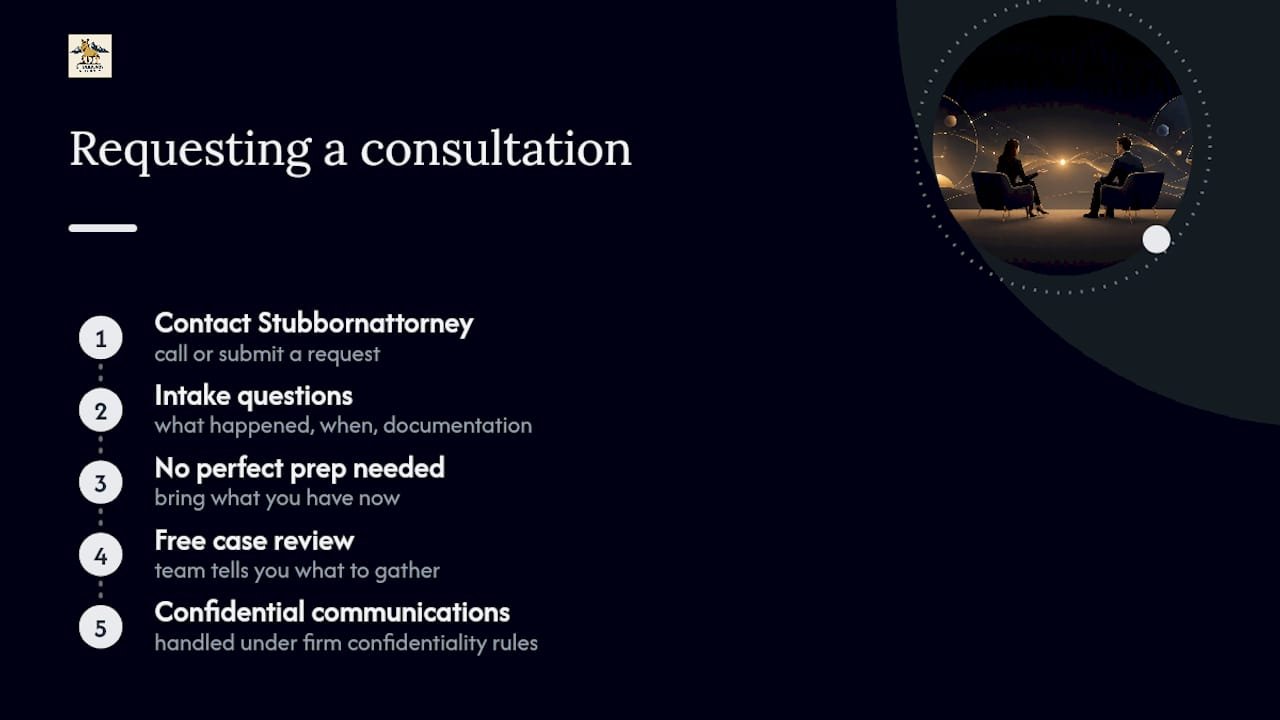
When you call or submit a request, the intake team asks about the basics: what happened, when, and what documentation you already have. You don’t need everything organized perfectly before that first call. Bring what you have, and the free case review will guide you on what to gather next. Communications during this process are handled with the same confidentiality expectations covered above.
If you’ve been in an accident and aren’t sure whether you have a case, request a free case evaluation and get a straight answer instead of guessing on your own.
Sources
A few sources go deeper on specific pieces of this process:
- First Lawyer Meeting — What to Expect & How to Prepare | Bennett Legal
- The Ultimate Guide to a Legal Consultation: What It Is, How to Prepare, and What to Expect US Law Explained
- How the legal client intake and conflict check process works — American Bar Association
- Attorney initial consultations — Super Lawyers
This article is general information, not a substitute for advice from a qualified lawyer. Consult a qualified legal professional about your own circumstances before acting on anything here.
FAQ
What Are Red Flags During a Consultation?
Watch for promises of a guaranteed outcome, vague or shifting answers about fees, and pressure to sign a retainer before you’ve had time to think it over. Any of these suggests the firm is more focused on closing you than evaluating your case.
What Should You Not Say to a Lawyer or Put in a Demand Letter?
Avoid guessing at dates or facts you’re unsure about; say “I don’t know” instead of inventing an answer that could contradict evidence later. In a demand letter specifically, avoid admissions of fault, exaggerated claims, or angry language that undercuts your credibility.
What Should You Say to an Attorney During a Consultation?
Give a complete, honest account, including facts that feel embarrassing or damaging, since the attorney needs the full picture to assess your case accurately. Bring your timeline and documents, and ask direct questions about experience, fees, and who will handle your file.
Should You Dress Up for a Lawyer Consultation?
Business casual is generally appropriate and shows you’re taking the meeting seriously, but this is a fact-gathering session, not a court appearance, so it isn’t a factor in how your case gets evaluated.
Is the First Legal Consultation Always Free?
No. It depends on the firm and the type of case; some firms offer free consultations while others charge, so ask before you book. Personal injury consultations, including those with Stubbornattorney, are commonly offered as free case reviews since the firm works on contingency.