

What Is Catastrophic Injury? Your Legal Guide for Colorado
TL;DR:
- Catastrophic injuries cause severe, long-term impairments that significantly alter a person’s life and capabilities. They are defined medically by lasting neurological or functional damage and legally by their impact on daily living and earning capacity, influencing compensation and legal strategies. Early medical care, thorough documentation, and expert legal guidance are essential to securing fair compensation and managing long-term consequences effectively.
Many people assume a catastrophic injury means only the most dramatic, visible accidents: a severed limb at a construction site or a high-speed collision leaving someone paralyzed on scene. But that assumption is dangerously incomplete. Some of the most life-altering injuries look ordinary at first, and the people who suffer them often don’t realize the full medical and legal weight of what happened until weeks or months later. If you or someone you love has been seriously hurt in Colorado, understanding exactly what “catastrophic injury” means in both medical and legal terms is the first step toward protecting your future and getting the compensation you deserve.
Table of Contents
- Defining catastrophic injury: Medical and legal perspectives
- Common examples of catastrophic injuries
- How catastrophic injuries change lives: Long-term consequences
- What to do after a catastrophic injury in Colorado: Your next steps
- A perspective you won’t hear from most injury guides
- Connect with experienced Colorado catastrophic injury advocates
- Frequently asked questions
Key Takeaways
| Point | Details |
|---|---|
| Definition matters | Medical and legal distinctions shape your rights and options after a catastrophic injury. |
| Lasting impact | Catastrophic injuries often lead to lifelong physical, emotional, and financial challenges for victims and families. |
| Get expert guidance | The right actions and legal help make a significant difference in your recovery and compensation. |
| Documentation is crucial | Carefully record all injury effects and expenses to support your claim. |
Defining catastrophic injury: Medical and legal perspectives
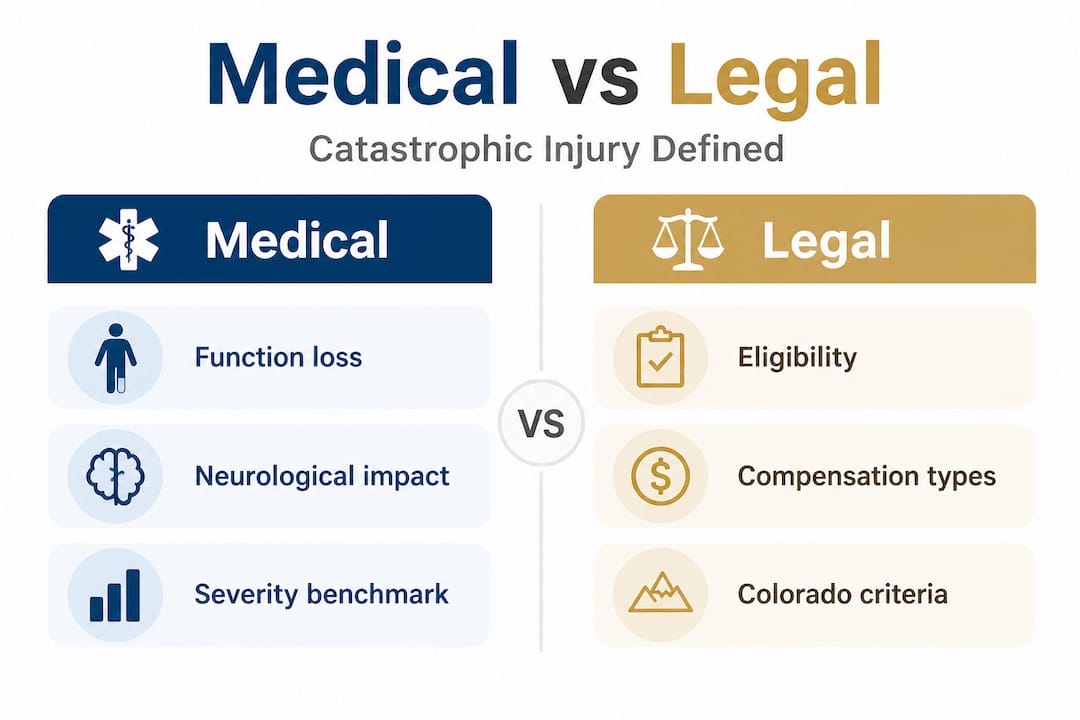
Medical professionals and attorneys both use the term “catastrophic injury,” but they don’t always mean exactly the same thing. Knowing both definitions helps you understand how your situation will be evaluated and why the distinction genuinely matters.
From a medical standpoint, catastrophic injuries are those that cause severe, lasting changes to how the body functions. Severe, lasting neurologic or functional impairment is the defining hallmark according to trauma and neurotrauma research. Think of conditions like permanent paralysis, traumatic brain injury with cognitive loss, or severe organ damage that requires lifelong management. The medical focus is on whether the body’s ability to function has been permanently or seriously compromised.
Legally, Colorado does not have a single rigid statute that spells out every injury that qualifies as catastrophic, but courts and insurance companies consistently look at a related set of factors. These include the severity of the injury itself, whether it causes permanent impairment, and how dramatically it changes the victim’s ability to work, care for themselves, and participate in daily life. In personal injury law, the classification of an injury as catastrophic often determines the types and amounts of compensation a victim can pursue.
“Catastrophic injury is not simply a dramatic event. It is a medical and legal threshold that carries enormous consequences for how a case is built, argued, and resolved.” This is why precise definitions matter so much in real-world legal strategy.
The gap between these two perspectives creates practical problems for injury victims. A person may have suffered what their doctor calls a catastrophic neurological event but still face resistance from an insurance company that wants to minimize the legal classification of the injury. Understanding your rights after injury in Colorado gives you the foundation to push back effectively.
Why the classification affects your case
The way an injury is classified shapes nearly every decision in your legal case. It influences the expert witnesses your attorney recruits, the evidence that gets documented, and the financial demands placed on the opposing party. Cases involving catastrophic injuries typically involve higher compensation demands because the long-term costs are far greater. Medical bills may continue for decades. The victim may never return to work. Family members may need to become caregivers.
Here is a summary of how medical and legal definitions compare across key criteria:
| Criteria | Medical definition | Legal definition in Colorado |
|---|---|---|
| Primary focus | Functional and neurological impairment | Impact on daily life and earning capacity |
| Duration of effects | Permanent or long-term | Permanent or significant long-term |
| Common examples | TBI, spinal cord injury, major organ damage | Same, plus loss of limb, severe burns |
| Who determines it | Treating physicians and specialists | Courts, attorneys, medical experts |
| Why it matters | Guides treatment and care planning | Guides compensation and legal strategy |
Getting both the medical documentation and the legal classification aligned is essential. An experienced catastrophic injury attorney bridges that gap.
Common examples of catastrophic injuries
With the definitions clear, it’s easier to see what kinds of injuries are typically labeled catastrophic in Colorado’s legal and medical environments. These are not abstract categories. They are injuries that change everything.
Traumatic brain injury (TBI) is one of the most common and most misunderstood forms. Severe trauma to the brain or nervous system can result in memory loss, personality changes, inability to work, and loss of independence, even when the person looks physically intact on the outside. In Colorado, TBI cases arise frequently from car crashes, falls, and sports-related incidents.
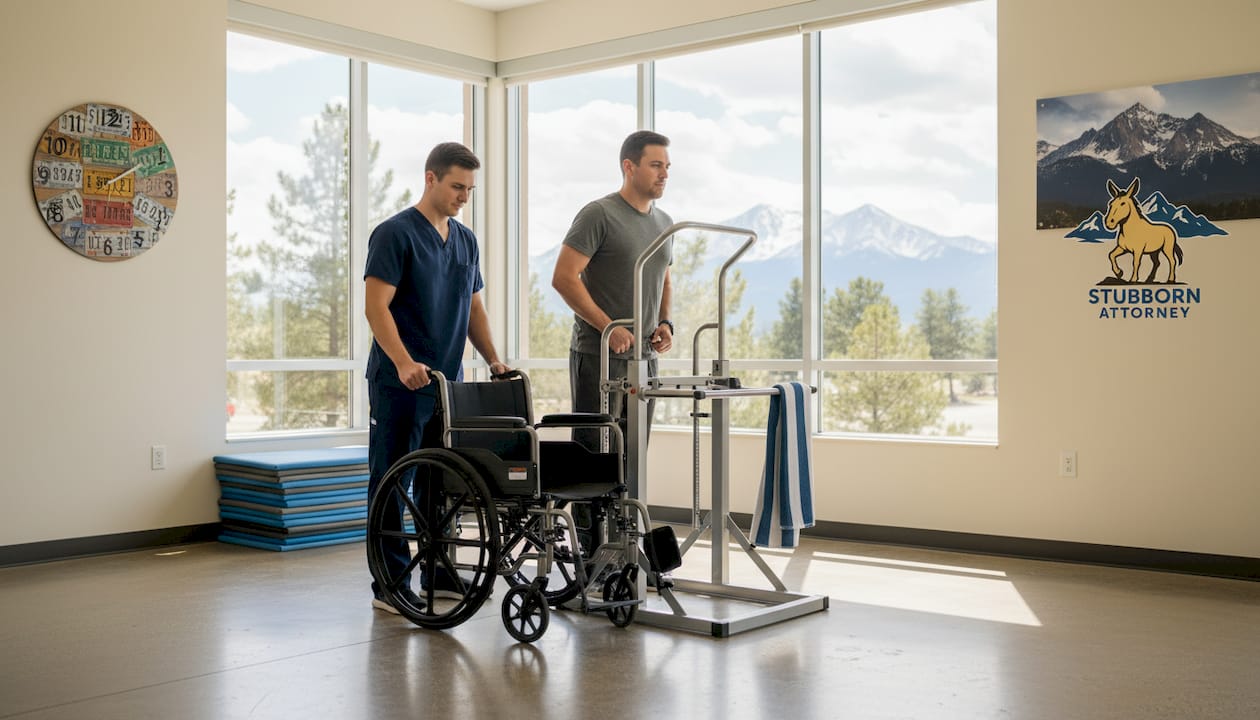
Spinal cord injuries are another primary category. Damage to the spinal cord can result in partial or complete paralysis, depending on the location and severity of the injury. People who suffer spinal cord injuries often face permanent reliance on mobility aids, in-home care, and extensive medical management.
Amputations, whether surgical or traumatic, fall squarely in the catastrophic category. Losing a limb affects mobility, employment, psychological wellbeing, and daily independence in ways that compound over a lifetime.
Severe burns that cover a significant portion of the body cause not only physical pain but also scarring, disfigurement, nerve damage, and deep psychological trauma. Burns often require multiple surgeries, skin grafts, and years of rehabilitation.
Multiple organ damage and internal injuries from high-impact accidents can also meet the threshold. These may not be visible on the surface at all, yet they can require ongoing surgical intervention and management.
Researchers who study catastrophic injury in athletes use severity benchmarks to categorize injuries, but these researchers also note limitations in how well sports data generalizes to other contexts like car crashes or workplace accidents. The takeaway is that severity must always be evaluated case by case rather than applied from a rigid template.
Here is a quick comparison of common catastrophic injury types and their typical long-term effects:
| Injury type | Common cause in Colorado | Typical long-term effects |
|---|---|---|
| Traumatic brain injury | Car crashes, falls | Cognitive impairment, personality change |
| Spinal cord injury | Vehicle collisions, falls | Paralysis, loss of independence |
| Amputation | Workplace accidents, crashes | Permanent disability, prosthetics |
| Severe burns | Industrial accidents, fires | Scarring, nerve damage, psychological trauma |
| Multiple fractures | High-impact crashes, falls | Chronic pain, mobility limitations |
Common causes in Colorado include:
- Motor vehicle accidents on highways like I-25 and I-70
- Falls from height in construction and outdoor recreation
- Workplace machinery accidents, especially in agriculture and construction
- High-impact sports, skiing, and mountain biking incidents
- Pedestrian and bicycle accidents in urban areas like Colorado Springs and Denver
One critical point worth knowing: some cases that ultimately become catastrophic personal injury case examples began with incidents that seemed minor at the scene. A rear-end collision at moderate speed can produce a TBI that isn’t fully recognized for weeks. A workplace fall that doesn’t break bones can still cause spinal damage that progresses over time.
Pro Tip: If you were involved in an accident and feel “off” in any way, including having headaches, memory gaps, or tingling in your limbs, seek medical care immediately and tell your doctor about the accident. Early documentation of these symptoms can make or break your case later.
You can also explore car accident claim types to understand how your specific situation fits into Colorado’s legal landscape, or review more injury examples to see the range of scenarios that qualify.
How catastrophic injuries change lives: Long-term consequences
Now that you know which injuries qualify, understanding their impact demonstrates why the term “catastrophic” isn’t just rhetoric. These injuries don’t just affect a person’s body. They restructure an entire life, and often the lives of everyone around the injured person.
Physical consequences are the most visible starting point. Many victims require extended hospital stays, surgeries, and then months or years of rehabilitation. Physical therapy, occupational therapy, and pain management become permanent fixtures. Some individuals plateau in their recovery and face a lifetime of managing a disability rather than recovering from one. Evidence-based care is critical here because the goal is maximizing function and quality of life even when full recovery is not possible.
Emotional and psychological consequences are less visible but just as real. Depression, anxiety, and post-traumatic stress disorder are common among catastrophic injury survivors. Many struggle with the loss of identity that comes from no longer being able to do the job they trained for, the hobbies they loved, or the parenting and caregiving roles they valued. This psychological toll extends to family members who often become unpaid caregivers, adjust their own careers, and absorb enormous emotional stress.
Financial consequences can be staggering. Consider the following realities:
- A spinal cord injury can cost between $500,000 and $5 million or more over a lifetime in medical expenses alone
- Lost earning capacity, especially for younger workers, can represent millions in lost wages over a career
- Home modifications, specialized vehicles, and in-home care add up to tens of thousands of dollars per year
- Family members who reduce their work hours to provide care suffer their own income losses
These long-term costs are exactly why understanding compensation types for injury victims matters so much. Colorado law allows injured people to pursue compensation for medical expenses, lost wages, loss of earning capacity, pain and suffering, and more. But capturing those losses accurately requires careful documentation and legal experience.
The financial pressure also comes at the worst possible time. Families dealing with a catastrophic injury are simultaneously managing grief, medical stress, and logistical chaos. Insurance companies know this and often move quickly to offer low settlements while the family is overwhelmed. Understanding financial compensation after injury before you talk to any insurer gives you a crucial advantage.
Pro Tip: Start a daily journal immediately after your injury or your loved one’s injury. Write down every symptom, every limitation, every appointment, and every expense. This kind of detailed record becomes powerful evidence in a catastrophic injury case, and it’s nearly impossible to reconstruct accurately months later.
Here are the key ongoing impacts to track and document:
- All medical appointments, treatments, prescriptions, and equipment costs
- Time missed from work and reduced hours due to recovery
- Activities of daily living you can no longer perform
- Emotional health changes and any mental health treatment
- Family members’ time spent on caregiving and their own lost income
What to do after a catastrophic injury in Colorado: Your next steps
With stakes so high, taking the right steps early can protect your future. Here’s what you need to do after a catastrophic injury in Colorado.
-
Seek immediate and ongoing medical care. This is the most important step, full stop. Evidence-based care plays a critical role in recovery after severe injuries, and the quality of your medical records directly affects your legal case. Follow every recommended treatment, attend every appointment, and never stop care prematurely because you think you’re “fine enough.”
-
Document everything from day one. Photographs of injuries, accident scenes, and property damage. Written records of every symptom and how it affects your daily life. All medical records, bills, and communications with healthcare providers. This documentation is the foundation of your entire case.
-
Consult a qualified personal injury attorney who handles catastrophic cases. Not every personal injury attorney has the experience to manage a catastrophic injury claim. These cases require medical experts, life care planners, vocational experts, and long-term legal strategy. Look for an attorney who specifically handles serious injury cases in Colorado, someone who understands how to fight insurance companies that are highly motivated to pay as little as possible.
-
Understand your rights regarding insurance and compensation. Colorado operates under a fault-based system, meaning the party responsible for the accident is responsible for your damages. You have the right to pursue compensation from that party’s insurance or through a lawsuit. Review injury lawsuit steps in Colorado to understand the timeline and process ahead of you.
-
Do not negotiate with insurers without understanding the full picture. Insurance adjusters are trained to settle cases quickly and cheaply. They may contact you within days of your accident, sometimes with a sympathetic tone, and offer a settlement that sounds reasonable while knowing it covers only a fraction of your actual long-term costs. You cannot know the full value of a catastrophic injury claim until you understand the complete medical and financial picture.
Pro Tip: Never give a recorded statement to the other party’s insurance company without first speaking with your attorney. Anything you say can and will be used to minimize your claim. This is one of the most common and damaging mistakes catastrophic injury victims make in Colorado.
Knowing how to maximize your claim potential from the start puts you in a far stronger position. The steps you take in the first days and weeks after a catastrophic injury genuinely determine how much protection and compensation you ultimately receive.
A perspective you won’t hear from most injury guides
Most articles about catastrophic injury stop at definitions and checklists. But there’s a harder truth that doesn’t get enough attention, and it comes directly from the experience of representing real clients through some of the most difficult chapters of their lives.
Catastrophic injury is not always dramatic at the scene. Some of the most devastating cases I’ve seen involved people who walked away from an accident under their own power. They went home. They tried to sleep. Two days later, they couldn’t remember their spouse’s birthday. A week later, they couldn’t drive. By the time a neurologist confirmed a serious TBI, the insurance company had already gotten a recorded statement and documented that the person was “walking and responsive” at the scene. That documentation was used aggressively to minimize the claim.
This is not accidental. Insurance companies are sophisticated operations with experienced claims professionals who understand that catastrophic neurological injuries are not always obvious immediately. They are motivated to build a record early that makes severity difficult to prove later.
Research on severity benchmarking from sports settings highlights something instructive: even in controlled athletic environments with trained observers, accurately categorizing injury severity and generalizing data across different situations has real limitations. In car accidents, falls, and workplace incidents, those limitations are even greater. Generic severity scales don’t capture the full picture of your individual injury. Case-specific evidence always matters more than any benchmark.
The other under-discussed reality is that catastrophic injury claims require sustained, persistent legal advocacy. These cases don’t resolve quickly. They require coordination between attorneys, treating physicians, rehabilitation specialists, life care planners, and vocational experts over months or years. Insurance companies count on claimants to grow exhausted and accept less. The cases that achieve fair results are the ones where the legal team refuses to back down.
There’s a reason we chose a mule as a symbol of how we practice law. A mule doesn’t panic on a narrow mountain trail. It doesn’t quit when the terrain gets hard. It moves forward with intelligence and persistence even when the conditions are difficult. That’s exactly the kind of legal representation that catastrophic injury victims in Colorado need and deserve. Understanding why to pursue an injury case can be the first step in deciding to fight for what you actually deserve.
Connect with experienced Colorado catastrophic injury advocates
If you or someone you care about has suffered a catastrophic injury, the right guidance can make all the difference. At Malnar Injury Law, now home at StubbornAttorney.com, we represent only injured victims because we are committed entirely to your outcome. Ryan Malnar brings over a decade of personal injury experience and a background as a former federal claims adjudicator, meaning he knows precisely how insurance companies and government agencies evaluate your case from the inside. Start with a free case evaluation to understand what your case may be worth. Review personal injury results to see how we have helped clients in situations like yours. And take a few minutes to understand your rights so you walk into every conversation from a position of knowledge. We do not let go.
Frequently asked questions
What makes an injury “catastrophic” under Colorado law?
An injury is generally considered catastrophic when it causes lasting neurological or functional impairment, such as a brain or spinal cord injury that significantly limits daily life, work capacity, or independence.
What types of accidents lead to catastrophic injuries?
Motor vehicle collisions, falls, workplace accidents, and high-impact sports are the most common causes, as both trauma research and injury severity studies consistently confirm across different incident types.
Why does the legal definition of catastrophic injury matter?
The legal classification directly affects your eligibility for certain types of compensation, including damages for lost earning capacity and long-term care, and shapes how aggressively your case needs to be built.
How soon should I contact a lawyer after a catastrophic injury?
As soon as possible, ideally within days of the accident, because early legal guidance helps preserve evidence, protect your rights, and prevent insurance companies from building a record that minimizes your claim.
Are catastrophic injuries always obvious right away?
No. Some of the most severe injuries, especially neurological ones, show their full life-changing effects over days or weeks rather than immediately, which is exactly why prompt medical evaluation and legal consultation are so critical.