
What Is Accident Scene Preservation and Why It Matters
What is accident scene preservation?
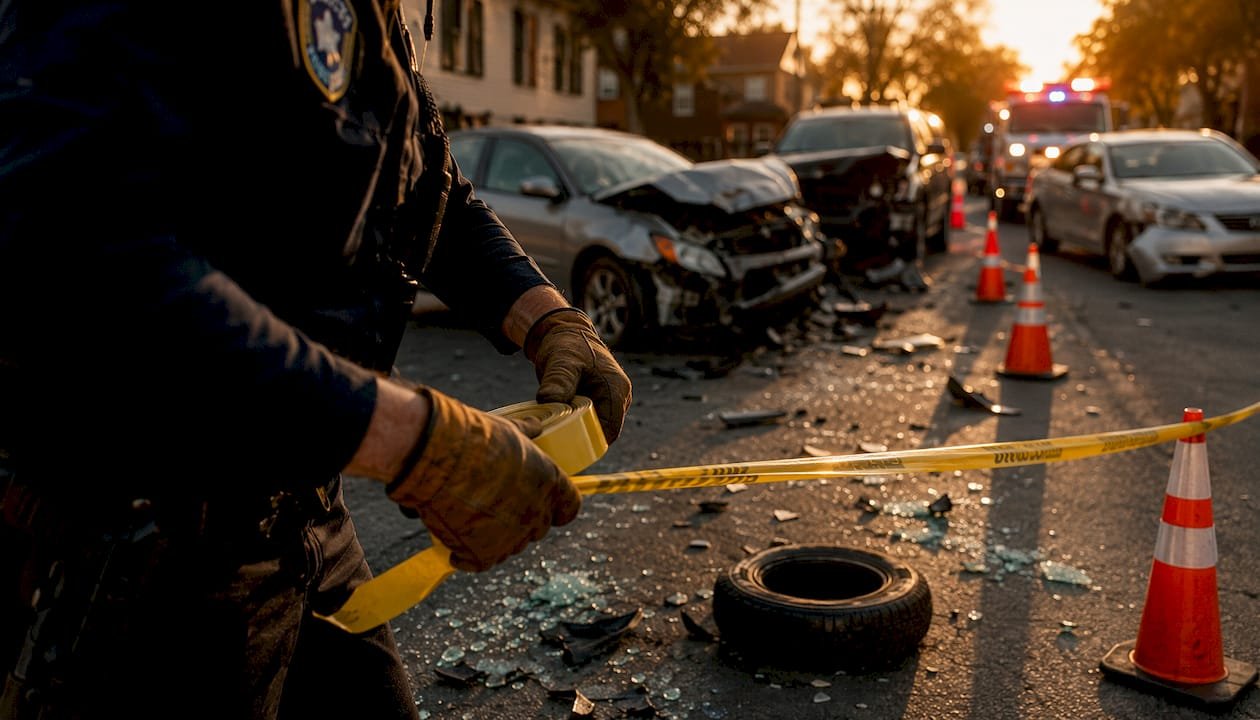
Accident scene preservation is the intentional act of preventing any alterations to a crash site so that physical evidence remains intact for forensic examination and legal proceedings. The moment a collision or incident occurs, a clock starts ticking. Tire tracks fade, fluid spills absorb into pavement, witnesses scatter, and weather moves in. Every minute without deliberate protection is a minute that evidence degrades.
The core goal is straightforward: keep the scene as close to its post-accident state as possible until trained investigators can document and collect what is there. That means preventing contamination, tampering, unauthorized movement of vehicles or debris, and accidental loss of trace materials.
Key types of evidence that preservation protects include:
- Physical marks such as skid marks, gouge marks, and ground scars
- Debris fields including vehicle parts, cargo, and broken glass
- Biological traces such as blood, tissue, and bodily fluids
- Electronic data from event data recorders and onboard systems
- Documents and records like shipping manifests or driver logs
The tools used to achieve this range from simple to specialized: caution tape and traffic cones to establish a perimeter, physical barriers to block unauthorized access, evidence markers and numbered placards, evidence bags and sealed containers, plastic sheeting to protect fragile marks from rain, and photography equipment for documentation.
Why preserving the accident scene is critical
The stakes of proper scene preservation extend well beyond the immediate aftermath of a crash. Investigators rely on the physical record of the scene to reconstruct exactly what happened, in what sequence, and why. Destroy that record, and you may never know the true cause.
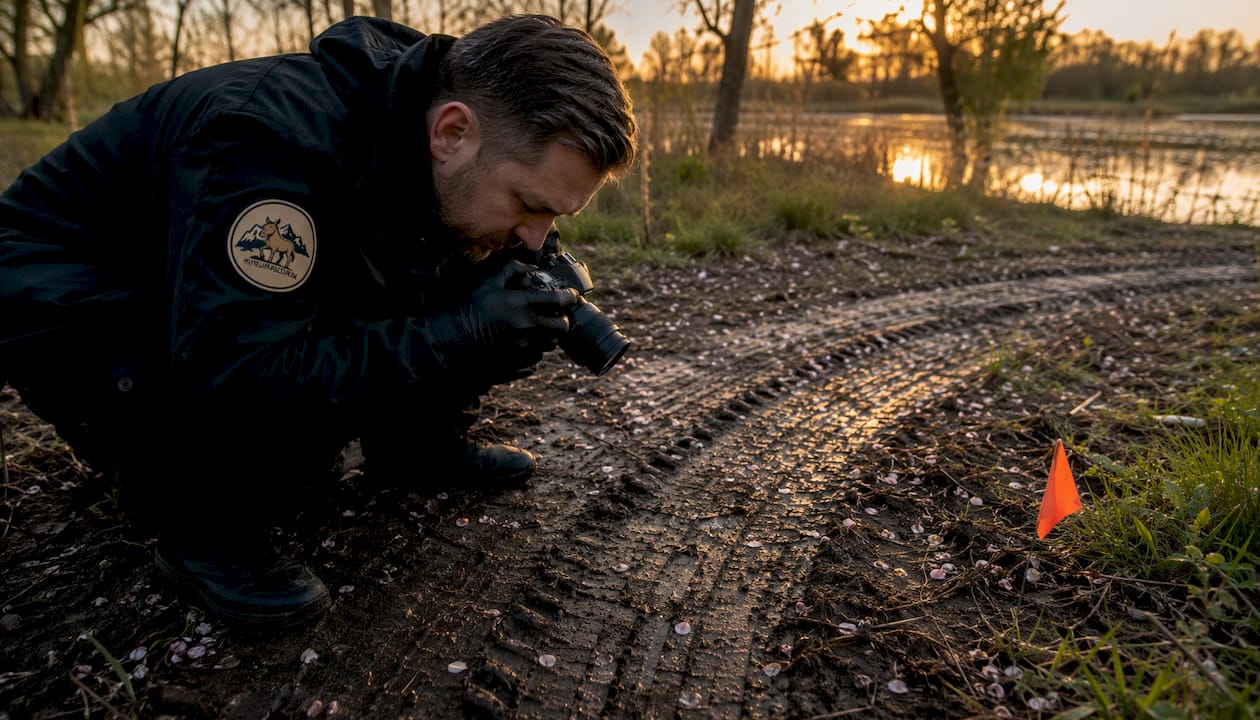
Evidence loss or contamination can collapse a case. A tire track washed away by rain, a vehicle moved before its position is recorded, a piece of debris kicked aside by a bystander: each of these can make it impossible to establish fault, speed, or point of impact. In personal injury litigation, evidence integrity is often the difference between a successful claim and a dismissed one.
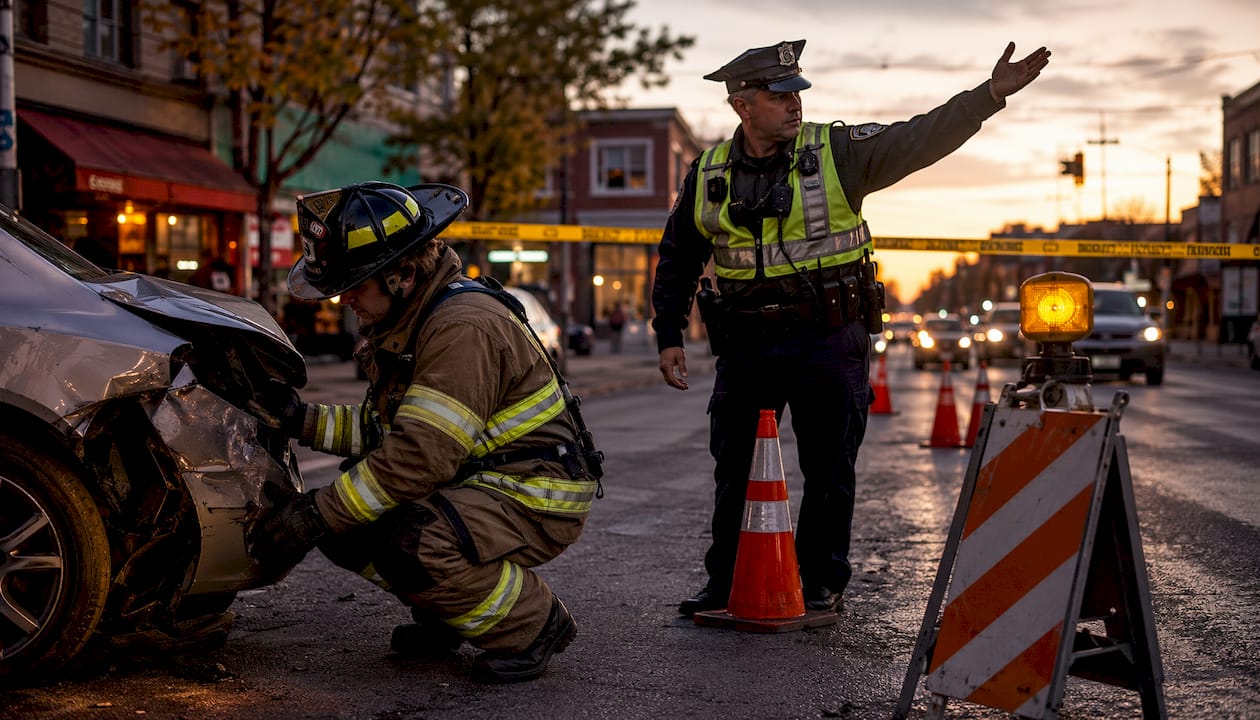
Safety is the other side of this. An unsecured scene creates secondary hazards: oncoming traffic, fuel spills, unstable vehicles, and exposed electrical systems all threaten responders and bystanders. Proper accident scene management means addressing those hazards while simultaneously protecting evidence, not treating the two as competing priorities.
Legal compliance adds another layer. Under OSHA regulations, evidence at the scene of a workplace accident resulting in a fatality or the hospitalization of multiple employees must be left untouched until inspectors have an opportunity to examine it, except where safety requires intervention. The Chemical Safety and Hazard Investigation Board similarly requires facility owners to maintain the post-accident status of a scene and protect all relevant evidence from alteration or removal.
Key reasons why preservation matters:
- Accurate event reconstruction depends on undisturbed physical evidence
- Legal claims and insurance disputes hinge on documented, uncontaminated proof
- Regulatory compliance with OSHA, NTSB, and CSB rules carries legal consequences
- Secondary accident prevention requires a controlled, secured perimeter
- Chain-of-custody integrity starts at the scene, not at the lab
Physical evidence is perishable. Recording tire tracks, debris fields, and fluid spills promptly is often the single most important step in any accident investigation, because these details change or disappear faster than any other evidence type.
How to preserve an accident scene: key steps and protocols
Preservation does not begin with evidence collection. It begins with people. Life safety comes first, always.
Step-by-step scene preservation protocol
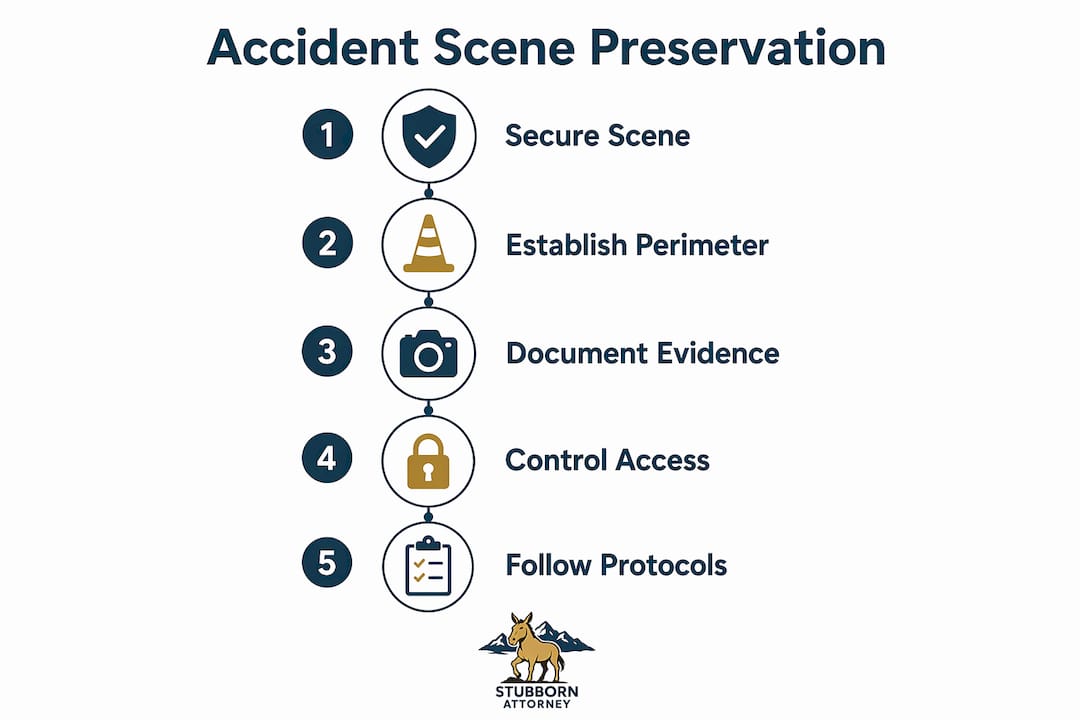
- Prioritize life safety. Render aid, call 911, and address immediate hazards like fire or fuel leaks before touching anything else. OSHA rules explicitly permit disturbing evidence when safety requires it, but that exception is narrow.
- Establish a perimeter. Use caution tape, traffic cones, and physical barriers to define the scene boundary. Make it larger than you think necessary. Debris fields and skid marks often extend farther than the obvious impact point.
- Control access. Allow only essential personnel inside the perimeter. Scene investigators should establish and verify physical boundaries and log all entries and exits, limiting movement to authorized individuals.
- Document before touching. Photograph everything from multiple angles and distances before any object is moved. Sketch the scene layout with measurements. Take written notes on conditions: weather, lighting, road surface, time of day.
- Mark evidence in place. Use numbered placards or evidence markers to identify items before collection. This creates a visual record that photographs can reference.
- Collect and package evidence. Physical evidence should be bagged and tagged at the time of collection. Each item gets its own sealed container to prevent cross-contamination. Label every package with a unique identifier.
- Establish chain of custody. Document every transfer of evidence, including the date, time, and name of the person receiving it. Chain of custody must be established at the point of collection and maintained through final disposition.
- Record vehicle positions before moving them. When vehicles must be relocated for safety, capture exact positions and critical settings such as airbrake positions before moving anything. These details directly affect reconstruction analysis.
- Address perishable evidence immediately. Biological fluids, tire tracks in soft soil, and chemical spills degrade fast. Prioritize documenting and collecting these before completing a full scene assessment.
- Call in specialists when needed. If evidence requires technical expertise beyond what is available on site, contact specialized personnel for consultation. Attempting to collect complex evidence without the right skills risks destroying it.
Pro Tip: Cover vulnerable evidence like tire tracks or biological traces with plastic sheeting before rain arrives. This simple step, using materials often available at any crash scene, can preserve critical details until investigators get there.
Common tools used at the scene:
- Caution tape and traffic cones for perimeter control
- Evidence markers and numbered placards
- Sealed evidence bags and non-porous containers for liquids
- Plastic sheeting for weather protection
- GPS devices for precise location mapping
- Cameras and video recorders for documentation
- Sketch pads, measuring tapes, and permanent markers
What role do first responders and bystanders play?
First responders carry the heaviest burden in the early minutes after a crash. Their first obligation is to preserve life, provide first aid, and stabilize hazards. But once those immediate needs are met, their role shifts directly to scene protection.
Police officers establish the perimeter and begin controlling access. Firefighters manage fuel spills and vehicle stability. Emergency medical technicians document patient conditions and the positions of victims before moving them. Each action, or inaction, shapes what investigators will find.
Bystanders matter more than most people realize. Trained individuals, such as those who have completed programs like Motorcycle First Responder, can manage scene safety, direct traffic, and protect evidence during the critical window before official responders arrive. That window typically runs five to thirty minutes, long enough for untrained bystanders to inadvertently destroy key evidence by walking through the scene, moving vehicles, or picking up debris.
Key responsibilities for first responders at the scene:
- Secure the perimeter immediately after life-saving activities are complete
- Prevent unauthorized personnel from entering the scene
- Document and photograph evidence before allowing any entry or movement
- Avoid disturbing ground scars, skid marks, or debris fields during operations
- Coordinate with investigators to hand off scene control properly
The first five minutes after a crash are often the most forensically valuable. Physical signs like tire marks and fluid trails begin degrading almost immediately, and a bystander who moves a vehicle or walks through debris can erase evidence that no photograph can fully replace.
For practical guidance on what to do in an event of a car accident and why you should hire an experienced attorney, the steps you take before police arrive can significantly affect your legal position later.
Legal and regulatory considerations for accident scene preservation
The legal framework governing scene preservation in the United States is built from several overlapping authorities, each with specific requirements and consequences for noncompliance.
OSHA sets the baseline for workplace accidents. Under 29 CFR 1960.29, any accident resulting in a fatality or the hospitalization of multiple employees triggers a mandatory investigation, and evidence must remain untouched until inspectors examine it. The investigative report must include photographs, measurements, witness interviews, and a full description of the accident.
The NTSB governs transportation accidents involving aircraft, trains, pipelines, and commercial vehicles. Its Transportation Accident Response Guide directs first responders to secure the scene and preserve evidence immediately after life-saving activities are complete, including protecting ground scars and marks made by vehicles.
The Chemical Safety and Hazard Investigation Board issues formal preservation orders for chemical accident sites. Facility owners who receive a Notice of Accident Investigation Initiation are legally required to maintain the post-accident state of the site and protect all relevant evidence from alteration, movement, or tampering.
OSAC standards from NIST provide the forensic science community with detailed requirements for on-scene collection and preservation of physical evidence, covering packaging, chain of custody, labeling, and storage.
Legal consequences of mishandling a scene include:
- Criminal obstruction charges if evidence is intentionally destroyed
- Civil sanctions for spoliation of evidence, which can result in adverse inference instructions at trial
- Regulatory fines and penalties under OSHA or CSB rules
- Loss of insurance coverage defenses when evidence of fault is destroyed
Under federal regulations, owners and operators of accident sites are required to preserve the scene to the maximum extent possible in its original post-accident state. This obligation extends to taking reasonable steps to protect evidence from third-party interference through appropriate security measures.
When exceptions apply, they are narrow. Safety interventions that require moving evidence are permitted, but the justification must be documented and the action recorded before it occurs whenever possible. Knowing what evidence matters in a legal claim helps you understand why these rules exist and what is at stake when they are ignored.
Expert insights on accident scene preservation best practices
Forensic and legal professionals consistently identify a few practices that separate thorough preservation from inadequate preservation, and the gap between the two can determine whether a case succeeds or fails.
That standard sounds simple. In practice, it demands discipline under pressure, because accident scenes are chaotic, weather does not wait, and the instinct to help often conflicts with the need to preserve.
Perishable evidence deserves special attention. Biological fluids, chemical residues, and tire impressions in soft ground can degrade within hours. Scene assessment must be dynamic: if evidence is at risk due to weather or environmental conditions, it must be documented and collected immediately, even before the full assessment is complete. Waiting for the “right moment” to collect perishable evidence often means losing it entirely.
Photography is one area where professionals see consistent mistakes. Every photograph taken at the scene, including blurry, poorly framed, or accidental shots, should be preserved. Digital enhancement can reveal details invisible to the naked eye, and deleting any image risks losing potentially critical evidence. The role of accident scene photos in a legal claim is often larger than people expect.
Best practices that experts consistently emphasize:
- Document continuously, not just at the start of the investigation
- Treat every photograph as potentially valuable, regardless of apparent quality
- Involve technical specialists early when evidence complexity exceeds on-site expertise
- Maintain chain-of-custody logs from the moment of collection through final disposition
- Re-evaluate scene boundaries as new information emerges
The legal implications of preservation quality are direct. Attorneys who handle personal injury cases know that a well-preserved scene produces evidence that holds up under cross-examination. A contaminated or disturbed scene produces disputes about what the evidence actually shows, and those disputes favor the party with fewer obligations to prove. Understanding why legal representation matters after an accident starts with understanding what good preservation makes possible.
If you were injured in an accident and want to know how the evidence from the scene affects your claim, Stubbornattorney offers a free case evaluation. The team at Malnar Injury Law has recovered millions of dollars for injured clients across Colorado, and they know exactly how insurers and agencies evaluate the physical record of a crash. Learn more about common personal injury cases and how scene evidence shapes each one.
FAQ
Why do you need to preserve an accident scene?
Preserving an accident scene protects physical evidence from contamination, loss, or alteration before investigators can examine it. Without that protection, reconstructing the cause of the accident becomes unreliable, and legal claims lose the factual foundation they depend on.
What are the four stages of an accident investigation?
The four stages are scene preservation and security, evidence documentation and collection, analysis and reconstruction, and reporting with findings. Preservation is the first stage because everything that follows depends on the integrity of what is collected.
What is the most practical way to secure an accident scene?
Establish a perimeter with caution tape or traffic cones immediately, control who enters, and photograph everything before moving any vehicle or object. Covering fragile evidence like tire tracks with plastic sheeting protects it from weather until investigators arrive.
What happens legally if an accident scene is disturbed?
Intentionally destroying evidence can result in criminal obstruction charges, while accidental disturbance can trigger spoliation sanctions in civil litigation, including court instructions that allow a jury to draw negative inferences against the responsible party. Under OSHA rules, evidence at qualifying workplace accidents must remain untouched until inspectors examine it.
Can bystanders help preserve an accident scene?
Yes. Bystanders can direct traffic away from the scene, prevent others from walking through debris, and cover vulnerable evidence with available materials like plastic sheeting. Trained individuals, such as those certified through programs like Motorcycle First Responder, can manage scene safety effectively during the critical window before official responders arrive.