
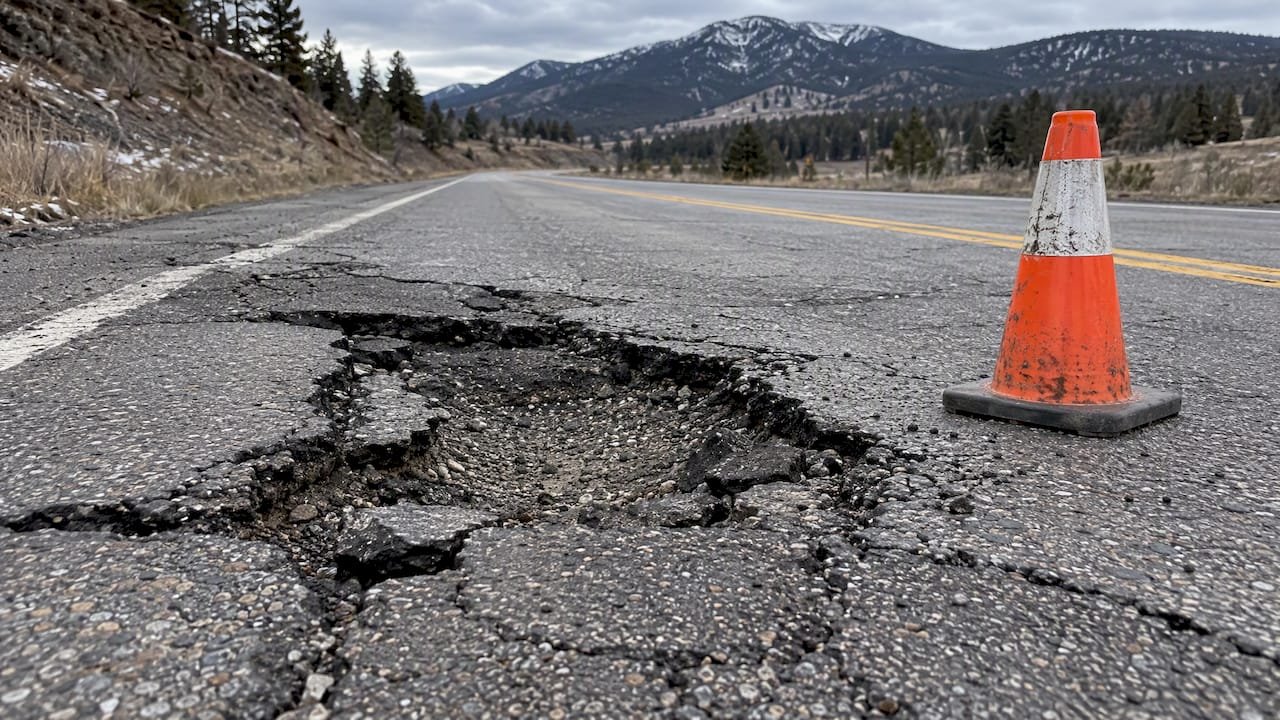
Colorado Road Hazard Claims: 182 Days to Notify the State
Recovery for pothole or road-hazard damage in Colorado is possible, but governmental immunity limits it to cases where the responsible agency knew or should have known about the hazard and failed to fix it. If a government road caused your damage, start now: photograph the defect with location details, keep every tow and repair receipt, notify your insurer, and if a state agency may be at fault, file written notice with the Colorado Attorney General within 182 days.
Table of Contents
- Who is liable: CDOT, your city or county, or a private owner
- Deadlines you cannot miss after a Colorado road hazard
- How to report the hazard and file a government claim
- Evidence that proves notice, causation, and damages
- Damages you can recover and how fault affects your payout
- What the state’s claim data shows about your odds
- Why acting fast and getting experienced help matters
- How we can help with your Colorado road hazard claim
- FAQ
- Sources
- Official forms, CDOT reporting, and statute links
Who is liable: CDOT, your city or county, or a private owner
Before you file anything, figure out who actually controls the road. The Colorado Department of Transportation maintains interstates and state highways, while cities and counties are generally responsible for local streets and roads within their borders. Filing with the wrong agency wastes time you do not have under the state’s notice deadline.
If the hazard sat in a parking lot or other private property, you are usually looking at a private tort claim against the property owner or manager, not a government claim at all, and the governmental-immunity rules described below do not apply the same way.
- Check whether the road is an interstate, US highway, or state route (likely CDOT) versus a city street or county road.
- Use the mile marker, cross street, or GPS pin to pinpoint exactly where the damage happened.
- Search the relevant city or county public-works website to confirm who handles maintenance in that stretch.
Deadlines you cannot miss after a Colorado road hazard
Colorado law gives you two very different clocks, and missing either one can end your claim before it starts. For any claim against the State of Colorado, written notice must reach the Attorney General’s office within 182 days of the incident under C.R.S. § 24-10-109. That notice has to be the actual New Claim Form, printed, signed, and mailed or hand-delivered; submitting the online version alone does not file your claim.
Separately, Colorado’s general civil statute gives you three years from the date of the accident to file a lawsuit over motor-vehicle injury or property damage under C.R.S. § 13-80-101.
- 182 days: written notice deadline for any claim against a Colorado state agency.
- The ordinary lawsuit deadline is separate from the government-claim notice deadline.
- Your auto insurer may require notice within days or weeks under your own policy, regardless of these statutory deadlines.
The 182-day window is far shorter than most drivers expect, and it applies even when your damage seems minor, according to SORM’s claims process.
How to report the hazard and file a government claim
Filing correctly matters as much as filing on time. Here is the order that keeps you inside the deadlines and builds a record SORM can actually evaluate.
- Identify the road’s owner (CDOT, city, or county) using mile markers or street signage.
- Report a state-road hazard to the applicable CDOT regional hotline: Region 1 (Denver Metro/Central), 303-759-2368; Region 2 (Southeast), 719-562-5568; Region 3 (Northwest), 970-243-2368; Region 4 (Northeast), 970-350-2368; Region 5 (Southwest), 970-385-1423.
- Report a city or county road to that local government’s public-works or roads department.
- For a potential state claim, obtain the New Claim Form from SORM, print it, sign it, and mail or hand-deliver it to the Attorney General’s office within 182 days.
- Keep a copy of everything you submit, including the date and method of delivery.
Once SORM receives your signed notice, the agency assigns a claim file and an adjuster, who investigates the incident and may request additional documentation before reaching a settlement or denial.
- Do not assume an online submission or phone report satisfies the written-notice requirement for a state claim.
- Follow up in writing if you do not hear from an assigned adjuster within a reasonable time.
Evidence that proves notice, causation, and damages
Your claim lives or dies on proof that the agency knew about the hazard and that it caused your specific damage. Collect evidence immediately, before the pothole gets patched or the scene changes.
- Take wide shots and close-ups of the defect, including something for scale, plus photos or video of the vehicle damage with timestamps, GPS coordinates, or a mile marker.
- Save tow receipts, repair invoices, itemized parts lists, and written repair estimates, and keep the original documents.
- Collect witness names and contact information, any police or crash report, medical records if you were injured, and records of prior complaints about the same hazard.
A Colorado Open Records Act request can surface prior complaints or repair logs for the same stretch of road, which is often the strongest evidence that an agency had notice and failed to act.
Pro Tip: Photograph the hazard from your car window before you pull over, since road crews sometimes patch dangerous spots within hours of a reported accident.
Damages you can recover and how fault affects your payout
A successful claim may cover repair costs, towing, diminished vehicle value, and medical bills or related losses if you were hurt. What you actually collect depends on the facts and applicable fault rules.
- Repair costs, towing fees, and documented diminished value are the core property-damage categories.
- Medical bills, lost wages, and pain and suffering come into play when the hazard caused an injury, not just vehicle damage.
- Colorado applies modified comparative negligence, which can reduce your recovery based on your share of fault.
Notify your auto insurer promptly and separately from any government claim. Insurance notice deadlines are typically much shorter than the three-year lawsuit window and operate independently of the 182-day government notice rule.
What the state’s claim data shows about your odds
SORM’s investigation hinges on one question: did the responsible agency have actual or constructive notice of the hazard and fail to repair it within a reasonable time? Photographic evidence alone rarely settles that question without proof of when the hazard was reported and how the agency responded.
Few claims actually get paid. Publicly reported figures show that in one fiscal year, only 2 of 500 state-road vehicle-damage claims were paid, totaling $2,414, while the two prior fiscal years saw 14 of 1,458 claims paid, totaling $48,870.
| Period | Claims filed | Claims paid | Total paid |
|---|---|---|---|
| Cited fiscal year | 500 | 2 | $2,414 |
| Prior two fiscal years combined | 1,458 | 14 | $48,870 |
Claims that do succeed tend to share the same traits: documented prior reports of the same hazard, a clear timeline between notice and the agency’s response, and solid photographic and repair evidence tying the damage directly to that defect.
Why acting fast and getting experienced help matters
Having handled government-claim processes, we know how agencies and insurers evaluate these files. The 182-day notice requirement is unforgiving, and a late form can end a claim regardless of how strong the underlying evidence is.
If your damage is significant, you suffered an injury, or your insurer is not cooperating fully, that complexity is exactly when a free case evaluation is worth requesting before a deadline passes.
— Ryan
How we can help with your Colorado road hazard claim
Meeting a 182-day notice deadline while documenting repair costs and negotiating with an insurer is a lot to manage on top of getting your car fixed. We handle Car Accidents, vehicle damage claims, and related personal-injury matters across Colorado, and our case evaluation gives you a clear read on your claim before any deadline runs out.
- We built our process around how government claims and insurance adjusters actually evaluate files, drawing on direct experience on the adjuster side.
- Our contingency-fee representation means you owe nothing unless we recover compensation for you.
- We handle the SORM paperwork, evidence preservation, and insurer communication so you are not racing the clock alone.
If a pothole or dangerous road condition damaged your vehicle or caused an injury, reach out through our services page for a case evaluation before your notice window closes.
This article is general information, not a substitute for advice from a qualified lawyer. Consult a qualified legal professional about your own circumstances before acting on anything here.
FAQ
Is it ever too late to file an insurance claim?
Insurance policies set their own notice deadlines, often just days or weeks after an incident, so late reporting can jeopardize coverage. Check your policy’s notice terms immediately and report the damage as soon as possible.
Can I get reimbursed if a pothole damages my car?
Reimbursement is possible if the responsible government agency had notice of the pothole and failed to repair it within a reasonable time, though SORM data shows payouts are uncommon. You must file written notice with the correct agency within 182 days for a state-road claim.
Can you claim for damage caused by a pothole?
Yes, but governmental immunity limits claims to situations where the agency knew or should have known about the defect and did not fix it in time. Success depends on strong evidence of the hazard’s location, prior complaints, and documented repair costs.
Is Colorado a no-fault insurance state?
No, Colorado is an at-fault state, and claims are resolved under modified comparative negligence, which reduces your recovery by your share of fault. Your share of fault can affect whether and how much you recover.
Sources
Official forms, CDOT reporting, and statute links
- CDOT pothole repair reporting
- SORM liability claims process
- Colorado car accident lawsuit deadlines
- Submit a new claim, SORM
- CDOT pothole repairs and regional hotlines
- Colorado Open Records Act request