

Colorado’s Rear-Facing Car Seat Rules Parents Must Follow
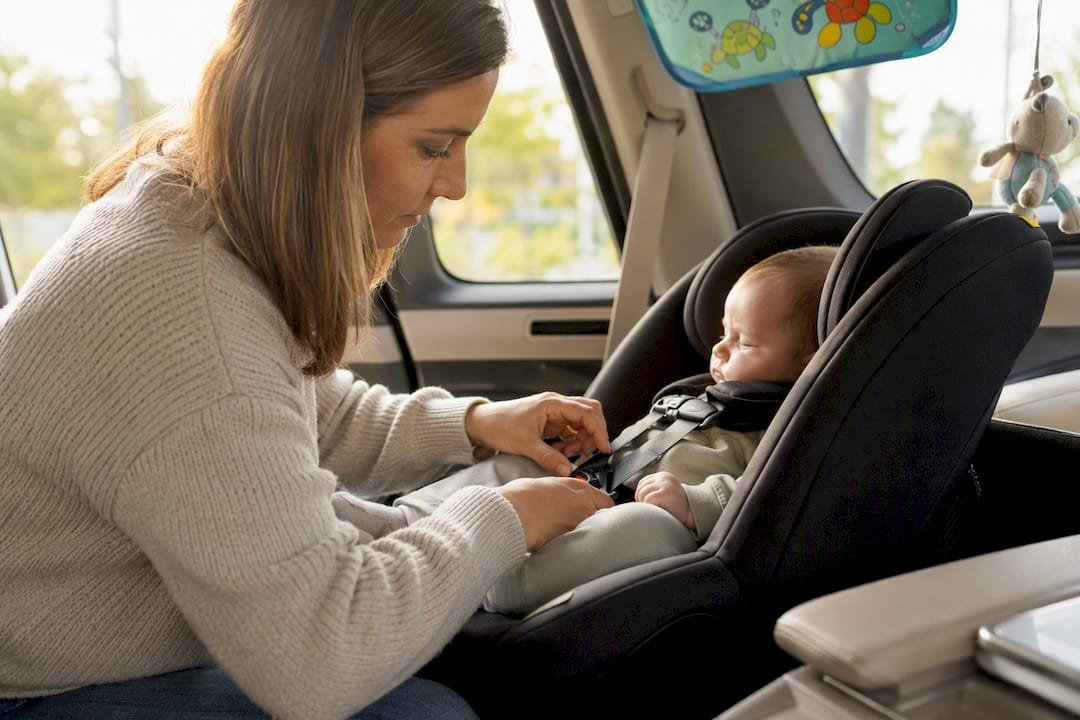
Colorado law requires children under 2 years old who weigh less than 40 pounds to ride rear-facing in the back seat, if one is available, under HB24-1055, which took effect January 1, 2025. That’s the floor, not the finish line. The Colorado Department of Transportation and safety groups nationwide still recommend keeping kids rear-facing until they outgrow the seat’s height or weight limit, which for many convertible seats runs well past a child’s second birthday.
Here’s the compliance snapshot:
- Under 2 and under 40 lb: rear-facing car seat, back seat if available.
- Under 9: must ride in the back seat if the vehicle has one.
- Child restraint violations: treated as a primary offense, meaning an officer can pull you over for this alone.
- Manufacturer limits control fit and installation, even when they exceed the legal minimum.
Law update: HB24-1055 raised the rear-facing threshold from under 1 year/20 pounds to under 2 years/40 pounds, effective January 1, 2025.
Table of Contents
- Rear Facing Car Seat Laws in Colorado, by Age and Weight
- When Should You Actually Switch From Rear-Facing?
- What Happens if You’re Stopped for a Car Seat Violation?
- Exceptions: Front Seats, RVs, and Childcare Vehicles
- Where Colorado Parents Can Get Help
- Why This Law Matters Beyond the Ticket
- Sources
- FAQ
Rear Facing Car Seat Laws in Colorado, by Age and Weight
Colorado’s child passenger safety statute breaks down by developmental stage, and the numbers changed significantly under the 2025 update. Before HB24-1055, the rear-facing requirement applied only to children under 1 year old and under 20 pounds. Lawmakers doubled both thresholds, matching Colorado’s rule closer to what pediatric safety researchers had been recommending for years.
| Age / stage | Legal requirement | Seat type |
|---|---|---|
| Under 2 years AND under 40 lb | Rear-facing car seat, back seat if available | Rear-facing only |
| 2 to 4 years | Rear- or forward-facing seat, back seat if available, based on weight and manufacturer limits | Rear- or forward-facing |
| 4 to 8 years (or until 4’9") | Forward-facing seat or booster, depending on size | Forward-facing/booster |
| Under 9 years | Must ride in back seat if one is available | Any age-appropriate restraint |
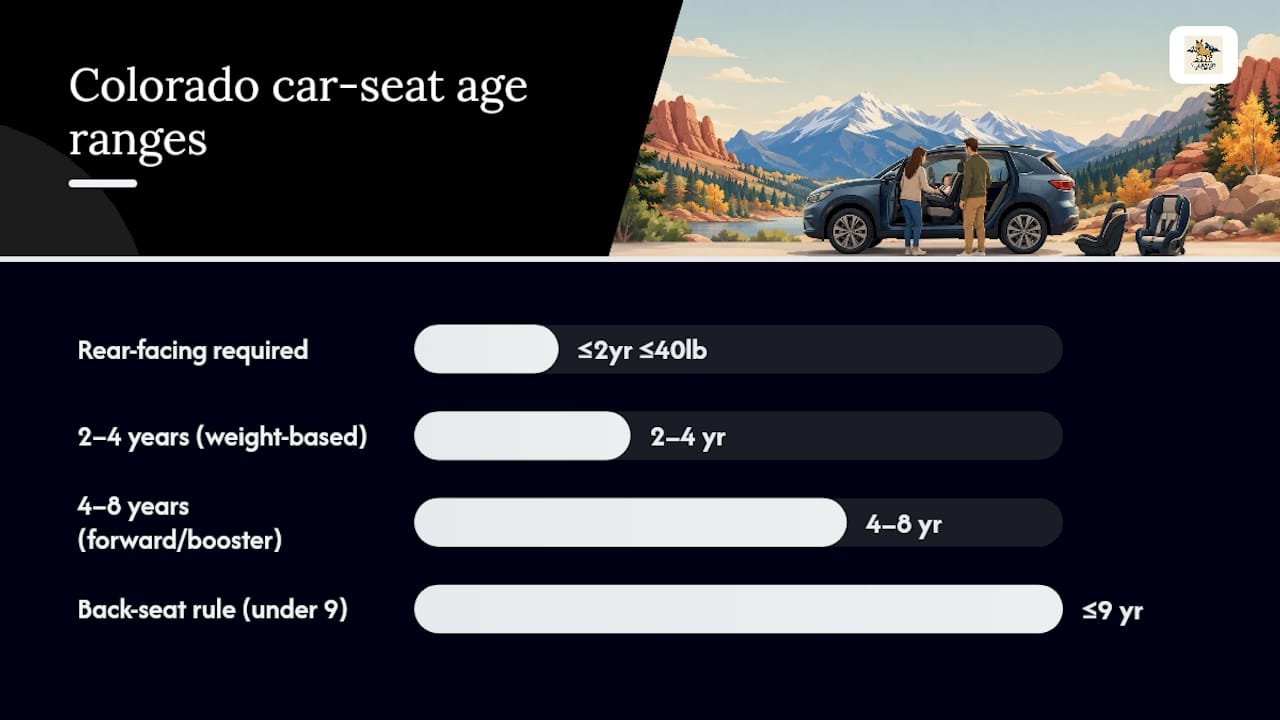
The Colorado Department of Public Health and Environment notes that once a child passes the 2-year/40-pound mark, the law shifts to a forward-facing-or-rear-facing decision tied to the specific seat’s weight rating rather than a hard age cutoff. That’s a meaningful nuance: two kids born the same week could legally sit differently in the car depending on how much they weigh and which seat they’re in.
A quick example. Say your child just turned 22 months and weighs 28 pounds. Colorado law still requires rear-facing, because the child hasn’t hit either the age or weight threshold yet. Now flip it: a 26-month-old weighing 42 pounds has aged past the mandatory window and exceeds the weight cutoff too, so the family moves into the 2 to 4 age bracket, where the manufacturer’s own seat limits take over.
HB24-1055 didn’t stop at rear-facing rules. It also raised the required safety-belt and restraint age from under 16 to under 18, closing a gap that had left older teens without a clear statutory restraint requirement. For families with kids spanning several age groups, that’s one more reason to treat this law as a whole-vehicle policy, not just an infant-seat rule.
When Should You Actually Switch From Rear-Facing?
Colorado’s statute sets the legal minimum, but the National Highway Traffic Safety Administration and the American Academy of Pediatrics both recommend keeping children rear-facing as long as the seat allows, regardless of what the calendar says. Many convertible seats on the market today have rear-facing weight limits of 40 to 50 pounds, which means a lot of 3 and 4 year olds could legally and safely stay rear-facing far longer than the statute requires.
Three checks tell you when it’s actually time to switch:
- Check the weight label on the seat shell. If your child is under that number, rear-facing still works.
- Check head position. Once the top of your child’s head comes within an inch of the top of the seat shell, it’s time to move up.
- Check the manual. Manufacturer instructions override general guidance whenever the two conflict.
Loose harness straps and incorrect belt routing are among the most common mistakes technicians find during inspections, according to NHTSA’s installation guidance. Before every drive, pinch the harness at the shoulder. If you can pinch excess webbing, tighten it. The chest clip should sit level with the armpits, not the belly or the neck.
Pro Tip: If you’re shopping for a new seat, consider a convertible or all-in-one model. They typically allow rear-facing well past the legal minimum, which means you won’t need to buy a second seat just to keep your toddler rear-facing longer.
If you’re ever unsure about a fit, CDOT’s installation videos and local inspection events give you a free second opinion before you ever hit the highway.
What Happens if You’re Stopped for a Car Seat Violation?
Child restraint violations in Colorado are a primary offense, which means an officer can stop your vehicle for this issue alone, without any other traffic violation involved, according to the Colorado State Patrol. That’s different from some other states, where restraint laws are secondary and only get enforced alongside another citation.
What typically happens at a stop:
- You’ll likely receive a ticket if the restraint doesn’t match the legal requirement for your child’s age and weight.
- If a crash occurs and a child is injured due to improper restraint, additional charges or liability issues can follow, separate from the base citation.
- If your seat is properly installed, calmly show the officer the manufacturer label and your child’s height/weight to demonstrate compliance.
- After any professional car seat check, snap a photo of the harness and installation. It’s a small habit that can serve as useful documentation later.
Exceptions: Front Seats, RVs, and Childcare Vehicles
A few situations don’t fit neatly into the standard age/weight table. Front-seat placement is allowed only when the vehicle has no usable back seat, and only if both the car seat and vehicle manuals permit it. Never place a rear-facing seat in front of an active airbag; if a front seat is your only option, move it as far back as it will go.
- No back seat available: front seat allowed only if both manuals approve it and airbags are managed correctly.
- RVs: exemptions can apply, but a child riding in the front passenger seat of an RV still needs proper restraint.
- Childcare vehicles: providers transporting children must follow the same restraint laws as any other driver.
- Ride-share and cabs: always check that your own seat is compatible with the vehicle before relying on a driver’s setup.
Where Colorado Parents Can Get Help
You don’t have to figure this out alone. The CDPHE car seat safety page and CDOT’s child passenger safety resources both list local inspection events, installation videos, and printable guides. For a hands-on check, a certified Child Passenger Safety Technician can catch harness or routing errors most parents miss on their own.
- Read the full HB24-1055 bill text for the exact statutory language.
- Review NHTSA’s car seat recommendations for manufacturer-based guidance.
- Find a local inspection station through CDOT before a long trip.
Why This Law Matters Beyond the Ticket
Car seat compliance isn’t paperwork, it’s the difference between a survivable crash and a tragic one. I’ve spent years handling injury cases across Colorado, and the ones involving kids stay with you. When a family calls us after a crash and a child was hurt, restraint questions come up fast, both from insurance adjusters and sometimes from law enforcement. If your child was injured in a crash and you have questions about your rights, Stubbornattorney offers a free case review to walk you through what comes next.
This article is general information, not a substitute for advice from a qualified lawyer. Consult a qualified legal professional about your own circumstances before acting on anything here.
Sources
- Car seat safety | Colorado Department of Public Health and Environment
- HB24-1055 Child Passenger Safety & Education | Colorado General Assembly
- Colorado Child Passenger Safety Law | Colorado Department of Transportation (CDOT)
- Car seat recommendations for children by age/size | NHTSA
FAQ
When can a toddler face forward in a car seat in Colorado?
A child can face forward once they turn 2 years old and weigh at least 40 pounds, though many convertible seats allow rear-facing beyond that point and experts recommend waiting until the seat’s limit is reached.
What are the booster seat laws in Colorado?
Children generally move to a booster once they outgrow their forward-facing harness seat, typically around 4 to 8 years old or 4’9" tall, and must still ride in the back seat if one is available until age 9.
When should I switch my child to a rear-facing car seat, and when should I move them out of one?
Move a child into a rear-facing seat from birth and keep them there until they hit the seat’s printed height or weight limit, not simply their second birthday, since manufacturer limits often exceed the legal minimum.
What’s the height and weight requirement for a booster seat in Colorado?
Colorado law doesn’t set one fixed number for booster use; it depends on when a child outgrows their forward-facing harness seat, which manufacturers typically rate up to around 40 to 65 pounds depending on the model.