
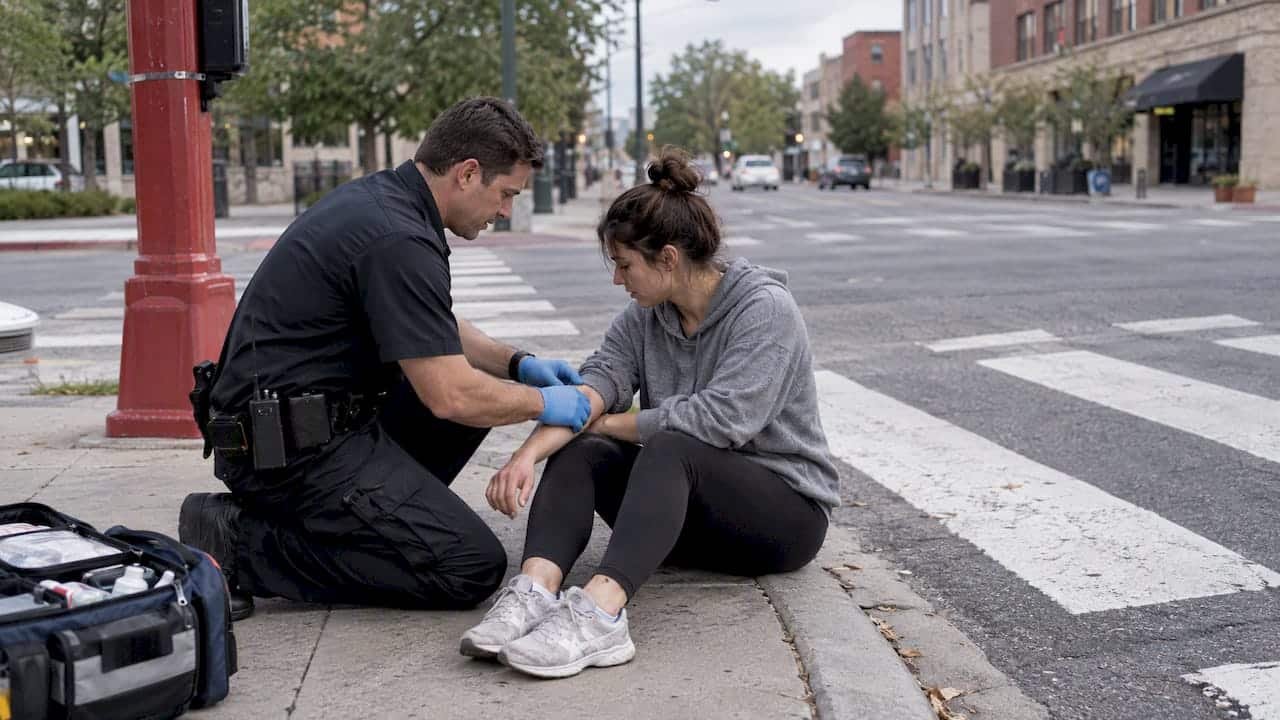
Pedestrian Hit-and-Run in Colorado: Your Rights and Next Steps
If a driver hit you on foot in Colorado and drove away, you still have options. Get medical care first, report the crash to police, and protect the evidence. You may also be able to recover compensation even if the driver is never identified, most often through your own uninsured/underinsured motorist (UM/UIM) coverage. Colorado law treats fleeing a crash that injures someone as a crime, and the civil deadline to file a claim is generally three years. Acting early protects both.
This guide walks through what to do at the scene and in the days after, what the driver was legally required to do, what penalties a fleeing driver faces, and how injured pedestrians pursue compensation when there is no driver to sue. We are a Colorado Springs personal injury firm, so we also point out where a lawyer’s help changes the outcome.
Table of Contents
- What to do right after a pedestrian hit-and-run
- Evidence that disappears quickly
- What Colorado law required of the driver
- Penalties for a driver who flees
- How to get paid when the driver is never found
- If the driver is found
- Deadlines you should know
- Mistakes that weaken a hit-and-run claim
- Our perspective
- How we can help
- FAQ
- Sources
What to do right after a pedestrian hit-and-run
The first minutes after a crash are confusing, painful and often frightening. You do not have to do everything perfectly. You only need to do the few things that matter most, in roughly this order.
- Get to safety if you can, and only if you can. If you can move without making an injury worse, get out of the roadway and onto a sidewalk or shoulder. If you are badly hurt or cannot move, stay where you are and signal for help. Moving with a back, neck or head injury can make things worse.
- Call 911. Tell the dispatcher you were hit by a vehicle that left. Give your location, any description of the vehicle you remember, and which direction it went. A call made within minutes gives police the best chance of finding a car while it is still on the road.
- Accept medical care, even if you feel “fine.” Adrenaline hides pain. Head injuries, internal bleeding, fractures and soft-tissue injuries can show up hours or days later. A paramedic or emergency room record made the same day also ties your injuries to the crash, which matters when an insurer later questions it.
- Write down or record what you remember. Do it as soon as you are able, or ask a friend or family member to do it for you. Include the vehicle’s color, make, body style (pickup, SUV, sedan), any part of a license plate, damage you saw, the driver if visible, and the time and place.
- Ask witnesses to stay. Get names and phone numbers from anyone who saw the crash or the vehicle leave. Bystanders often remember details that you cannot, because you were the person who was hit.
- Keep every medical record. Bills, discharge papers, prescriptions and treatment instructions all belong in one folder. They document both the injury and the cost, and you will need them for any claim.
If you are reading this days after the crash and did none of these things, you have not lost your claim. Report it to police now, see a doctor now, and start collecting what you can. Our own checklist for Colorado car accident victims covers many of the same steps in more detail, and much of it applies to pedestrians too.
Evidence that disappears quickly
A hit-and-run case is built on pieces of evidence that are easy to lose. In a crash where the driver is gone, the evidence often decides whether the driver is ever found and how well your claim holds up.
An analysis of vehicle-pedestrian collisions in Plaintiff Magazine lists the kinds of material that matter: the collision report, scene photographs and measurements, photographs and inspection of the vehicle damage, EMS and medical records, injury photographs, and statements from all parties and witnesses. The same article warns that vehicle and roadway evidence can change quickly through repairs, weather, traffic and construction. That is a good reason to move fast.
Here is how that looks in practice for a pedestrian.
- Photographs. If you or someone with you can take them, photograph the intersection or road, any skid marks, debris from the vehicle (broken lights, mirror housings, bumper fragments), your torn or damaged clothing and phone, and your injuries. Photograph injuries again over the following days as bruising develops.
- Surveillance video. Businesses, apartment buildings, traffic cameras and doorbell cameras can overwrite footage within days or weeks. Note any camera that could have captured the road, and ask the owner to preserve the video. Tell the investigating officer about it as well.
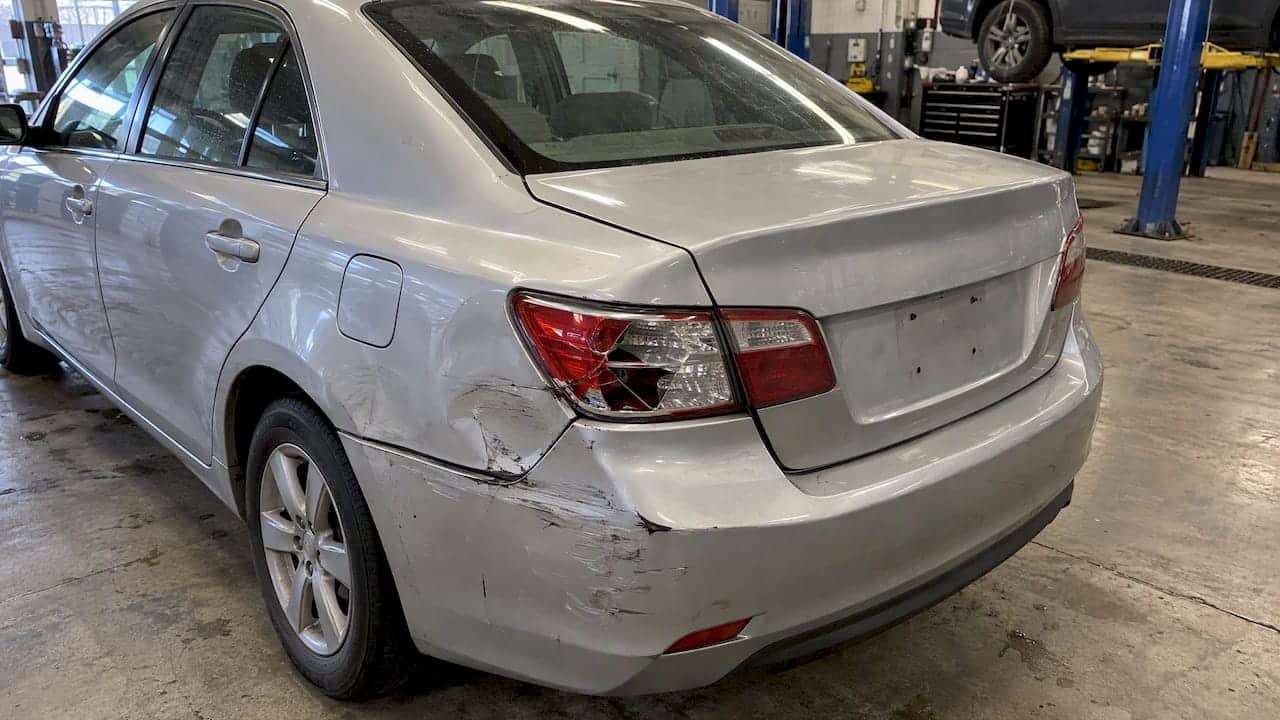
- Vehicle parts. Fragments left at the scene can identify the make, model and year of the car. Tell police where they are, and do not take them home unless an officer tells you to.
- Your clothing and belongings. Keep what you were wearing, unwashed, in a bag. Transfer marks and damage can help show the point of impact.
- Witness details. Memories fade quickly. A short written statement from a witness, made soon after, is far stronger than a recollection a year later.
- A police report number. Ask for it before the officer leaves, and write down the officer’s name and agency. Insurers, including your own, will usually ask for it.
The same Plaintiff Magazine piece describes the issues a reconstruction usually turns on: where the impact happened, how fast the vehicle and the pedestrian were moving, the pedestrian’s orientation, and whether the crash was avoidable. When a driver flees, those questions are harder to answer, which is why the early scene evidence matters so much.
What Colorado law required of the driver
A driver who hits a person in Colorado cannot lawfully drive away. Under C.R.S. 42-4-1601, a driver directly involved in a crash that causes injury, serious bodily injury or death must stop at the scene or as close to it as possible, or return immediately, and remain there until meeting the duties set out in section 42-4-1603(1). Those duties include giving name, address and vehicle registration information, and rendering reasonable assistance to anyone injured, such as arranging transport to a hospital.
Notice what this means for your situation. A driver who hit you and left did not make a mistake in a moment of panic that the law forgives. Leaving is itself a separate offense, and it is a more serious one when someone is hurt.
The Colorado Supreme Court also addressed what a prosecutor must prove. In People v. Manzo (2006), the court treated leaving the scene of a crash involving serious bodily injury as a strict liability offense. In plain terms, the driver does not need to have known that the injuries were serious to be guilty. A driver who says “I thought I just hit a pothole” or “I didn’t realize how badly she was hurt” does not escape the charge for that reason.
If you want a broader look at what the law expects from drivers after a crash, we have written a separate page on what Colorado law requires after a hit and run.
Penalties for a driver who flees
People often search for the punishment first, because they want to know whether the driver will be held responsible. Colorado’s statute grades the offense by how badly someone was hurt. According to C.R.S. 42-4-1601:
| Result of the crash | Offense for a driver who fails to stop |
|---|---|
| Injury | Class 1 misdemeanor traffic offense |
| Serious bodily injury | Class 4 felony |
| Death | Class 3 felony |
A conviction also carries a mandatory revocation of the driver’s license. Separately, C.R.S. 42-2-127.9 lets the Department of Revenue suspend a license if it determines, by a preponderance of the evidence, that the person drove a vehicle in a crash causing serious bodily injury or death and failed to stop or return to the scene. That administrative step does not depend on a criminal conviction.
Two points matter for you as the injured person.
First, the criminal case belongs to the state. A prosecutor decides whether to charge, and a conviction punishes the driver. It does not pay your medical bills or replace lost wages. Compensation comes through a separate civil claim or an insurance claim.
Second, a fleeing driver’s conduct can affect the civil side. If the driver is found and is also facing charges, that can shape how the case unfolds. Still, you do not have to wait for a criminal case to end before looking into your own options. Talking to an attorney early helps you coordinate the two without saying something that harms your claim.
How to get paid when the driver is never found
This is the question that worries most hit-and-run victims: if nobody can be identified, who pays? The answer in many cases is insurance you already have.
Uninsured/underinsured motorist coverage
The Colorado Division of Insurance explains that UM/UIM coverage pays for bodily injury losses caused by a hit-and-run driver. The coverage is optional in Colorado, but it is built into policies by default: the Division notes it is automatically included unless the policyholder rejects it in writing. The Colorado General Assembly describes the same rule, saying insurers must provide it at the policyholder’s bodily-injury liability limit unless rejected in writing, and that a policyholder may choose less coverage or reject it.
A pedestrian can often claim under UM/UIM coverage even though no car of theirs was involved. Whether you qualify depends on the wording of the policy. Policies commonly extend UM/UIM protection to the named insured and to resident family members, and it can apply when you are on foot. Read your own declarations page, or ask the carrier or your agent, and check whether you or a family member in your household holds a policy.
If you do not own a car, look at policies belonging to relatives you live with. That is a common place to find coverage that people overlook.
Reading the policy before you call the insurer
Before you give any recorded statement, get the actual policy language. Many people only discover the limits and exclusions after a claim is already under way. An insurance agency’s auto insurance coverage guide can help you understand how different coverages fit together, such as liability, UM/UIM, and medical payments, so you know what to ask your carrier for. When you have a lawyer, we can request the policy information for you.
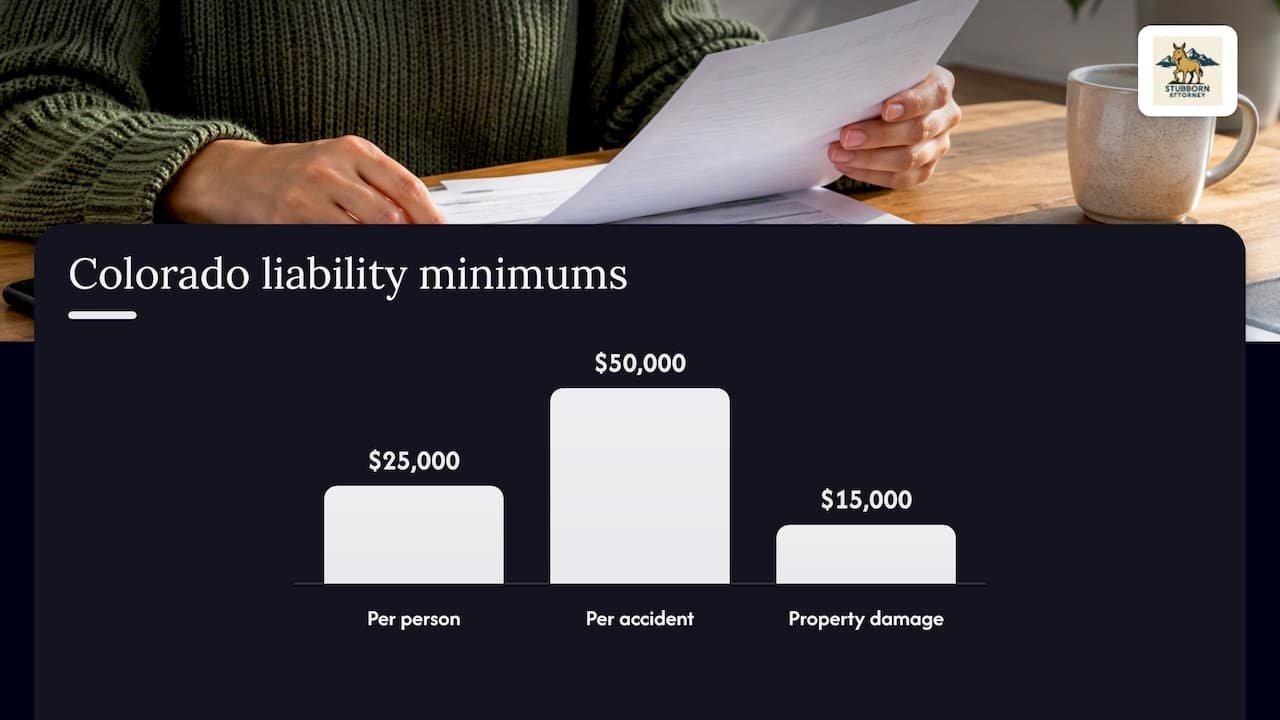
The Division of Insurance also lists Colorado’s required liability minimums: $25,000 per person, $50,000 per accident and $15,000 for property damage. Those are minimums. Serious pedestrian injuries often cost far more than $25,000, which is why the coverage you carry yourself can matter as much as what a driver carries.
What the claim looks like
A UM/UIM claim is a claim against your own insurer, but it is not always friendly. The carrier steps into the shoes of the missing driver and will look for reasons to pay less. Typical points of dispute include whether a vehicle really hit you, whether the injuries were caused by the crash, whether treatment was reasonable, and whether you reported promptly. This is why a prompt police report and same-day medical records carry so much weight in hit-and-run claims. Some policies also have specific notice requirements for hit-and-run claims, so read yours or ask a lawyer to.
You should not have to guess at all this while recovering from injuries. Our page on why you might need a pedestrian accident lawyer explains where the process tends to get complicated.
If the driver is found
Some hit-and-run drivers are identified, through a witness, camera footage, a damaged vehicle at a repair shop or a tip. When that happens, a civil claim against the driver becomes possible, usually through the driver’s liability insurance. That claim can cover your economic losses, such as medical bills and lost income, and noneconomic losses, such as pain and suffering.
Colorado recently raised its limits on these damages. According to the legislature’s page for HB24-1472, for civil actions filed on or after January 1, 2025, the cap on noneconomic damages in tort actions is $1.5 million, and the wrongful death cap is $2.125 million. Both are set to adjust for inflation every two years starting January 1, 2028. If a pedestrian dies in a hit-and-run, the family may have a wrongful death claim, and these figures apply to it.
A driver who fled may also have been uninsured, which is one reason people flee. In that case your UM/UIM coverage again becomes the main source of recovery. If the driver was driving for work, there may be an employer or a commercial policy involved, and that changes the picture. A lawyer can look into it. If you were hit by a commercial vehicle, see our overview of commercial vehicle crashes in Colorado.
For a broader look at the kinds of claims that can arise after a vehicle crash, our guide to types of car accident claims in Colorado is a good companion read.
Deadlines you should know
The most important deadline for most injured pedestrians is the statute of limitations. Colorado’s law for motor-vehicle tort actions says a claim for bodily injury or property damage must be commenced within three years after the cause of action accrues, and it accrues when the injury and its cause are known or should have been known with reasonable diligence. The same act addresses uninsured motorist actions, which generally must be commenced or demanded within three years after accrual, subject to specific exceptions.
Deadlines for other situations can differ. Claims for a death, claims against a government entity, and policy notice requirements may follow shorter or different rules. If your case involves a death, a city or state vehicle, or a road defect, speak to an attorney promptly instead of relying on the three-year figure.
The Colorado General Assembly’s own legislative memorandum explains the reasoning behind these limits: they are meant to encourage swift legal action, so that physical evidence and eyewitness testimony stay reliable. That fits what we see in hit-and-run cases. Three years is the outer limit. The practical window to find video, locate witnesses and build a strong UM/UIM claim is much shorter.
Mistakes that weaken a hit-and-run claim
Most problems we see come from understandable decisions people made while hurt and overwhelmed.
- Skipping the police report. Without a report, an insurer can question whether the crash happened as you describe. Report it even if you were not taken to the hospital.
- Waiting to see a doctor. Gaps between the crash and first treatment give insurers room to argue the injury came from something else.
- Giving a recorded statement too early. Insurers may ask for one within days. You are not required to speak on the spot, and a casual remark like “I’m okay” can be used later.
- Posting about the crash. Social media posts and photos can be used to downplay your injuries. Keep the details to the people who need them.
- Not telling your insurer promptly. Some policies require quick notice of a hit-and-run. Check your policy language.
- Accepting a fast offer. An early settlement offer may not account for future treatment. Once you sign a release, the claim is generally over.
- Letting the evidence expire. Video gets overwritten. Vehicles get repaired. Ask for preservation early.
Our perspective
A hit-and-run is a double injury. First the crash, and then the feeling that the person responsible simply walked away. Many of the people who come to us expect the case to end because there is no driver to name. It usually doesn’t.
Before this firm existed under its current name, I spent years as a claims adjudicator for the federal government. I know how large insurance companies and government agencies evaluate a claim, and I know what they look for when they want to pay less. In a hit-and-run, the insurer’s argument is often that you cannot prove what happened. Our job is to prove it, with the police report, the medical records, the witnesses and the video.
We represent only injured people. We handle cases directly with attorneys, not as a case mill, and we work on contingency, so you owe nothing unless we recover money for you. We have settled hundreds of injury cases, and we take the same stubborn approach to every one: when we take your case, we do not let go.
If you have been hit, get medical care first. Everything else can follow.
Ryan
How we can help
Malnar Injury Law, now StubbornAttorney.com, represents injured pedestrians in Colorado Springs and across Colorado. We can help you identify which insurance policies apply, preserve evidence, handle the insurer, and pursue the case through litigation if that is what it takes. We work on a contingency basis: there is no client payment unless there is a monetary recovery in your case.
Read more about our work on our pedestrian accident lawyer page, or see the full list of the injury cases we handle on our services page.
FAQ
What is the punishment for a pedestrian hit-and-run in Colorado?
It depends on the harm. Under C.R.S. 42-4-1601, failing to stop after a crash causing injury is a class 1 misdemeanor traffic offense, after a crash causing serious bodily injury it is a class 4 felony, and after a death it is a class 3 felony. A conviction also leads to mandatory license revocation. The criminal penalty is separate from any civil compensation you may recover.
Can I get compensation if the driver is never found?
Often, yes. Colorado’s Division of Insurance says UM/UIM coverage pays bodily injury losses caused by a hit-and-run driver, and that coverage is included in policies unless the policyholder rejected it in writing. Your own policy, or one held by a resident relative, may apply even if you were on foot. The details depend on the policy language, so have it reviewed.
How long do I have to file a claim after a hit-and-run?
For motor-vehicle injury claims, Colorado generally allows three years after the claim accrues, and uninsured motorist actions are subject to a similar three-year rule with exceptions. Deaths, government vehicles and policy notice rules may differ. Do not wait until the end of the period, because evidence is hardest to find later.
Do I have to know the driver’s name to hire a lawyer?
No. Many hit-and-run cases begin with no known driver. A lawyer can start with the police report, the scene, your insurance policies and any video, then work out which coverage applies and what investigation is still possible.
Sources
- Colorado Revised Statutes 42-4-1601 (2025)
- Colorado Revised Statutes 42-2-127.9 (2025)
- People v. Manzo, Colorado Supreme Court (2006)
- Colorado Division of Insurance: Auto Insurance
- Colorado Division of Insurance: Auto Insurance main page
- Colorado General Assembly: Optional Automobile Insurance Coverage
- HB24-1472, Colorado General Assembly
- Colorado statute on limitation periods for motor-vehicle torts (1994 act)
- Colorado General Assembly memorandum on statutes of limitations
- Plaintiff Magazine: Analyzing vehicle-pedestrian collisions