

Why Review Accident Policies: Protect Your Coverage
Reviewing your accident insurance policy is the single most effective step you can take to prevent financial hardship after an accident. Most people treat their policy as a set-and-forget document, signed once and filed away. That approach is costly. Policies become outdated as life changes, legislative reforms shift coverage definitions, and coverage gaps appear only when a claim is filed. Understanding why review accident policies matter, and knowing how to do it, gives you real control over your financial recovery before disaster strikes.
Why review accident policies before you need them
The industry term for this process is accident policy evaluation, and it covers far more than checking your premium amount. A proper evaluation means reading your declarations page, understanding your coverage limits, identifying optional benefits you may have waived, and confirming that your policy still reflects your current life situation. Most people skip this entirely. Policy details become fixed post-accident, which means limits you failed to update before the crash are the limits you are stuck with during your claim.
The good news is that this process does not require hours of your time. A thorough policy review takes under 15 minutes when you know what to look for. That is less time than most people spend choosing a streaming show, yet the financial impact can be enormous.
Here is a practical, step-by-step approach to reviewing your accident policy efficiently:
- Locate your declarations page. This is the summary sheet at the front of your policy. It lists your coverage types, limits, deductibles, and any endorsements. If you cannot find it, call your insurer or broker and request a current copy.
- Read the accident benefits section specifically. This section details what you receive for injuries, medical treatment, and lost income. Do not skim it. Look for dollar limits on each benefit category.
- Identify optional versus reduced coverages. Many policyholders unknowingly accepted reduced coverage at sign-up to lower their premium. Check whether you opted down on medical payments, income replacement, or attendant care benefits.
- Confirm your coverage limits match your current income and expenses. If your salary has increased or your household has grown since you last reviewed the policy, your limits may be dangerously low.
- Note any legislative changes that may have affected your policy. Regulatory reforms can quietly reduce benefits without changing your premium or sending you a clear notice.
Pro Tip: Schedule a free 10-minute consultation with a licensed broker or personal injury attorney immediately after any accident. Free expert reviews are available and can identify gaps before you file a claim, saving you thousands of dollars in uncovered costs.
What are the common gaps and misconceptions in accident coverage?
The most dangerous assumption in accident insurance is that your policy today reflects your life today. Insurance experts confirm that policies must evolve as life circumstances change to maintain adequate protection. Most do not evolve on their own. You have to drive that change.

The second most dangerous assumption is that your health insurance covers everything an accident produces. It does not. Health insurance pays for medical treatment. It does not replace lost wages, cover your deductible out of pocket, or pay for transportation to appointments, childcare during recovery, or home modifications after a serious injury. Confusing the two leaves families financially exposed at the worst possible moment.
Regulatory changes and legislative reforms can create hidden coverage gaps even when your premium stays the same. A reform can redefine what qualifies as a serious impairment, narrowing the injuries that trigger your benefits. You would never know unless you reviewed your policy after the reform took effect.
Common coverage blind spots that accident policy reviews regularly uncover include:
- Outdated income replacement limits. A limit set three years ago may cover only a fraction of your current salary.
- Lapsed optional benefits. Benefits like attendant care or housekeeping coverage are often optional and may have been removed at renewal without your full awareness.
- Impairment definition changes. Legislative reforms can raise the threshold for what counts as a qualifying injury, reducing the number of accidents that trigger full benefits.
- Stacked coverage confusion. Many policyholders do not realize they may be able to stack multiple policies for greater protection, or that doing so requires explicit review and coordination.
- Deductible mismatches. A high-deductible health plan paired with an accident policy that has a low benefit cap creates a gap that you pay out of pocket.
“Most people discover their coverage is inadequate only after an accident has already happened. At that point, the policy is locked. The time to find and fix gaps is before you ever need to file a claim.”
Over 33% of homeowners are unaware whether their insurance coverage is adequate. That statistic reflects a systemic problem: people buy insurance for peace of mind, then never verify that the peace of mind is justified.
How does accident insurance complement health and disability insurance?
Accident insurance is defined as a supplemental policy that pays tax-free, flat cash benefits directly to the insured for specific covered injuries, regardless of what other insurance pays. That distinction matters enormously. The cash goes to you, not to a hospital or provider. You spend it on whatever the recovery actually costs.
Health insurance and accident insurance serve completely different functions. Understanding both is the foundation of a sound accident policy evaluation.
| Feature | Accident insurance | Health insurance | Disability insurance |
|---|---|---|---|
| Pays for medical treatment | No | Yes | No |
| Replaces lost income | Partial (injury-specific) | No | Yes |
| Pays cash directly to you | Yes | No | Yes |
| Covers deductibles and copays | Yes (indirectly) | No | No |
| Requires receipts or bills | No | Yes | No |
| Tax-free benefit | Yes | N/A | Varies |
| Triggered by specific injury | Yes | No | No |
Accident insurance pays cash directly to the insured regardless of health coverage, covering lost wages and out-of-pocket expenses that health insurance does not touch. That cash acts as a financial buffer during the weeks or months when you cannot work and bills keep arriving.
The most effective protection comes from stacking these policies deliberately. A high-deductible health plan paired with a well-reviewed accident policy and a disability policy creates layered coverage that addresses medical costs, income loss, and incidental expenses simultaneously. But stacking only works when you have reviewed each policy and confirmed they complement rather than duplicate each other.
Pro Tip: Ask your broker to map out exactly which costs each of your policies covers after a hypothetical accident scenario. This exercise takes about 20 minutes and immediately reveals any gaps between your policies that you need to address.
Personal accident insurance premiums typically range from $15 to $60 per month for individual coverage. That cost is modest relative to the financial exposure an unreviewed policy creates. The real expense is not the premium. It is the gap between what you thought you were covered for and what the insurer actually pays.
What practical benefits come from regularly reviewing your accident policies?
Regular accident policy reviews produce measurable, documented benefits. Policyholders who regularly review insurance and update limits aligned with life changes reduce financial risk after major incidents. That reduction is not theoretical. It shows up in faster claim settlements, fewer disputes with insurers, and lower out-of-pocket costs during recovery.
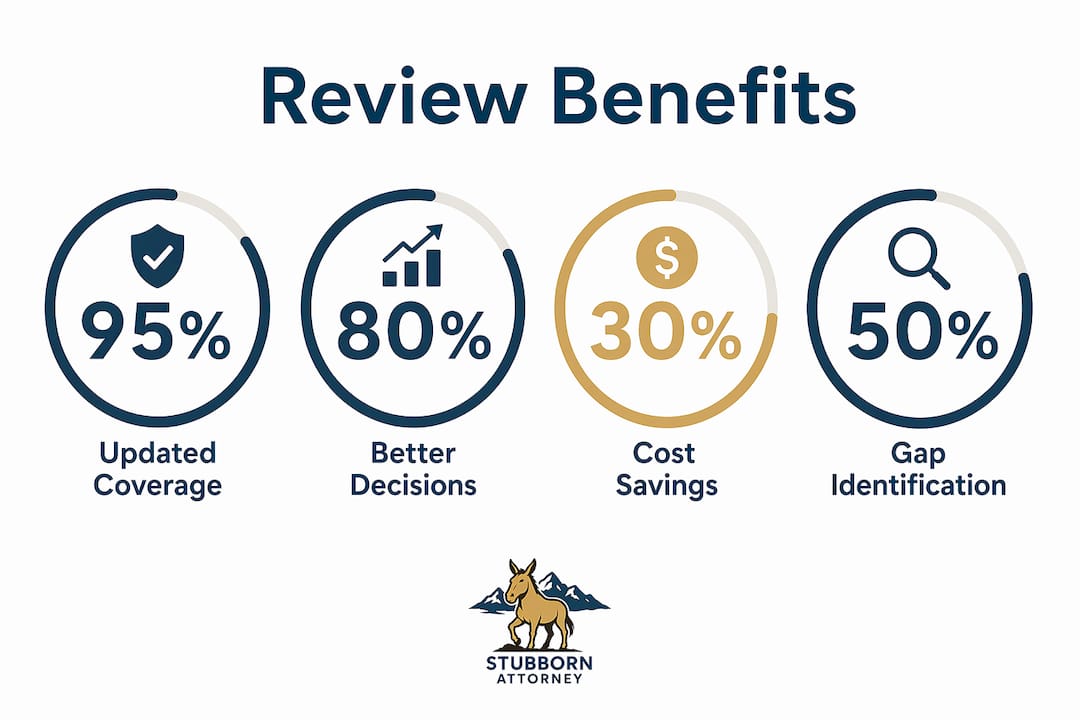
The table below summarizes the documented benefits of regular policy reviews compared to a set-and-forget approach:
| Outcome | Regular review | No review |
|---|---|---|
| Coverage reflects current income | Yes | Often no |
| Optional benefits confirmed active | Yes | Unknown |
| Legislative changes incorporated | Yes | No |
| Claim disputes reduced | Yes | Higher risk |
| Financial recovery speed | Faster | Slower |
| Out-of-pocket surprise costs | Lower | Higher |
Beyond the numbers, there is a confidence factor. When you know exactly what your policy covers, you make better decisions immediately after an accident. You know whether to seek specialist care, whether to take time off work, and whether to pursue a legal claim. Uncertainty at that moment is expensive. Clarity is free.
Many consumers underestimate accident risk and focus on price over meaningful coverage details, risking severe financial harm post-accident. This is the core mistake that regular reviews prevent. Price comparison is not the same as coverage evaluation. A policy that costs $10 less per month but covers $50,000 less in benefits is not a bargain.
The benefits of reviewing your accident coverage regularly include:
- Reduced financial hardship during recovery. Knowing your limits in advance lets you plan for gaps rather than discover them mid-crisis.
- Faster, cleaner claims. Policyholders who understand their coverage file more accurate claims and face fewer delays.
- Alignment with legislative changes. Reforms in 2026 have affected impairment definitions in several states and provinces. A review catches these shifts before they cost you.
- Informed decisions about financial recovery after an accident. Understanding your policy is the first step toward knowing what you are owed.
- Stronger legal position. If your claim is disputed, a well-documented review history demonstrates that you understood your coverage and relied on it in good faith.
My honest view on proactive versus reactive policy reviews
I have spent over a decade representing injured victims in Colorado, and before that I worked as a claims adjudicator for the federal government. I have sat on both sides of the table. I know exactly how insurers evaluate claims, and I know what happens when a policyholder walks in without having reviewed their coverage.
The pattern I see repeatedly is this: someone gets hurt, they call their insurer, and they discover for the first time that a benefit they assumed they had was either reduced, excluded, or capped at a number that does not come close to covering their actual loss. At that point, there is nothing I can do to change the policy. The accident has already happened. The limits are locked.
I advocate treating your accident policy as a living document, not a receipt for a transaction you completed years ago. Life changes constantly. Your income goes up. You have children. You take on a mortgage. Each of those changes creates new financial exposure that your old policy limits do not address. A 15-minute review once a year, or immediately after any major life event, closes that gap before it becomes a crisis.
The most empowering thing you can do right now is pull out your declarations page and read the accident benefits section. If you do not understand a term, call your broker. If you think a limit seems low, ask what it would cost to raise it. And if you have already been in an accident, call a personal injury attorney before you file your claim. Understanding your auto accident claim rights before you negotiate with an insurer is not optional. It is the difference between a fair settlement and a shortfall you live with for years.
The mule philosophy I bring to this work applies directly here: once I commit to a client’s case, I do not let go. But the clients who come to me having already reviewed their policies, documented their coverage, and sought medical treatment promptly are the ones who give me the most to work with. Preparation is not just a legal strategy. It is a financial survival skill.
— Ryan
Get a professional review of your accident policy today
If you have been in an accident or suspect your coverage has gaps, Stubbornattorney is ready to help. Ryan Malnar and the team at Malnar Injury Law have recovered millions of dollars for Colorado injury victims, and a significant part of that work involves identifying exactly what your policy owes you. A professional review does not just find gaps. It builds the foundation for a stronger claim. You can start with a free personal injury case review to understand your rights and your coverage in one conversation. If you want to see the types of cases where policy reviews made a direct difference in outcomes, explore common personal injury case examples from Malnar Injury Law. The consultation is free. The insight is immediate.
FAQ
Why review accident policies before an accident happens?
Policy details become fixed at the moment of an accident, so limits you failed to update beforehand are the limits that apply to your claim. Proactive reviews let you close coverage gaps while you still have the option to change them.
How long does an accident policy review take?
A thorough accident policy review takes under 15 minutes when you focus on the declarations page and accident benefits section. Free expert consultations with brokers or attorneys can complete a more detailed review in about 10 minutes.
Does health insurance cover everything after an accident?
Health insurance covers medical treatment but does not replace lost wages, cover deductibles, or pay for incidental recovery costs. Accident insurance fills that gap by paying cash directly to you for specific covered injuries, regardless of what your health plan pays.
How often should I review my accident insurance coverage?
Review your accident coverage at least once per year and immediately after any major life change such as a salary increase, marriage, new child, or home purchase. Legislative reforms, like those affecting impairment definitions in 2026, are an additional trigger for an unscheduled review.
What happens if I discover a coverage gap after an accident?
Contact a personal injury attorney immediately. While you cannot change your policy limits after the accident, an attorney can identify whether the insurer is applying your existing coverage correctly and whether additional legal claims may recover costs your policy does not cover.