

Consulting a Lawyer Workflow for Personal Injury Cases
Consulting a lawyer workflow is the structured process an injured person follows to engage legal help, starting from preparation and running through the initial consultation to the final decision on representation. Most personal injury lawyers offer free initial consultations lasting between 20 and 60 minutes. That window is short. Knowing exactly how to prepare, what to expect, and how to evaluate the attorney afterward turns a brief meeting into a decision you can trust. This guide walks you through every step of the legal advice workflow so you walk in ready and walk out informed.
How to prepare before your first consultation
Preparation is the single biggest factor separating a productive consultation from a wasted one. Most people arrive with a rough memory of events and a vague sense of frustration. The lawyer spends half the meeting reconstructing a timeline that you could have handed over in writing.

Build a one-page written timeline
A concise written timeline helps lawyers quickly grasp case facts and identify information gaps. Write it in plain language: date, what happened, who was involved, what injuries resulted, and what treatment you received. Keep it to one page. That single document does more for your consultation than any verbal explanation.
Lawyers are trained to spot gaps. When your timeline skips from the accident to three weeks later, they will ask what happened in between. Having it written down forces you to fill those gaps before the meeting, not during it.
Gather your key documents
Bring everything you have related to the incident. The following documents give your attorney the raw material to assess your case:
- Police or incident reports
- Medical records and bills received so far
- Photos of injuries, property damage, or the accident scene
- Insurance correspondence, including any settlement offers
- Contact information for witnesses
- Your own health and auto insurance policy details
Do not worry if you are missing items. The lawyer can tell you what to obtain and how. What matters is bringing what you already have.
Prioritize your questions in advance
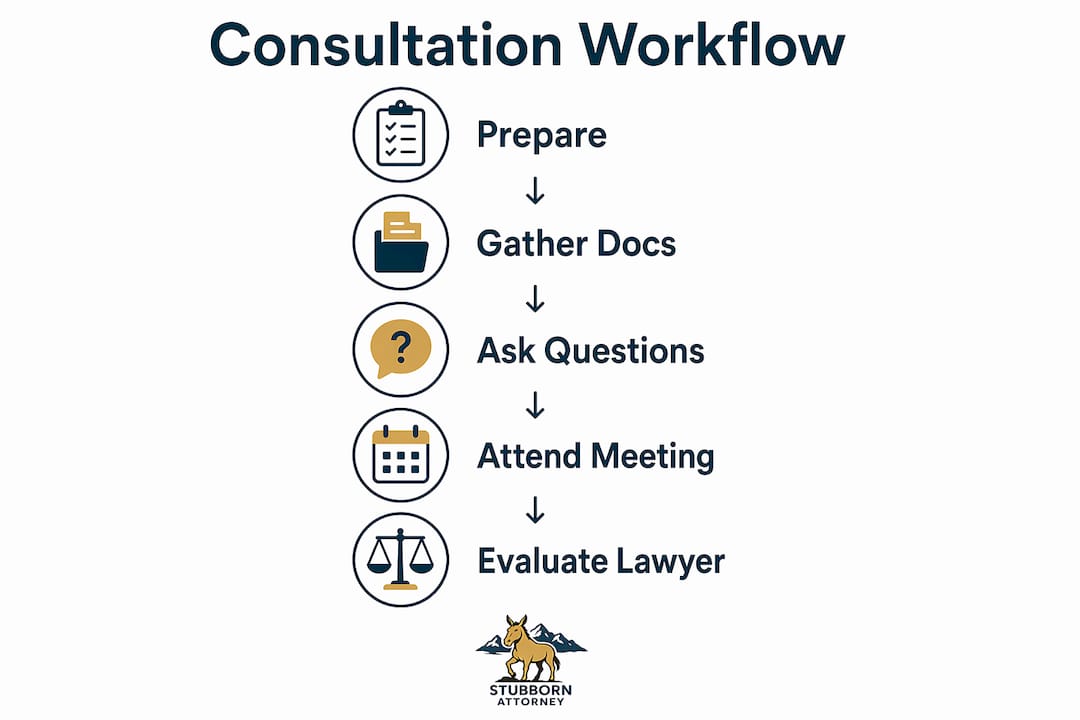
Prioritize questions about case viability, your options, and costs before the meeting. Write them down and rank them. If the consultation runs short, you want your most critical questions answered first.
The three questions every personal injury client should ask are: Does my case have merit? What are my realistic options? And what will representation cost me? Everything else is secondary.
Pro Tip: Write your top three questions on a separate index card and keep it in your hand during the meeting. When the conversation drifts, you can redirect without losing your place.
What happens during the initial consultation workflow
The initial consultation follows a predictable structure once you understand it. Knowing the flow lets you participate actively rather than just react.
The standard consultation structure
A typical personal injury consultation moves through these stages in order:
- You tell your story. The lawyer listens without interrupting much. This is your chance to explain what happened, when it happened, and how it has affected you. Speak chronologically and stick to facts.
- The lawyer asks follow-up questions. These questions are not random. The attorney is testing the legal elements of your claim: duty, breach, causation, and damages. Answer directly and honestly, including facts that seem unfavorable to you.
- The lawyer gives an initial assessment. This is where you learn whether the case has merit, what legal theories apply, and what the realistic range of outcomes looks like.
- Billing and representation are discussed. Most personal injury attorneys work on contingency, meaning they collect a percentage of your settlement rather than charging hourly. The lawyer will explain the fee structure and what signing a representation agreement means.
- Next steps are outlined. Whether the attorney takes your case or not, you should leave with a clear picture of what happens next.
“Quality consultations provide honest assessment of both strengths and weaknesses. A lawyer who only tells you what you want to hear is not preparing you for the road ahead.” — ProctorLaw
What the lawyer is actually evaluating
The attorney is running a mental checklist during your story. They are assessing liability (who is at fault and how clearly), damages (how serious and documentable your injuries are), and collectability (whether the at-fault party has insurance or assets to pay a judgment). A case can have clear liability but minimal damages and still be difficult to pursue. Understanding this helps you interpret the attorney’s feedback without taking it personally.
Lawyers also evaluate whether the statute of limitations is still open. In Colorado, most personal injury claims must be filed within three years of the injury. If you are close to that deadline, the attorney will flag it immediately.
How do automated intake tools improve the consultation process?
Modern law firms use technology to reduce friction between first contact and the actual consultation. This matters to you because delays in intake often mean delays in getting legal help when time is critical.
Manual vs. automated intake: a direct comparison
| Factor | Manual Intake | Automated Intake |
|---|---|---|
| Time to complete intake | 30–60 minutes | 12–18 minutes |
| Conflict check speed | Hours to days | Near-instant |
| Scheduling method | Phone tag with staff | Direct calendar booking |
| Client experience | Inconsistent | Consistent and guided |
| Conversion rate | Variable | Up to 73% |
Automated legal intake workflows reduce manual intake time to 12–18 minutes with conversion rates reaching 73%. That conversion rate reflects how many people who start the intake process actually book and complete a consultation. Higher conversion means fewer injured people falling through the cracks.
Tools that drive modern legal intake
Law firms that use tools like Calendly for direct scheduling eliminate the back-and-forth phone calls that delay consultations by days. Online intake forms collect your basic case information before you ever speak to an attorney, which means the lawyer arrives at your consultation already familiar with your situation. Automated conflict checks run your name against existing clients to confirm the firm can legally represent you, a step that used to require manual staff review.
High-performing intake workflows that use automation significantly improve client experience and increase attorney conversion rates. From your perspective as a client, this means less waiting, fewer repeated explanations, and a faster path to actual legal advice.
Pro Tip: When you contact a law firm, note how quickly they respond and how organized their intake process feels. A firm that handles its own intake poorly is unlikely to handle your case with more care.
How do you evaluate a lawyer after the consultation?
The consultation is a two-way interview where both the lawyer and the client assess fit. Most people forget the second half of that equation. You are evaluating the attorney just as much as they are evaluating your case.
Questions to ask before you sign anything
Use these questions to assess whether this attorney is the right fit for your case:
- Who handles day-to-day communication? Clients often meet senior lawyers initially, but daily casework may be handled by junior staff. Ask directly who will be your primary contact and how quickly they respond to calls or emails.
- What is the communication plan? Will you receive updates weekly? Only when something significant happens? Get a clear answer.
- What are the weaknesses in my case? A lawyer who cannot name any weaknesses is either not being honest or has not thought it through. Both are red flags.
- What is the full fee structure? Contingency fees in personal injury cases typically range from 33% to 40% of the settlement. Ask whether that percentage changes if the case goes to trial.
- What is the realistic timeline? Personal injury cases can take months to years. Understanding the timeline helps you plan financially and emotionally.
Assess communication style during the meeting itself
The consultation itself is data. Did the lawyer listen without interrupting? Did they explain legal concepts in plain language or hide behind jargon? Did they seem genuinely interested in your situation or distracted?
Treating the consultation as a job interview improves objectivity and helps clients assess lawyer competence and communication style. That framing is useful because it removes the power imbalance many people feel when talking to an attorney. You are the one making the hiring decision.
Meet more than one attorney
Meeting with at least two attorneys before deciding is standard practice, not disloyalty. Different lawyers will assess your case differently, quote different fees, and communicate in different styles. That comparison gives you a baseline. You will know a good consultation when you have experienced a mediocre one.
Look for top qualities in a personal injury lawyer before you commit: clear communication, specific experience with your type of injury case, and transparency about both costs and realistic outcomes. Those three qualities predict a working relationship that holds up under pressure.
What i have learned after a decade of personal injury consultations
The biggest mistake I see clients make is treating the first consultation as a passive event. They show up, answer questions, and wait to be told what to do. That approach costs them. The clients who get the most from a consultation arrive with a written timeline, a ranked list of questions, and a clear sense that they are interviewing the attorney, not auditioning for representation.
I have also seen the opposite problem: clients who arrive so prepared that they spend the entire meeting reciting facts instead of listening. The consultation is a conversation. Your job is to give the attorney what they need and then pay attention to how they respond. The quality of their questions tells you more about their competence than any credential on the wall.
One thing I tell every person who calls our office: do not let the statute of limitations make your decision for you. Colorado gives most injury victims three years to file. That feels like a long time until it is not. The best time to start the legal consultation process is as soon as your immediate medical needs are addressed. Evidence is freshest, witnesses remember more, and you have time to find the right attorney rather than the nearest one.
The consultation is not a commitment. It is information. Use it that way.
— Ryan
Ready to start your personal injury consultation?
Stubbornattorney, the brand home of Malnar Injury Law, offers free initial consultations for injured victims across Colorado. Attorney Ryan Malnar spent years as a federal claims adjudicator before switching sides to represent injured people, which means he understands exactly how insurance companies evaluate your claim. The firm handles a wide range of personal injury cases, from car accidents to dog bites to slip-and-fall incidents. If you are ready to put the steps in this article into practice, start with a free case review and find out where your case stands. No obligation. No hourly clock running.
FAQ
How long does an initial personal injury consultation last?
Most personal injury consultations last between 20 and 60 minutes and are free of charge. Some legal referral services charge a small fee, typically $20 or less for a 30-minute session.
What documents should i bring to a lawyer consultation?
Bring any police or incident reports, medical records and bills, photos of the accident or injuries, insurance correspondence, and witness contact information. The more documentation you provide, the faster the attorney can assess your case.
Can i consult more than one lawyer before deciding?
Yes, and you should. Meeting with multiple attorneys gives you a comparison point for fees, communication style, and case assessment. No ethical attorney will penalize you for doing your research before signing a representation agreement.
Who will actually handle my case after i hire a lawyer?
Ask directly during the consultation who will manage your day-to-day communication and casework. Senior attorneys often handle initial meetings while junior staff manage ongoing work, so clarifying this upfront prevents surprises later.
What is the difference between a contingency fee and an hourly rate?
A contingency fee means the attorney collects a percentage of your settlement only if you win, with no upfront cost to you. An hourly rate requires payment regardless of outcome. Personal injury lawyers almost always work on contingency, making legal representation accessible without out-of-pocket expense.