

Attorney Vetted 182 Day Steps for Colorado Governmental Immunity Act Claims
The Colorado Governmental Immunity Act makes state and local government entities presumptively immune from tort lawsuits, and that immunity only lifts through narrow statutory waivers under § 24-10-106. Waivers cover things like negligent driving of a government vehicle, dangerous conditions on public property, and certain school-related incidents. If your injury involves a city, county, school district, or state agency, you must send written notice within 182 days of discovering the injury, or your claim is gone for good.
Table of Contents
- What the Colorado Governmental Immunity Act Covers
- The Statutory Waivers Under § 24-10-106 (and Their Limits)
- Who Counts as a Public Entity or Employee
- Filing Your Notice of Claim Under § 24-10-109
- Who Pays When a Government Entity Loses a Claim
- What Case Law Says About Real Fact Patterns
- How to Protect a CGIA Claim From Day One
- Where to Verify the Statute and File Your Claim
- How the CGIA Interacts With Federal Immunity and Other State Laws
- How Government Entities Formally Raise Immunity as a Defense
- Defenses Public Entities Raise Beyond Statutory Immunity
- Which Injury Claims the CGIA Actually Bars or Allows
- Exceptions and Limits That Go Beyond the Basic Waivers
- Administrative Remedies and Dispute Resolution Under the CGIA
- How Our Firm Approaches Colorado Governmental Immunity Act Claims
- Get Help Filing Your Colorado Governmental Immunity Act Claim
- Sources
- FAQ
What the Colorado Governmental Immunity Act Covers
The Colorado Governmental Immunity Act lives in Title 24, Article 10 of the Colorado Revised Statutes, spanning sections 24-10-101 through roughly 24-10-120. The legislature passed it in 1972 to replace the old common-law doctrine of sovereign immunity with something more predictable, though not necessarily more forgiving. Before the CGIA, Colorado courts had been chipping away at sovereign immunity case by case, and lawmakers wanted a single statute that spelled out when the government could be sued and when it couldn’t.
That history matters because Colorado courts treat the CGIA as a statute “in derogation of the common law.” In practice, that phrase means courts read the immunity provisions broadly and the waiver provisions narrowly. If a fact pattern sits on the fence between “immune” and “waived,” the government usually wins the argument. This is the single biggest thing claimants misunderstand about the law: the CGIA isn’t a general permission to sue the government for negligence. It’s a blanket denial of that right, with a handful of specific, carefully worded exceptions carved out.
The statute’s core sections work together like this:
- § 24-10-102 states the legislative purpose: protecting public treasuries from excessive tort liability while allowing recovery in specific situations.
- § 24-10-105 establishes the baseline rule that public entities are immune from tort liability unless a waiver applies.
- § 24-10-106 lists the actual waiver categories (the section that does most of the heavy lifting in real cases).
- § 24-10-109 sets the notice-of-claim requirements and deadlines.
- § 24-10-114 and related sections address damage caps and payment mechanisms.
A law-review analysis from the University of Colorado traces how courts have interpreted these provisions since the statute’s passage, noting that the CGIA’s structure forces plaintiffs to prove their facts fit within a waiver category before immunity ever gets discussed. That order of operations trips up a lot of self-represented claimants, who assume ordinary negligence principles apply the same way they would against a private driver or business. They don’t. Against a government entity, negligence is only the second question. The first question is whether a waiver exists at all.
The Statutory Waivers Under § 24-10-106 (and Their Limits)
Section 24-10-106 lists the specific circumstances where the Colorado legislature agreed the government should answer for its negligence. Understanding these categories, and their built-in exceptions, is the difference between a claim that survives and one that gets dismissed before discovery even starts.
Motor vehicle operation. Immunity is waived for injuries from the negligent operation of a government-owned vehicle by a public employee acting within the scope of employment. This is the waiver behind most CGIA claims because it covers everything from a city snowplow to a school bus. The carve-out: emergency vehicles responding to an emergency call generally keep a higher bar, and courts often require proof the driver acted with something close to reckless disregard, not ordinary carelessness, when lights and sirens were active.
Dangerous condition of public property. This waiver applies to public buildings, highways, roads, streets, and publicly maintained parks or recreation areas, but only under a specific three-part test. Courts generally require proof that:
- The condition constituted an unreasonable risk to public health or safety.
- The public entity knew or should have known about the condition.
- The entity had a reasonable time to correct it but failed to do so.
A pothole that formed overnight during a snowstorm is a very different case from a pothole the city received five complaints about over six months. Timing and notice to the entity make or break this waiver.
Public utilities and facility operation. Waivers extend to the negligent operation and maintenance of public water, gas, sanitation, electrical, power, and swimming facilities. A burst municipal water main flooding a basement, for example, potentially falls here.
School-related waivers. The legislature added several school-specific waivers over the years, driven largely by public pressure following high-profile incidents. These include:
- Negligent failure to conduct a required background check on a school employee.
- Certain claims tied to school violence, where the entity’s negligence contributed to a foreseeable violent act.
- A separate waiver for negligent supervision in youth programs involving sexual misconduct, added after advocacy groups pushed for accountability in state-run youth services.
Prescribed fire and other specialty waivers. Colorado also waives immunity for damages caused by a negligently conducted prescribed fire (a controlled burn that gets out of hand), reflecting the state’s ongoing wildfire exposure. The Legislative Council memo notes lawmakers have continued adding narrow waivers in response to specific incidents, including a more recent waiver tied to unlawful use of force or failure to intervene by law enforcement.
Each of these categories comes with its own conditions and dollar limits, and missing a technical requirement inside a waiver, not just missing the waiver itself, can sink an otherwise strong claim.
Who Counts as a Public Entity or Employee
The CGIA’s protections extend well beyond obvious state agencies. “Public entity” under the statute includes the state itself, counties, cities, towns, school districts, special districts (water, fire, metropolitan), and any other political subdivision organized under Colorado law. If you were injured by a special district, like a regional transportation authority or a local water and sanitation district, the CGIA almost certainly applies even though the entity doesn’t sound like “government” in casual conversation.
“Public employee” is defined broadly too. It covers officers, employees, and authorized volunteers of a public entity acting within the scope of their duties, including elected officials. This creates a practical wrinkle: a public employee driving a personal vehicle on personal business isn’t covered, but that same employee running a city errand in their own car during work hours might be.
A few coverage points worth flagging directly:
- School districts, charter schools operating under a district’s authority, and special districts are all treated as public entities.
- Independent contractors hired by a government entity are usually not covered by CGIA immunity, since they aren’t employees.
- Vicarious liability against the entity for an employee’s willful and wanton conduct can be barred even when the employee’s individual immunity is pierced, depending on how the claim is framed.
That last point catches people off guard. Proving an employee acted with willful and wanton disregard might strip that individual’s personal immunity, but it doesn’t automatically open the door to suing the entity itself for the same conduct. The statutory language governing employer liability runs on a separate track.
Filing Your Notice of Claim Under § 24-10-109
Nothing in the Colorado Governmental Immunity Act matters if you miss the notice deadline. C.R.S. § 24-10-109 requires a written notice of claim within 182 days after you discover the injury, and Colorado courts treat this as a jurisdictional requirement, not a mere formality. Miss it by one day, and the claim is barred permanently, regardless of how strong the underlying negligence case is. There’s no equitable exception for “I didn’t know” or “I was in the hospital.” The clock runs from discovery of the injury, not from when you learn the government might be responsible for it.
Here’s how the filing process actually works in practice:
- Identify the correct entity. Claims against the state go to the Attorney General’s office; claims against a city, county, or special district go to that entity’s governing body or designated agent. Getting this wrong, sending notice to the wrong office, doesn’t stop the clock.
- Draft the notice with statutory content. Colorado law requires specific information: the claimant’s name and address, the date, place, and circumstances of the injury, the name of the public employee involved (if known), and the amount of damages claimed.
- Deliver it properly. SORM’s own guidance confirms notice is effective when sent by registered or certified mail, or delivered by personal service. An online form alone doesn’t satisfy the statute; SORM explicitly warns that web submissions generate a PDF you still must print, sign, and mail.
- Wait for the response window. After filing, the entity has up to 90 days to accept, deny, or take no action on the claim. You cannot file a lawsuit until that 90-day window closes or the entity issues a formal denial, whichever comes first.
- Track the underlying statute of limitations. The 182-day notice requirement runs alongside, not instead of, Colorado’s general personal injury statute of limitations. Filing notice doesn’t pause that clock, so both deadlines need active tracking. Our guide to key deadlines for Colorado injury claims breaks down how these timelines interact.
Pro Tip: Send your notice by certified mail with return receipt requested, even if you also submit an online form. The mailed, signed copy is what actually satisfies the statute, and the receipt is your proof if the entity later claims it never received anything.
Who Pays When a Government Entity Loses a Claim
Public entities in Colorado don’t cut checks straight out of their operating budgets when they lose a tort claim. State-level claims run through the State Office of Risk Management (SORM), which administers a risk-management fund specifically for these payouts. Individual state agencies are generally barred from paying claims directly; SORM centralizes the process so exposure and payment tracking stay consistent across the entire state government. Local governments typically carry their own liability pools or commercial coverage for the same purpose.
That funding structure has real fiscal weight behind it. The Legislative Council memo on CGIA and risk management funding documents that the state paid a total amount in the millions since 2023 for claims tied to one specific newer waiver (unlawful use of force or failure to intervene), and a substantial amount in recent years for cybersecurity-related claims alone. Those numbers explain why lawmakers move cautiously when they consider expanding waiver categories: every new waiver is a new line item against a fund that has to stay solvent for every agency in the state.
A few structural points worth understanding:
- Settlements and judgments against state entities draw from the risk-management fund SORM administers, not from an individual department’s budget.
- Local entities (cities, counties, special districts) fund claims through their own insurance pools, intergovernmental risk pools, or purchased coverage.
- Statutory damage limitations apply on top of whatever waiver permits the claim, meaning even a fully successful claim may be capped well below the actual damages proven.
What Case Law Says About Real Fact Patterns
Statutory text only tells you half the story. The other half comes from how Colorado courts have applied § 24-10-106 to actual injuries, and the pattern that emerges is consistent: courts demand specific, provable facts before they’ll expand a waiver’s reach.
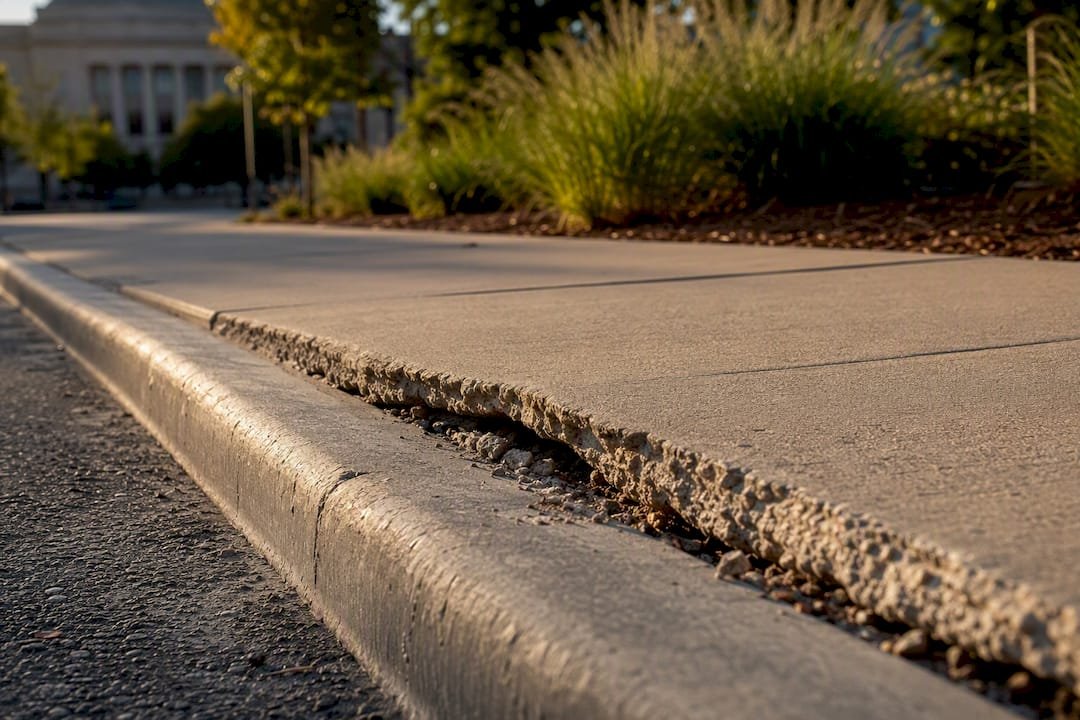
For dangerous-condition claims, courts have repeatedly required plaintiffs to show the entity had actual or constructive knowledge of the hazard well before the injury, not just that the hazard existed. A crumbling sidewalk that’s been reported multiple times to a public works department creates a very different record than one nobody ever complained about. Judges look for a documented timeline: when the condition arose, who reported it, and how much time passed before the injury.
Motor vehicle waiver cases turn heavily on the emergency-vehicle exception. When a police cruiser or fire truck is responding to an active call with lights and sirens engaged, courts generally require proof approaching willful and wanton conduct, not ordinary negligence, before liability attaches. A patrol car that runs a red light without lights or sirens while chasing a routine call is a much stronger case for a plaintiff than the same vehicle running the light during an active pursuit.
School-violence waiver claims hinge on foreseeability. Courts want to see that the district had specific warning signs, prior incidents, disciplinary records, or direct threats, that made the violence reasonably foreseeable, not just a general awareness that violence can happen anywhere. Vague “the school should have known” arguments tend to fail; specific documented warnings tend to succeed.
The consistent thread across all three categories: waivers get interpreted narrowly, and the burden sits squarely on the claimant to build a factual record before the statute of limitations forces a filing decision. This is precisely where experienced counsel earns their keep, translating a chaotic injury story into the specific legal elements a judge is looking for.
How to Protect a CGIA Claim From Day One
The steps you take in the first 182 days after a government-related injury often decide whether the claim survives at all. Here’s the practical sequence experienced counsel follows:
- Get medical treatment immediately and keep every record. Medical documentation anchors both your damages claim and your timeline of discovery, which starts the notice clock.
- Photograph the scene before conditions change. A dangerous-condition claim lives or dies on evidence of what the hazard looked like and how long it had existed. If a pothole gets patched the next morning, your photos may be the only proof left.
- Get names and contact information for witnesses. Government agencies move slowly, and witness memory fades. Statements gathered within days carry far more weight than ones gathered months later.
- Identify the specific entity and employee involved. Was it a city street crew, a school district employee, a state trooper? The notice must name the correct entity, and getting this wrong can create delays you can’t afford inside a 182-day window.
- Draft the notice to track statutory waiver language directly. A vague description of “the accident” doesn’t help. A notice that specifically describes a dangerous condition the entity had notice of, or a vehicle negligently operated by an on-duty employee, starts building the waiver argument from day one.
- Retain counsel before the 90-day response period expires, not after. An attorney can push a claim forward, negotiate before litigation, or file suit the moment the waiting period closes without losing time to indecision.
Pro Tip: Do not rely on an online claim submission form as your only filing method, even when a government website makes it look official. SORM’s own instructions confirm you must sign and mail the physical form. Skipping that step can leave you with a claim you thought was filed and wasn’t.
The most common fatal mistakes in real CGIA cases aren’t complicated: notice sent to the wrong office, notice sent after day 182, notice missing required statutory content, or claimants who assumed a phone call or an online form was sufficient. Every one of these mistakes is entirely avoidable with the right process in place, which is exactly why claimants often bring in help early rather than after a denial letter arrives. Our checklist for avoiding claim mistakes walks through several more of these pitfalls in detail, and if your injury came from a vehicle collision specifically, the Colorado car accident legal checklist covers evidence steps that apply directly to motor-vehicle waiver claims.
Where to Verify the Statute and File Your Claim
For readers who want to read the primary sources themselves rather than take anyone’s summary at face value, here’s where the actual documents live:
- Full statute text: C.R.S. Title 24, Article 10 on Colorado Public Law gives you the complete, current CGIA text, section by section.
- Official state guidance: The SORM CGIA Summary, published by the Office of the State Controller, explains waiver categories and claims handling in plain language, and remains the most current administrative interpretation available.
- Claim submission instructions: SORM’s Submit a New Claim page walks through the New Claim Form process step by step.
- Fiscal and legislative context: The Legislative Council memo documents recent waiver additions and their real dollar impact on state risk-management funding.
One detail worth stating plainly: for claims against the state, the Attorney General’s office is the correct recipient of your notice, not the individual agency you’re dealing with. Sending notice only to the agency, without also satisfying the Attorney General requirement, is a mistake that has sunk otherwise valid claims.
How the CGIA Interacts With Federal Immunity and Other State Laws
The Colorado Governmental Immunity Act governs state-law tort claims against Colorado public entities. It has no effect on federal civil rights claims brought under 42 U.S.C. § 1983, which run on their own separate immunity framework, qualified immunity for individual officers and Monell liability standards for municipalities. A single injury can trigger both tracks at once. If a police officer’s conduct injures someone, the victim might pursue a CGIA-governed negligence claim against the department in state court while simultaneously pursuing a federal constitutional claim against the individual officer, each with its own deadlines, notice requirements, and immunity standards.
The two systems don’t borrow from each other. A successful federal civil rights claim doesn’t waive CGIA immunity for a parallel state negligence claim, and vice versa. Colorado’s own separate statute governing peace officer accountability, enacted through recent legislative reforms, created a distinct state-law path for certain police misconduct claims outside the CGIA’s traditional waiver structure entirely. That statute operates independently of § 24-10-106, with its own procedural rules.
This layering is exactly why fact patterns involving law enforcement, in particular, benefit from careful legal sorting early. Filing everything as if only one framework applies risks missing a claim that a different statute, federal or state, would have supported.
How Government Entities Formally Raise Immunity as a Defense
When a public entity gets sued or receives a notice of claim, it doesn’t wait until trial to raise immunity. Colorado procedure allows a public entity to file a motion to dismiss early in litigation specifically on CGIA immunity grounds, and courts are required to resolve that motion before the case proceeds to normal discovery on the merits. This is different from most civil litigation, where immunity or jurisdictional defenses often get resolved alongside other issues.
The entity’s attorney typically argues one of two things: either no statutory waiver applies to the facts alleged, or the claimant failed to satisfy a procedural prerequisite, most commonly the 182-day notice requirement. Courts treat the notice question as a factual determination they can resolve through an evidentiary hearing separate from the rest of the case, meaning a claim can be dismissed on notice grounds alone before a judge or jury ever hears evidence about the underlying negligence.
Because Colorado courts construe waivers narrowly, public entity attorneys often succeed simply by showing the claimant’s facts fall just outside a waiver’s specific language, even when the underlying negligence looks clear-cut to an outside observer. This procedural posture is a major reason immunity motions get filed aggressively and early: a dismissal on immunity grounds ends the case entirely, without the entity ever having to defend the substance of what happened.
Defenses Public Entities Raise Beyond Statutory Immunity
Even when a waiver clearly applies, government defense attorneys have a full toolkit of additional defenses available, the same ones a private defendant might raise, layered on top of the immunity question.
Comparative negligence is common: the entity argues the claimant’s own conduct contributed to the injury, which can reduce or eliminate recovery under Colorado’s modified comparative fault rules. Assumption of risk shows up in claims involving recreational public property, parks, trails, and rec centers, where entities argue the claimant knowingly accepted an inherent risk. Entities also frequently challenge causation directly, arguing the claimed injury resulted from a pre-existing condition or a separate intervening event rather than their conduct.
Discretionary function arguments appear in claims touching policy decisions, budget allocations, or staffing choices, where entities argue certain governmental decisions are immune from second-guessing through tort litigation regardless of waiver language. And in claims involving independent contractors performing government work, entities often argue the contractor, not the entity, bears responsibility since contractors typically fall outside CGIA employee definitions.
Claimants who assume the immunity fight is the only battle often get caught off guard by this second layer of defenses once litigation actually begins.
Which Injury Claims the CGIA Actually Bars or Allows
The practical effect of the Colorado Governmental Immunity Act is that most negligence claims against government entities are barred by default, and only claims fitting squarely within a § 24-10-106 waiver survive. Claims typically barred include general premises liability outside the narrow “dangerous condition” definition, negligent hiring or supervision claims outside the specific school and youth-program waivers, and most claims arising from purely discretionary policy decisions.
Claims typically allowed include vehicle collisions caused by on-duty government employees, injuries from provably dangerous conditions on public property with adequate notice to the entity, certain school-related incidents tied to background-check failures or foreseeable violence, and injuries from negligently operated public utilities or prescribed burns. Intentional tort claims occupy a gray area: the CGIA generally doesn’t shield willful and wanton conduct by individual employees, even though it may still shield the entity itself from vicarious liability for that same conduct, depending on how the claim is structured.
Exceptions and Limits That Go Beyond the Basic Waivers
Even inside a valid waiver category, several additional limitations can narrow or eliminate a claim. Damage caps apply on top of waiver eligibility, meaning a successful claim can still recover far less than the actual harm proven. The willful and wanton standard, rather than ordinary negligence, governs claims against individual public employees personally, a higher bar than what applies to the entity itself in many waiver categories.
Recreational-use limitations reduce entity exposure for injuries occurring on land opened for public recreational access without a fee, reflecting a policy choice to encourage municipalities to keep parks and trails open rather than close them over liability fears. And several waivers carry their own internal exceptions, the emergency-vehicle carve-out inside the motor-vehicle waiver being the clearest example, where the general waiver applies but a specific fact pattern reverts the analysis back toward immunity.
Every one of these limitations operates independently of the main immunity/waiver analysis, which is why a claim that clears the waiver hurdle can still lose on a damage cap, a standard-of-proof issue, or a secondary statutory exception.
Administrative Remedies and Dispute Resolution Under the CGIA
The CGIA’s notice requirement functions as a built-in administrative step before litigation ever starts. Once a claimant files notice, the entity has up to 90 days to investigate and respond, and many claims resolve during that window without a lawsuit ever being filed. SORM’s guidance confirms that claims against the state route through its internal risk-management review before any litigation posture develops, giving both sides a structured opportunity to negotiate based on the claim’s stated facts and damages.
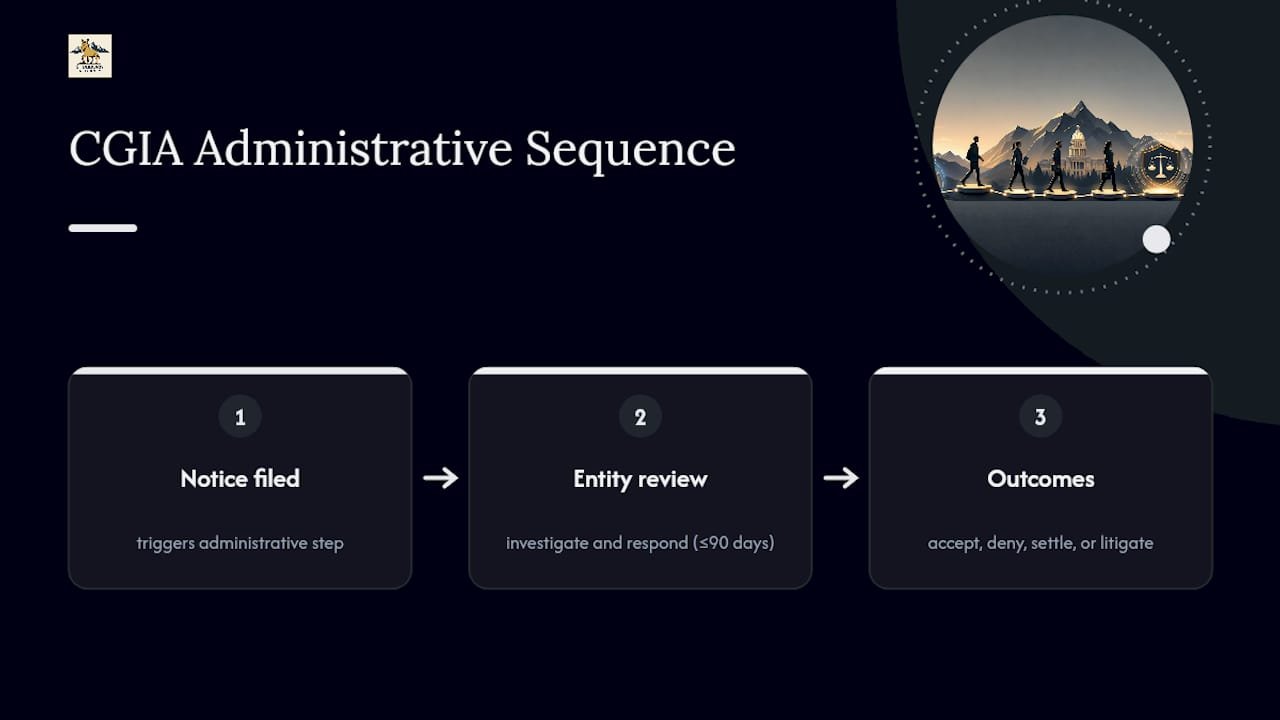
This pre-suit period functions similarly to mediation in effect, even though the statute doesn’t formally label it as alternative dispute resolution. Entities can accept a claim, deny it outright, or make a settlement offer without ever requiring the claimant to file suit. Because litigation against a public entity involves the added complexity of proving a waiver applies, both sides often have real incentive to resolve strong claims during this administrative window rather than risk a dismissal motion or a costly trial. Claimants who use this period to negotiate from a well-documented position, backed by medical records, photos, and a notice that already tracks the applicable waiver language, tend to get more serious engagement from entity claims adjusters than those who file a bare-bones notice and wait passively.
How Our Firm Approaches Colorado Governmental Immunity Act Claims
Before practicing law, I spent time as a federal claims adjudicator, which means I’ve sat on the other side of the table evaluating exactly the kind of claim this article walks through. That experience shapes how we approach every CGIA case: we start by mapping the facts against the specific waiver language in § 24-10-106 before we do anything else, because that’s the exact analysis the entity’s own defense counsel will run.
We treat the 182-day notice deadline as immovable, because it is. Our process starts with the notice draft itself, written to track statutory waiver categories directly rather than describing the incident in generic terms. We gather medical records, scene photos, and witness statements early, before memories fade and physical evidence disappears, and we handle every interaction with SORM or the Attorney General’s office so our clients aren’t navigating unfamiliar government procedure alone while recovering from an injury.
If your injury involved a government vehicle, a public building, a school, or another public entity, the fastest way to find out where your case stands is a free case evaluation. There’s no cost to find out whether your facts fit a statutory waiver, and given the jurisdictional nature of that 182-day clock, the sooner that conversation happens, the better.
— Ryan
Get Help Filing Your Colorado Governmental Immunity Act Claim
Stubbornattorney exists for exactly this kind of case: the injury claim where a normal insurance negotiation playbook doesn’t apply because the defendant is a government entity with its own statutory rulebook. We draft notices that track § 24-10-106 waiver language from the first sentence, handle every filing detail SORM and the Attorney General’s office require, and manage the evidence preservation that dangerous-condition and motor-vehicle waiver claims depend on.
We take these cases on contingency, meaning there’s no fee unless we recover compensation for you, and a free case evaluation costs nothing to find out where your claim stands before that 182-day window closes. If your injury happened on a Colorado roadway, public property, or through a school district, visit our personal injury services page to see how we handle these claims, or start with an injury case evaluation to get a straight answer on whether your facts fit a statutory waiver.
This article is general information, not a substitute for advice from a qualified lawyer. Consult a qualified legal professional about your own circumstances before acting on anything here.
Sources
- C.R.S. 24-10-109 – Notice required
- CGIA Summary | OSC – Office of the State Controller – Colorado
- The Colorado Governmental Immunity Act and State Risk Management Funding (Legislative Council memo)
- § 24-10-106. Immunity and partial waiver — 2021 Colorado Code (Justia)
FAQ
What Are the Exceptions to the Colorado Governmental Immunity Act?
The main exceptions, called waivers, cover negligent operation of government motor vehicles, dangerous conditions on public property, negligent operation of public utilities, certain school-related incidents, and negligently conducted prescribed fires, as defined in § 24-10-106.
When Did Colorado Ban Qualified Immunity?
Colorado passed legislation limiting qualified immunity for individual police officers in specific misconduct cases in recent years, separate from the CGIA, which continues to govern state-law tort claims against government entities generally.
Does Colorado Have Sovereign Immunity?
Colorado replaced traditional sovereign immunity with the statutory framework of the Colorado Governmental Immunity Act in 1972, which makes government entities presumptively immune from tort suits except where a specific statutory waiver applies.
Can You Sue a Government Entity Yourself in Colorado Without a Lawyer?
You can file a notice of claim and pursue a CGIA case without an attorney, but the statute’s strict construction and jurisdictional 182-day deadline make self-representation risky; a firm like Stubbornattorney can evaluate whether your facts fit a waiver before that window closes.
How Long Do I Have to File a Notice of Claim in Colorado?
You have 182 days from discovering the injury to file written notice under C.R.S. § 24-10-109, and missing this deadline permanently bars the claim regardless of how strong the underlying facts are.