
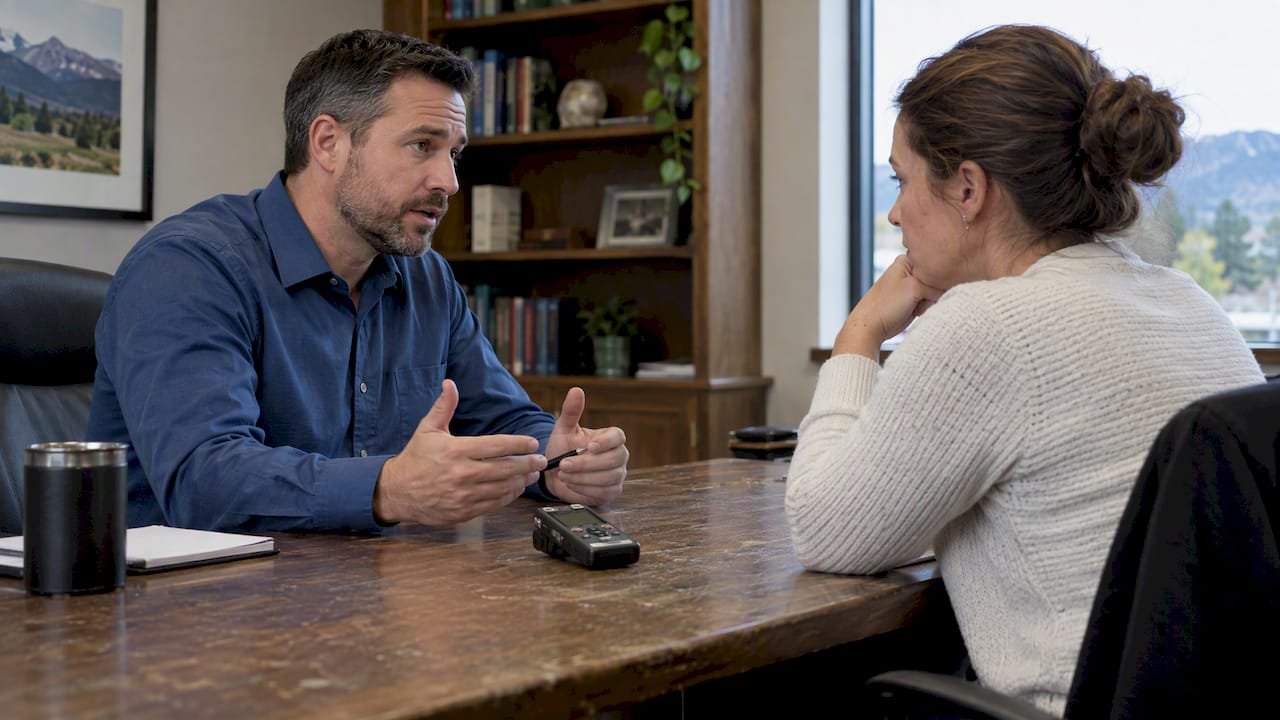
Protect Your Claim: Lawyer Backed Recorded Statement for Insurance
As a rule, decline a third-party insurer’s request for a recorded statement and loop in your own insurer or an attorney before you say anything on tape. The recording becomes a permanent part of the claim file and can be used to pick apart your account later. If an adjuster calls, pause, write down their name and your claim number, and tell them you’ll call back.
Table of Contents
- What a recorded statement is and how insurers use it
- Why a recorded statement can hurt your claim
- Your insurer versus the other driver’s insurer: the EUO difference
- State recording consent rules and what to do if one is broken
- How to prepare if an adjuster requests a recorded statement
- When an attorney should step into the process
- Balancing cooperation with protecting your claim
- How Malnar Injury Law protects you through this process
- FAQ
- Sources
What a recorded statement is and how insurers use it
A recorded statement is an audio or video interview an adjuster conducts to document your version of an accident, and it gets filed permanently as part of the claim record, where it can resurface in settlement talks or at trial, according to LegalClarity’s overview. It is a different animal than the quick call you make to report the crash.
Adjusters use the statement to build the insurer’s version of events, then weigh it against medical records, police reports, and anything else in the file. That comparison is where claims gain or lose value, since the role an adjuster plays in a claim centers on finding reasons to limit payout.
A few distinctions matter here:
- First Notice of Loss (FNOL) or an app-based accident report is casual intake, not a formal statement.
- A recorded statement is scheduled, announced as being recorded, and kept as evidence.
- Anything you say in either context can still end up in the file, so treat both with care.
Why a recorded statement can hurt your claim
Small, human phrases do real damage. Saying “I feel fine” days before soft-tissue symptoms appear, guessing at a time or distance, or apologizing out of reflex can all be used against you later, since the recording becomes part of a record insurers compare against medical files and testimony, and small inconsistencies often turn into impeachment points that lower a claim’s value.
Three risks stand out:
- Guessing at details you don’t actually remember creates gaps an adjuster can exploit later.
- Casual language like apologies or “I’m okay” gets treated as an admission, not politeness.
- A recorded answer that contradicts a medical record or police report becomes an impeachment tool in court.
Adjusters are trained to build rapport first and shift into formal questioning once you’re relaxed. Recognizing that shift is half the defense.
Pro Tip: If you’re not certain of a fact, say “I don’t recall” rather than estimate. A guess recorded on tape is harder to walk back than an honest gap.
Your insurer versus the other driver’s insurer: the EUO difference
You owe no contract to the other driver’s insurance company, so you have no legal obligation to give them a recorded statement, a point confirmed in LegalClarity’s guide to recorded statement rights. Your own policy is a different story: most auto policies include a duty-to-cooperate clause that can require you to answer questions, and in some cases escalate into an Examination Under Oath, or EUO.
An EUO is a sworn, formal proceeding, distinct from the informal recorded statement, and it carries higher stakes because you’re testifying under oath rather than just answering questions on a call, per InsuranceClaimsInfo’s comparison of the two processes.
Key distinctions to keep straight:
- No contract exists between you and the other party’s insurer, so their recorded-statement request is optional.
- Your own insurer’s cooperation clause can require information, but most courts require the insurer to show actual prejudice before using limited noncooperation to deny coverage, according to NAIC’s claims guidance.
- Refusing a properly demanded EUO, unlike refusing a third-party recorded statement, can put your own coverage at risk.
- Negotiating timing, requesting a written alternative, or having counsel present on the call can satisfy cooperation duties without added exposure.
State recording consent rules and what to do if one is broken
Most states allow recording with just one party’s consent, but several require consent from everyone on the call, and in those two-party-consent states an adjuster has to get your explicit permission before recording, as Encyphir’s overview of consent rules explains. A properly run call opens with the adjuster stating that the call is being recorded and asking if that’s acceptable.
If you realize partway through that you were recorded without that notice, the practical steps are straightforward:
- Note the date, time, and the adjuster’s name as soon as you notice.
- Ask directly whether the call is being or was recorded, and get the answer on record.
- Report the issue to your own insurer or the relevant state insurance regulator if the notice step was skipped.
A recording taken without required consent may end up inadmissible, which matters more to the insurer’s case than to yours.
How to prepare if an adjuster requests a recorded statement
Treat the request like any other formal interview: prepare, don’t improvise. InsuranceClaimsInfo’s preparation checklist recommends building a written timeline beforehand and keeping answers narrow and factual rather than filling silence with speculation.
A simple sequence covers most situations:
- Get the adjuster’s name, badge or ID number, and your claim number before agreeing to anything.
- Tell them you need to call back rather than answering on the spot.
- Write out a factual timeline of the accident while details are fresh.
- Keep answers short, stick to what you know, and say “I don’t recall” instead of guessing.
- Offer a written statement, request a delay, or ask that your attorney be present or handle it directly.
Avoid absolute statements about fault or injury severity, since both tend to change as facts and medical findings develop. If the insurer pushes back on a delay, scheduling the statement a few days out to gather medical records first usually satisfies cooperation duties without rushing you into a weak answer.
Pro Tip: Write your timeline before the call, not during it. A statement read from notes sounds more consistent than one built live on the phone.
When an attorney should step into the process
Some situations call for legal help before you say another word to an adjuster: serious or unclear injuries, disputed liability, an adjuster whose tone turns pressuring, or any mention of an EUO. These are the moments where the difference between an adjuster and an attorney in a claim becomes obvious, since their incentives point in opposite directions.
An attorney can take over the mechanics of the process directly:
- Negotiate the timing of a recorded statement so it happens after medical records are in hand.
- Draft and submit a written statement in place of a recorded call.
- Sit in on or take the recorded call personally, limiting what gets asked and how.
- Handle an EUO demand and assess whether litigation exposure is building.
Our attorney has extensive experience practicing personal injury law and has also worked as a claims adjudicator for the federal government, providing insight into both perspectives in these conversations.
Balancing cooperation with protecting your claim
Cooperating with your own insurer matters, but cooperation does not mean answering every question the moment it’s asked. Decline a third-party recorded statement, coordinate with your own insurer or an attorney, and keep any statement you do give factual and brief. Treat an EUO demand as a signal to call a lawyer immediately rather than handling it alone.
— Ryan
How Malnar Injury Law protects you through this process
We step in at exactly this point: handling adjuster calls, timing recorded statements around your WorkSafeBC treatment medical treatment, and preparing written alternatives so nothing you say gets twisted into a reason to undervalue your claim. Our services page covers car accidents, motorcycle accidents, semi-truck accidents, and other injury claims where this kind of early misstep does the most damage.
We work on a contingency fee basis, so you pay nothing unless we recover money for you, and a free case evaluation is the fastest way to find out where your claim stands before you talk to any adjuster again.
This article is general information, not a substitute for advice from a qualified lawyer. Consult a qualified legal professional about your own circumstances before acting on anything here.
FAQ
Should I give a recorded statement to insurance?
Generally, decline a recorded statement to the other driver’s insurer and speak with your own insurer or an attorney first, since the recording becomes a permanent part of the claim file. There’s no legal requirement to give one to a third-party insurer, according to LegalClarity.
Can I refuse a recorded statement to my insurance company?
You can decline a recorded statement from the other party’s insurer without consequence, but your own policy’s cooperation clause may require some information and can escalate to an Examination Under Oath. Courts typically require your insurer to show real prejudice from limited noncooperation before denying coverage over it, per NAIC.
Why do insurance companies want recorded statements?
Adjusters use recorded statements to lock in your account early, often before injuries fully develop, then compare your answers against medical records and other evidence to find inconsistencies that can reduce a payout, as Encyphir explains.
Why does an insurance company want a recorded statement?
The goal is the same across insurers: build a documented version of events while it’s fresh, then use any gap between that statement and later medical or factual evidence to challenge the claim’s value. Preparing with a written timeline and factual, narrow answers reduces that risk, according to InsuranceClaimsInfo.
Sources
- Recorded statement for insurance: What it is and your rights – LegalClarity
- Recorded statement preparation – InsuranceClaimsInfo
- Recorded statements in insurance claims | Encyphir
- What you should know about filing an auto claim – NAIC