

Get a Rental Car Fast in an Active Accident Claim: What to Collect
Insurance will usually cover a rental car after an accident, but who pays depends on fault. If the other driver caused the crash, their liability insurer should pick up the cost, though only after they accept responsibility. If you carry rental reimbursement, your own insurer can typically get you a car within a day or two, then chase the at-fault carrier for repayment later. Follow the checklist below before you sign a rental agreement.
Table of Contents
- Immediate Steps to Get a Rental Car After a Crash
- Who Pays for a Rental Car After an Accident?
- What Does Rental Reimbursement Actually Cover?
- Renting Without Rental Reimbursement Coverage
- If Your Car Is Totaled or Repairs Run Long
- Documentation Checklist for Rental Reimbursement
- When to Contact a Lawyer About a Denied Rental Claim
- What Most Advice Gets Wrong About Rental Claims
- How Stubbornattorney Can Help With a Denied Rental Claim
- Sources
- FAQ
Immediate Steps to Get a Rental Car After a Crash
Speed matters here, and so does paperwork. Miss a step and you risk paying out of pocket for a rental your policy would have otherwise covered.
- Get medical attention and file a police report if the crash meets your state’s reporting threshold.
- Photograph the scene, the damage, and both vehicles’ plates, and collect the other driver’s insurance information.
- Call your insurer before you rent. Ask for your claim number and whether direct billing is available with a rental company.
- Call rental agencies and ask specifically for insurance or claim rates tied to your accident.
- Keep every document tied to the claim in one place.
That last step sounds obvious until you’re three weeks into a claim and an adjuster asks for a receipt you tossed in a glovebox.
- Rental agreement and daily rate confirmation
- Itemized receipts, not just a final total
- Repair shop estimate and timeline
- Claim number written on every document you submit
Who Pays for a Rental Car After an Accident?
If another driver caused the wreck, their liability insurer is on the hook for your rental, but only once they accept fault. That acceptance can take days or weeks depending on how contested the crash is. Waiting on someone else’s insurance company to finish an investigation is the single biggest reason people end up paying for a rental themselves.
Using your own rental reimbursement or collision coverage sidesteps that wait entirely. Progressive notes that going through your own policy is often faster than waiting for the other side’s liability decision, because your insurer pays now and pursues subrogation, meaning it recovers the cost from the at-fault carrier later. You never see that fight; you just get a car.
- At-fault driver’s insurer: pays eventually, but only after accepting liability
- Your own rental reimbursement: pays fast, then your insurer recovers costs through subrogation
- Direct billing arrangements: some insurers bill the rental company directly, so you skip fronting cash
If liability is clear and undisputed, the at-fault insurer sometimes moves quickly. If it’s a disputed intersection crash or a rear-end collision with conflicting stories, plan on your own policy carrying the load first.
What Does Rental Reimbursement Actually Cover?
Rental reimbursement is optional coverage you add to your policy, and it only kicks in after a covered loss like a collision or theft, not routine maintenance or a mechanical breakdown. Policies express limits as a daily cap paired with a total-claim cap, often written as something like “30/900,” meaning $30 a day up to $900 total.
Daily caps commonly range in the lower tens of dollars, and coverage duration is often up to about a month, according to Car and Driver’s insurance coverage breakdown. That window usually aligns with typical repair times.
- Fuel is your responsibility, not the insurer’s
- Counter-sold upgrades to a bigger vehicle usually aren’t covered
- Extra insurance products pitched at the rental counter typically fall outside your reimbursement limit
- GPS units, child seats, and other add-ons are almost always excluded
Rent something comparable to your damaged vehicle. Grab a luxury SUV when you drove a compact sedan, and you’ll likely eat the difference between the rental’s daily rate and your policy’s cap.
Renting Without Rental Reimbursement Coverage
No rental reimbursement on your policy doesn’t mean you’re stuck without wheels. Ask the rental counter for an “insurance rate” or “claim rate.” Many agencies, including Enterprise, offer reduced pricing to accident claimants who show accident paperwork, even without reimbursement coverage.
- Present your claim number and accident report at pickup to request a claim rate
- Pay up front if no coverage applies, but save every itemized receipt
- Submit those receipts to the at-fault insurer with your claim number attached promptly
- Check your credit card’s rental protections before buying a loss damage waiver at the counter
Pro Tip: Call your own auto insurer before you rent, even without reimbursement coverage. Some policies extend limited liability or physical damage protection to rental cars automatically, which can save you from paying for a waiver you don’t need.
If Your Car Is Totaled or Repairs Run Long
Rental coverage typically ends the moment your insurer communicates a total-loss settlement offer, not when you actually receive the check. That gap between “we’ve made an offer” and “money in your account” can leave you without a car and without reimbursement at the same time.
- Ask your insurer directly whether rental coverage extends past the settlement communication date
- Request a short grace period in writing if repairs are dragging past your policy’s day limit
- Document every delay if the shop, not you, caused the holdup
Colorado handles this differently for third-party claimants. State regulation requires the at-fault insurer to begin paying for a replacement vehicle the day of loss when your car is inoperable, and to keep paying until the settlement is actually mailed or communicated, not just offered. That’s a meaningfully longer runway than the standard 30-day cap most policies use.
Documentation Checklist for Rental Reimbursement
Adjusters deny reimbursement more often over missing paperwork than over disputed facts. Build a file before you submit anything.
- Claim number, listed on every document you send
- Police report, if one was filed
- Photos of the damage from the scene
- Repair shop estimate and projected completion date
- Dated rental agreement with itemized daily charges
- Communications log noting call dates, names of adjusters, and what each person promised
If you’re going through your own policy, include any subrogation authorization paperwork and correspondence showing whether the other driver’s insurer has accepted liability.
Pro Tip: Email adjusters instead of calling when you can. A phone promise disappears the moment you hang up; a written record doesn’t.
When to Contact a Lawyer About a Denied Rental Claim
Repeated denials, an insurer that refuses to accept liability despite clear evidence, or a settlement-related rental gap that drags on for weeks are all signs it’s time to bring in counsel. An attorney familiar with claims handling can challenge a denial directly, demand interim payments, and preserve evidence the insurer would rather you forget existed.
Insurers prioritize finalizing liability before paying third-party rentals. Firms with claims-adjudication experience can often negotiate interim payments where the evidence strongly supports the claimant’s position, without waiting for the entire liability investigation to close.
If your rental costs are tangled up with a contested liability decision or an injury claim, get a free case evaluation before more time passes.
What Most Advice Gets Wrong About Rental Claims
Most guidance on this topic treats rental reimbursement like a simple math problem: daily cap times number of days, done. That’s not how claims actually break down. The real friction point is timing, not arithmetic. People lose money not because their policy limit was too low, but because they waited on the at-fault insurer to make a decision instead of using their own coverage first.
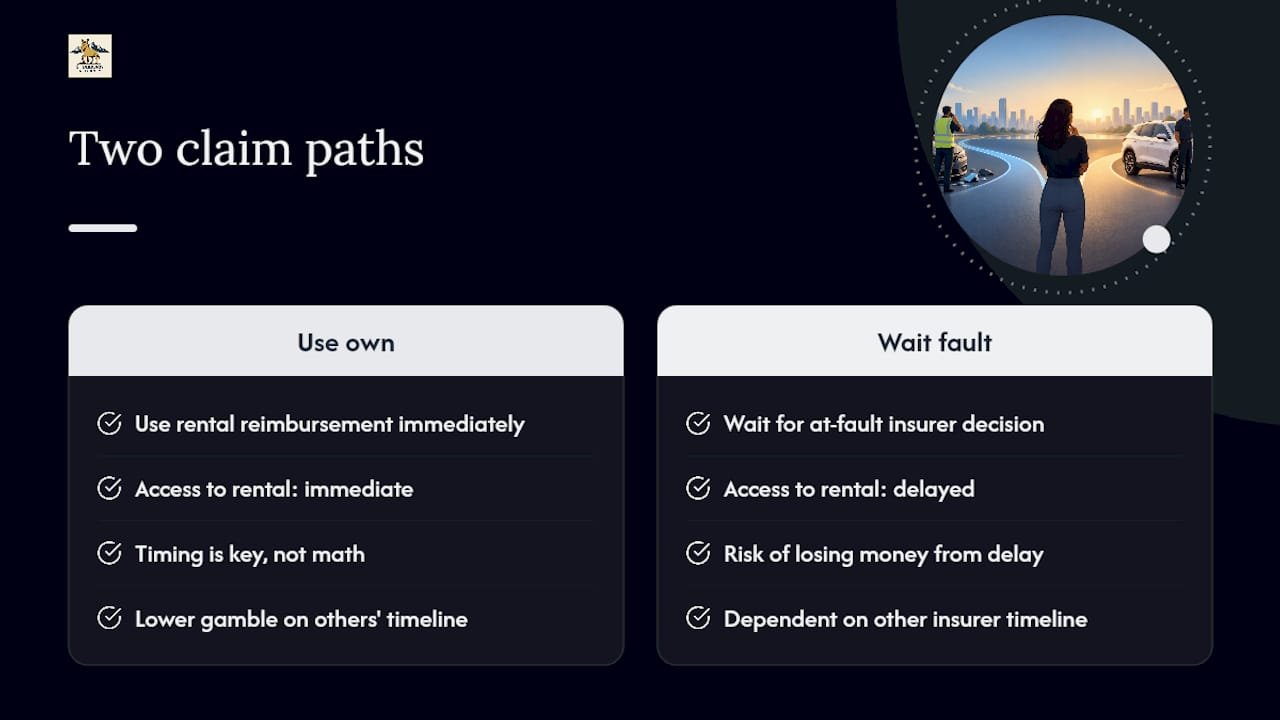
The conventional advice to “wait and see who’s at fault” before renting a car is backwards for most drivers. If you have rental reimbursement, use it immediately. Subrogation exists precisely so you don’t have to gamble on someone else’s timeline. I’d also push back on the idea that documentation is a formality. In practice, it’s the difference between a clean reimbursement and a fight. Adjusters deny claims over missing receipts far more often than over genuinely disputed facts.
If you take one thing from this: collect your paperwork like you’re preparing for a dispute, even if you never expect one. Most of the time you won’t need it. The time you do need it, nothing else will save your claim.
— Ryan
How Stubbornattorney Can Help With a Denied Rental Claim
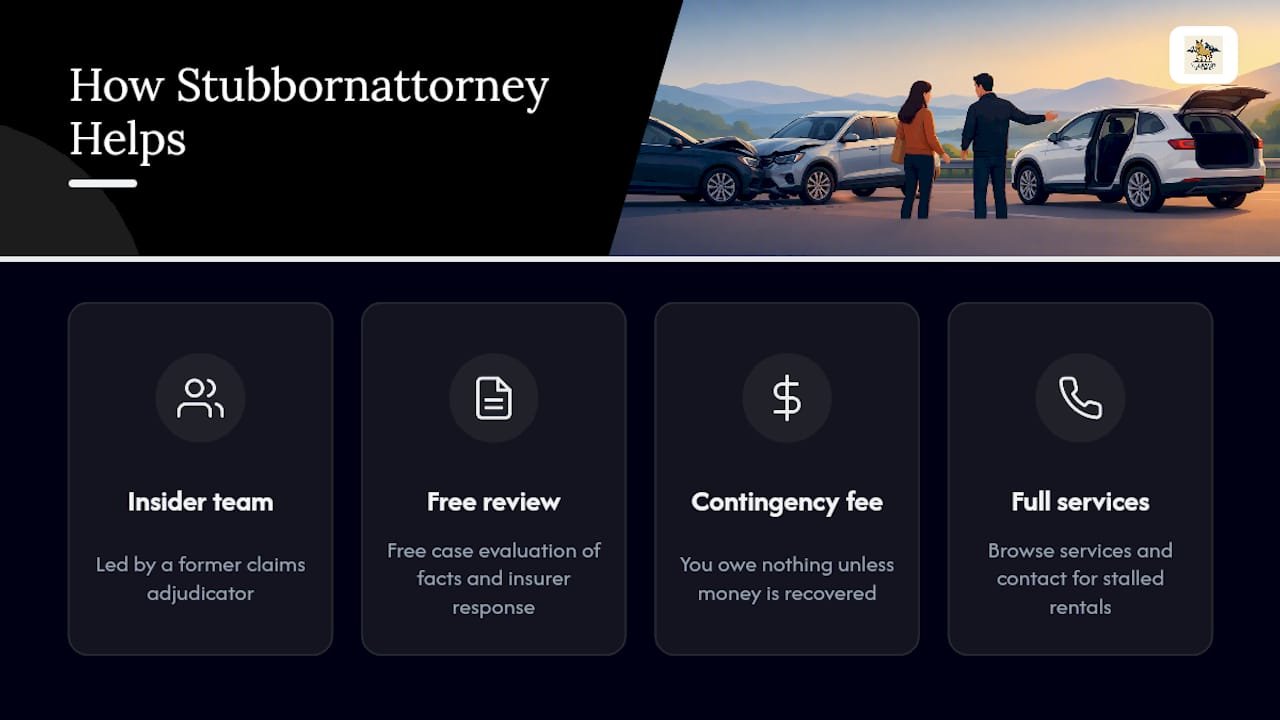
When an insurer stalls, denies, or lowballs your rental reimbursement, Stubbornattorney brings something most people don’t have access to on their own: a legal team led by a former claims adjudicator who knows exactly how insurers justify a denial and how to dismantle that justification. That inside knowledge is the real advantage here, not just legal representation in general.
A free case evaluation covers your accident facts and the insurer’s response so far. If your case proceeds, representation may run on a contingency fee basis, meaning you owe nothing unless money is recovered for you. Browse the full range of personal injury and accident services Stubbornattorney handles, then reach out for a free case evaluation if your rental reimbursement has stalled longer than it should.
This article is general information, not a substitute for advice from a qualified financial advisor. Consult a qualified financial professional about your own circumstances before acting on anything here.
Sources
- How long will insurance pay for a rental car after an accident? (Experian)
- Rental car reimbursement coverage (Progressive)
- How long will insurance pay for a rental car? (Car and Driver)
- 3 CCR 702-5-2-15-5 – Payment for Temporary Replacement of Damaged Motor Vehicles (Cornell LII)
FAQ
Does Insurance Give You a Rental Car After an Accident?
Yes, if you carry rental reimbursement coverage or if the at-fault driver’s liability insurer accepts responsibility for the crash. Your own coverage generally gets you into a car faster because it doesn’t require waiting on another insurer’s investigation.
What Should You Avoid Saying During an Insurance Claim?
Avoid guessing about fault, speculating about injuries you haven’t been diagnosed with, or giving a recorded statement before you understand what the adjuster is trying to establish. Stick to facts you’re certain of, and if the questions turn toward liability or injury severity, it’s reasonable to pause and consult an attorney first.
How Long Does It Take to Get a Rental Car After an Accident?
If you use your own rental reimbursement, you can often rent within a day, especially with a direct billing arrangement between your insurer and a rental company. Waiting on the at-fault driver’s insurer to accept liability can add days or weeks before payment starts.
Can I Rent a Car if I Had an Accident?
Yes, having been in an accident doesn’t stop you from renting a car, and most agencies offer claim rates specifically for accident victims presenting their paperwork. Bring your claim number, accident report, and driver’s license, and ask directly for an insurance or claim rate at the counter.
How Long Will Insurance Pay for a Rental Car?
Most policies cap rental reimbursement around 30 days, which lines up with the average repair timeline of about two weeks for most collision damage. Coverage typically ends once your insurer communicates a total-loss settlement, though Colorado requires third-party replacement vehicle payments to continue until that settlement is actually mailed or communicated, not merely offered.