


Act Within 24–72 Hours: Delayed Injury Symptoms After a Colorado Crash
Delayed injury symptoms are real and common after car crashes, falls, and other trauma, often surfacing anywhere from a few hours to several days after impact. Watch for headaches and confusion, neck or back pain, numbness or tingling, abdominal pain, unusual bruising, and mood or sleep changes. If any of these appear, get evaluated within 24 to 72 hours instead of waiting to see if things improve on their own.
Table of Contents
- Common Delayed Injury Symptoms After a Crash
- Why Symptoms Sometimes Appear Later
- Injury Types That Commonly Present With Delayed Symptoms
- When to See a Clinician and How to Document What’s Happening
- First 48 Hours: What Helps and What to Avoid
- Red Flags That Need Emergency Care Right Now
- Why Early Medical Records Matter: A Legal Perspective
- If You’re Dealing With Delayed Symptoms After a Crash
- Sources
- FAQ
Common Delayed Injury Symptoms After a Crash
Not every injury introduces itself right away. Some of the most serious ones wait days to make their presence known, which is exactly what makes post-injury symptoms so easy to dismiss until they’ve become harder to treat.
Here’s what tends to show up late, roughly in order of how often it appears in car accident cases:
- Headaches, dizziness, and mental fog. These can signal a concussion or mild traumatic brain injury and may build gradually over hours to days rather than hit all at once.
- Neck pain and stiffness (whiplash). Pain from whiplash frequently peaks 24 to 72 hours after impact, not at the scene.
- Back pain with radiating leg pain. This pattern often points to a disc injury that wasn’t obvious immediately after the crash.
- Numbness, tingling, or weakness. These suggest nerve compression or a peripheral nerve injury and deserve prompt attention.
- Abdominal pain, lightheadedness, or unexplained bruising. These can indicate internal bleeding, which is one of the more dangerous conditions to miss.
- Mood shifts, sleep disruption, or new anxiety. Psychological symptoms, including early PTSD signs, commonly emerge well after the physical shock has faded.
Delayed swelling and bruising are documented, not rare. Clinical guidance from the Merck Manual notes that swelling can take hours to develop after a soft-tissue injury, and steadily worsening pain is a red flag for more serious complications like compartment syndrome or vascular damage. If a bruise looks worse on day two than day one, that’s information, not just an inconvenience.
Why Symptoms Sometimes Appear Later
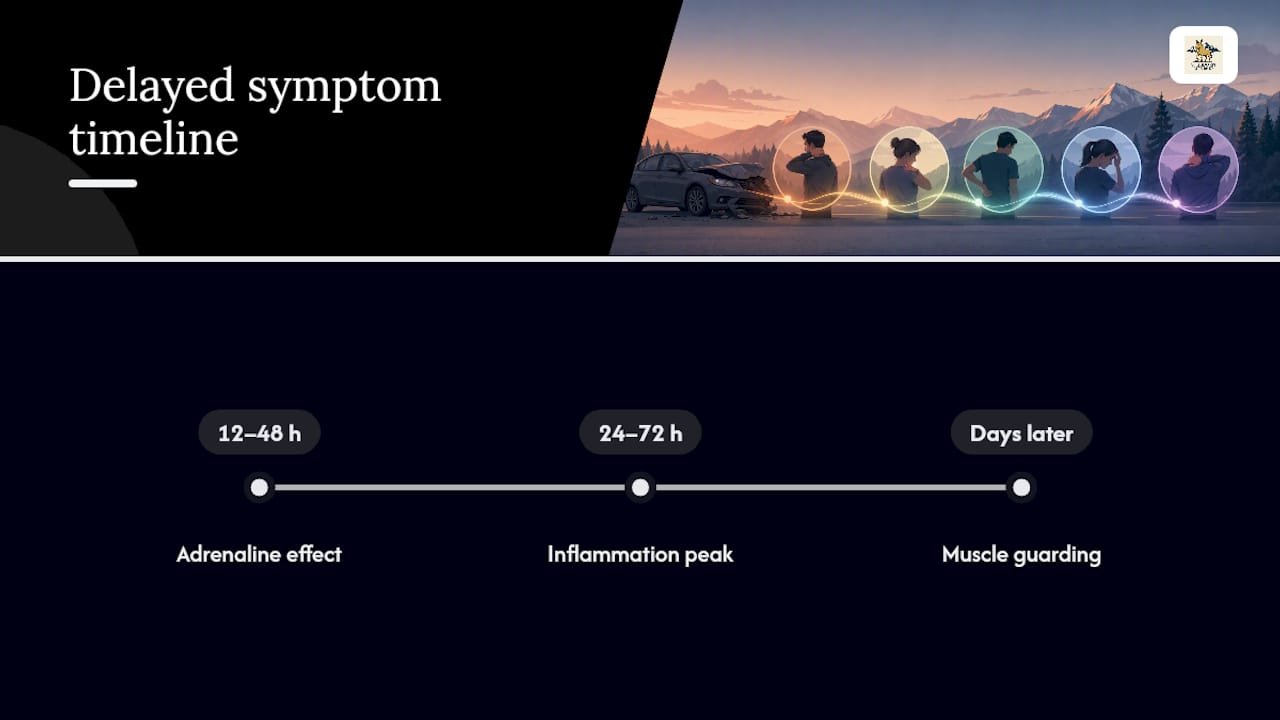
The body’s own chemistry buys you time you don’t actually have. Adrenaline and related stress hormones can mask pain for roughly 12 to 48 hours after trauma, according to the CDC, which is why so many people leave an accident scene saying they feel fine.
Inflammation runs on its own clock, too. It typically peaks 24 to 72 hours after the initial injury, which is often when swelling, stiffness, and pain finally register.
The gap between “feeling fine” and “actually fine” is usually a chemical one, not a medical miracle. Adrenaline dulls pain signals; it doesn’t repair tissue.
Muscle guarding adds another layer. Muscles tighten around an injured area to protect it, and that spasm itself becomes a source of pain days later. Structural issues, like a disc bulge slowly progressing toward herniation, can follow a similar delayed arc.
Injury Types That Commonly Present With Delayed Symptoms
Some diagnoses are practically defined by their delay. Knowing which ones to expect helps you take a new symptom seriously instead of shrugging it off.
- Soft-tissue injuries and whiplash: stiffness and limited range of motion that often worsen before they improve.
- Disc herniation: radiating pain, numbness, or weakness that may not show up until the disc has shifted further out of place.
- Concussion or mild traumatic brain injury: headaches, memory problems, and sensitivity to light or noise. The NINDS notes these symptoms are variable and can change throughout recovery, which is why follow-up matters even after an initial clean scan.
- Internal bleeding or organ injury: worsening abdominal pain or fainting that can require emergency imaging.
- Blood clots: leg pain and swelling that can progress toward chest symptoms if a clot travels to the lungs.
- Peripheral nerve injury: numbness or autonomic symptoms where early diagnosis, per Mayo Clinic, can prevent lasting complications.
- PTSD and psychological effects: mood and sleep changes that commonly surface days to weeks after the physical injury has already stabilized.
When to See a Clinician and How to Document What’s Happening
The window that matters most is the first 24 to 72 hours after a significant impact. Getting checked as soon as possible, even if you feel mostly okay, gives a clinician a real baseline instead of a guess made weeks later.
- Schedule an evaluation within 24 to 72 hours of the accident or the first sign of a new symptom.
- Describe the exact timeline to your provider: when a symptom started, how it’s changed, and what makes it better or worse.
- Ask that findings go into your medical record, not just a verbal note, so there’s a documented account tied to a date.
- Keep a simple symptom journal logging dates, times, and triggers, and photograph any visible bruising or swelling as it develops.
- Hold onto appointment and billing records, since a clear, consistent trail helps both your care team and, if needed later, an insurance or legal claim.
Contemporaneous records do double duty. They help a doctor track whether a nerve issue is improving or an old strain is turning into something else, and they establish a factual record that’s hard to dispute months later. Our guide on strengthening an injury claim walks through this in more detail.
First 48 Hours: What Helps and What to Avoid
The acute phase calls for restraint, not aggressive treatment. Ice, rest, gentle compression, and elevation are generally the safest moves in the first 24 to 48 hours after an injury.
- Apply cold, not heat. Harvard Health advises against heat and deep massage early on, since both can increase bleeding and inflammation rather than calm it.
- Use over-the-counter pain relievers as a short-term bridge, not a reason to ignore worsening neurological signs.
- Avoid pushing through pain with normal activity levels while swelling is still developing.
Pro Tip: If pain, numbness, or swelling gets worse after a day of rest and ice instead of easing up, that’s your signal to move up your medical appointment rather than wait it out.
Red Flags That Need Emergency Care Right Now
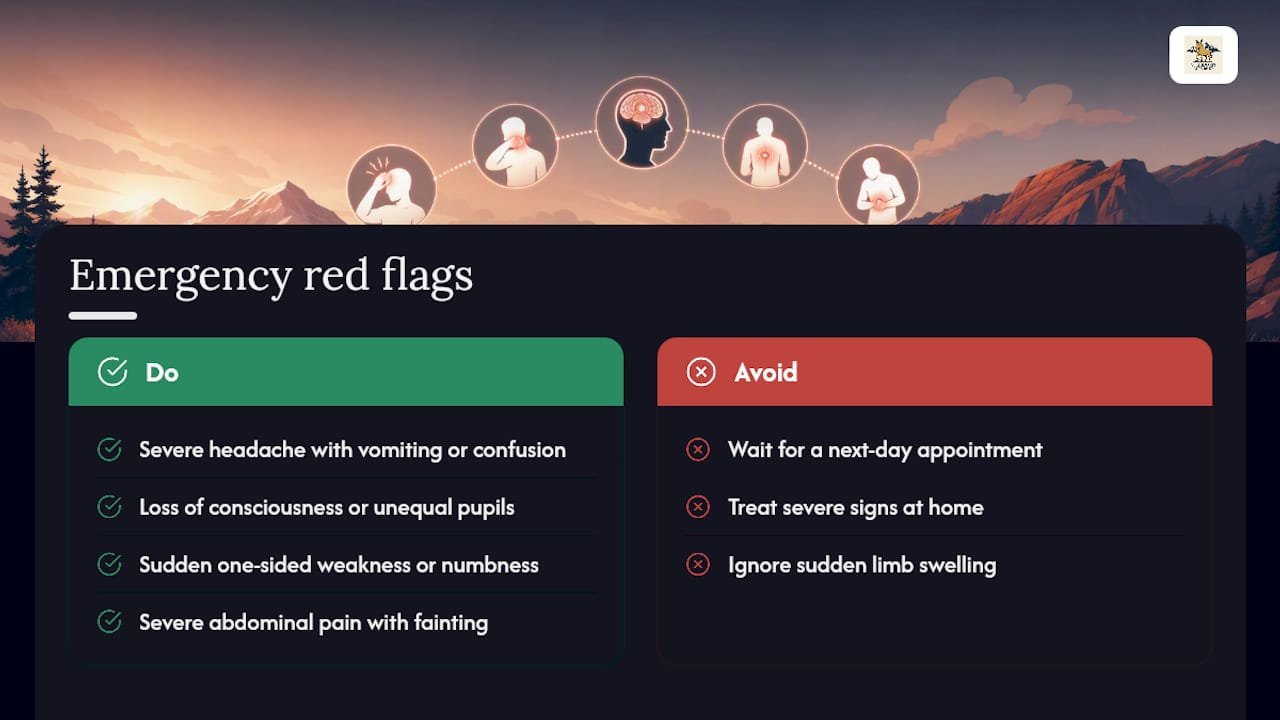
Some symptoms don’t belong on a wait-and-see list. A severe or worsening headache with vomiting, confusion, loss of consciousness, unequal pupils, or sudden weakness on one side of the body warrants a trip to the emergency department, not a next-day appointment.
The same goes for severe abdominal pain paired with fainting or a racing heartbeat, which can point to internal bleeding. Sudden numbness, an inability to move a limb, or one leg swelling far more than the other also need immediate attention. Shortness of breath or chest pain deserves the same urgency, since both can signal a blood clot that’s reached the lungs.
Why Early Medical Records Matter: A Legal Perspective
Ryan Malnar has spent over a decade representing injured clients in Colorado, after years working as a federal claims adjudicator evaluating claims from the other side of the table. That vantage point makes one thing clear: a symptom journal and an early medical visit don’t just guide better treatment, they build the factual record that insurers scrutinize later. If a delayed symptom raises legal questions about your accident, a free case review can help you understand your options.
— Ryan
If You’re Dealing With Delayed Symptoms After a Crash
Insurance adjusters look for gaps between the accident date and your first medical visit, and they use those gaps to argue your injury wasn’t serious or wasn’t related to the crash at all. Stubbornattorney handles that fight directly. Cases are worked by attorneys, not passed off to a case mill, and clients pay nothing unless the case results in a settlement or verdict.
If you’re already dealing with a headache that won’t quit, numbness that showed up two days after a fender bender, or back pain that’s getting worse instead of better, that’s exactly the kind of delayed symptom worth discussing with someone who’s seen how insurers evaluate these claims. Our personal injury services page covers the full range of cases we handle, from whiplash to internal injuries. Reach out for a free case review and find out where you stand before an adjuster tells you what your claim is worth.
This article is general information, not a substitute for advice from a qualified doctor. Consult a qualified healthcare professional about your own circumstances before acting on anything here.
Sources
- Signs and Symptoms | Traumatic Brain Injury | CDC
- Peripheral nerve injuries – Symptoms and causes | Mayo Clinic
- Overview of sprains and other soft-tissue injuries | Merck Manual Consumer Version
- Cold versus heat for pain relief: How to use them safely and effectively | Harvard Health Publishing
- Traumatic brain injury information | NINDS
FAQ
Can You Have a Delayed Reaction to an Injury?
Yes. Adrenaline can mask pain for roughly 12 to 48 hours after trauma, and inflammation typically peaks 24 to 72 hours later, which is why symptoms like headaches, stiffness, or bruising often show up after the initial shock wears off rather than right at the scene.
What Are Delayed Symptoms After an Accident?
The most common ones include headaches and confusion, neck and back pain, numbness or tingling, abdominal pain, delayed bruising, and mood or sleep changes. Any of these appearing hours or days after a crash should prompt a medical evaluation rather than a wait-and-see approach.
What Is a Delayed Injury?
A delayed injury is one where the physical damage occurred at the time of the accident, but the symptoms didn’t become noticeable until later, sometimes days later, due to adrenaline, inflammation timing, or a structural issue like a disc that progresses over time. Whiplash and mild concussions are two of the most frequently delayed diagnoses.
Can an Injury Show Up Days Later?
Yes, and it’s common enough that clinicians routinely advise a follow-up evaluation even for people who felt fine immediately after an accident. Disc herniations, peripheral nerve injuries, and internal bleeding are among the conditions most likely to reveal themselves days after the original impact.
Does Stubbornattorney Help With Delayed Injury Claims?
Yes. Stubbornattorney represents injured people across Colorado, including cases where symptoms didn’t appear until days after a car accident, and current pricing details are available on the services page.