
When to Replace a Car Seat After an Accident in 2026
Replace the car seat if the crash was moderate or severe, or if you have any doubt about how hard the impact was. The National Highway Traffic Safety Administration (NHTSA) says a car seat only stays safe to reuse when the crash meets all five minor-crash criteria: the vehicle was drivable afterward, the door nearest the seat wasn’t damaged, no one in the car was injured, the airbags didn’t deploy, and there’s no visible damage to the seat. Miss even one, and it’s time for a new seat.
Some manufacturers set the bar even lower. Graco recommends replacing any car seat that rode through any crash, period, because internal stress fractures don’t always show on the outside. When manufacturer guidance and NHTSA guidance disagree, follow whichever one is stricter for your seat.
Right now, before anything else:
- Stop using the seat immediately, even if it looks fine
- Photograph the seat, the vehicle damage, and the installation from multiple angles
- Get the police report on record, noting a child passenger seat was in the vehicle
- Don’t let anyone else use or borrow the seat until it’s evaluated
Table of Contents
- What to Check for Car Seat Replacement After an Accident
- How NHTSA Guidance and Manufacturer Policies Differ
- Getting Insurance to Cover a Car Seat Replacement
- Choosing and Installing a New Car Seat Fast
- Disposing of the Old Seat Without Losing Your Claim
- A Claims Adjuster’s View on Car Seat Documentation
- Get Help When the Insurance Fight Isn’t About the Car Seat Anymore
- Sources
- FAQ
What to Check for Car Seat Replacement After an Accident
Before you call your insurer, walk through the physical inspection. This tells you whether you’re dealing with an obvious replacement case or a gray area worth documenting carefully.
Start with NHTSA’s five minor-crash conditions, applied one by one:
- Could the vehicle be driven away from the crash scene? If it needed a tow, that alone pushes you toward replacement.
- Was the vehicle door closest to the car seat undamaged? Check for dents, cracked window seals, or misaligned panels near where the seat was installed.
- Did anyone in the vehicle suffer an injury, however minor? A sore neck counts.
- Did any airbags deploy? Deployment changes the crash classification regardless of the seat’s condition.
- Is there any visible damage to the car seat itself? This includes the harness, buckle, and base, not just the shell.
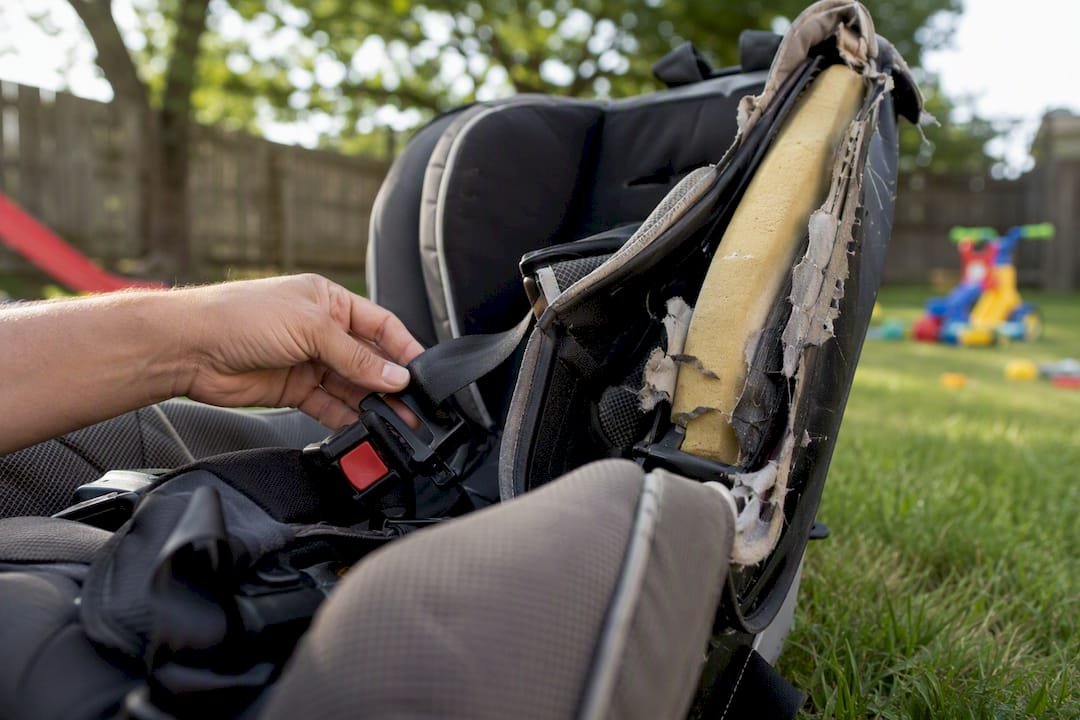
Beyond that checklist, look for specific red flags: cracks or spider webbing in the plastic shell, foam padding that’s compressed or crushed, a harness strap that’s frayed or stretched, a chest clip or buckle that sticks or won’t latch cleanly, and bent or deformed metal on the LATCH connectors or tether hook.
Here’s the detail most parents miss. A seat that was in the car but empty during the crash can still be structurally compromised, because the crash forces act on the seat itself, not on whether a child was strapped into it. Internal fatigue and stress can weaken a seat in ways you’d never spot from the outside.
Document everything before you touch or move the seat: photos from the front, back, sides, and underside; the make, model, and serial number (usually on a sticker on the bottom or back); your claim number once one exists; and any salvage or disposal instructions your insurer gives you.
Pro Tip: Photograph the seat’s serial number sticker separately and in focus. Insurers and manufacturers both need this exact number to process a claim or issue a replacement letter, and it’s often too small to read in a wide shot.
How NHTSA Guidance and Manufacturer Policies Differ
NHTSA’s standard is the federal baseline, and it’s built around measurable crash severity, not caution for its own sake. A crash counts as minor, and reuse is permissible, only when it satisfies every one of these:
- The vehicle was driveable from the crash scene
- The door nearest the car seat was undamaged
- No occupants were injured in the crash
- The airbags did not deploy
- There is no visible damage to the car seat
Manufacturers frequently go further than that federal floor, and it’s worth understanding why. Graco’s policy is to recommend replacement after any crash, visible damage or not, because the company would rather absorb the cost of a warranty replacement than risk a seat with hidden structural weakness. Other manufacturers, including Safety 1st and Britax, publish their own crash-replacement policies in the owner’s manual, and those policies don’t always match each other or NHTSA’s minor-crash standard.
That inconsistency is exactly why Consumer Reports tells parents to check the specific manual for their seat and call the manufacturer directly if anything is unclear. Do that, and write down who you spoke with and what they told you. If you end up filing an insurance claim, that manufacturer statement becomes evidence supporting your request.
Getting Insurance to Cover a Car Seat Replacement
Collision coverage is typically the piece of your auto policy that pays for a damaged car seat, and Progressive’s guidance notes that insurers often approve replacement even when the seat shows no visible damage, especially when a manufacturer’s crash policy supports it. Insurers generally aim to reimburse for a seat that matches the quality and type of the one that was damaged, not a downgrade.
Before you call the adjuster, assemble:
- Photos of the seat and the vehicle damage
- A police report that specifically notes a child passenger seat was in the vehicle
- The seat’s make, model, and serial number
- Your original purchase receipt, if you still have it
- A manufacturer statement or letter, if the manual or a phone call gave you one
When you talk to the claims adjuster, walk through the crash details plainly: how the impact happened, whether the seat was occupied, and any visible or suspected damage. Ask directly whether collision coverage applies to the seat and what documentation they need to process reimbursement.
If the claim gets denied, don’t treat that as final:
- Ask for the denial reason in writing
- Submit a manufacturer letter or published crash-replacement policy to counter it
- Resubmit with your full documentation packet, referencing the specific policy language
- If the insurer still won’t budge and the dispute involves real money or an injury claim, contacting an attorney is a reasonable next step
Filing the claim correctly the first time saves weeks. Our guide on documenting injuries and property after a Colorado crash covers the broader evidence-gathering process this ties into.
Choosing and Installing a New Car Seat Fast
Match the replacement to what your child actually needs, not just what’s in stock. If your old seat was a convertible seat rated for your child’s current height and weight, replace it with an equivalent class, not a step down in features or crash protection just to save money.
Skip used car seats entirely unless you personally know the seat’s full history. A seat with an unknown past could already be crash-damaged, and you’d have no way to know until it fails when you need it most.
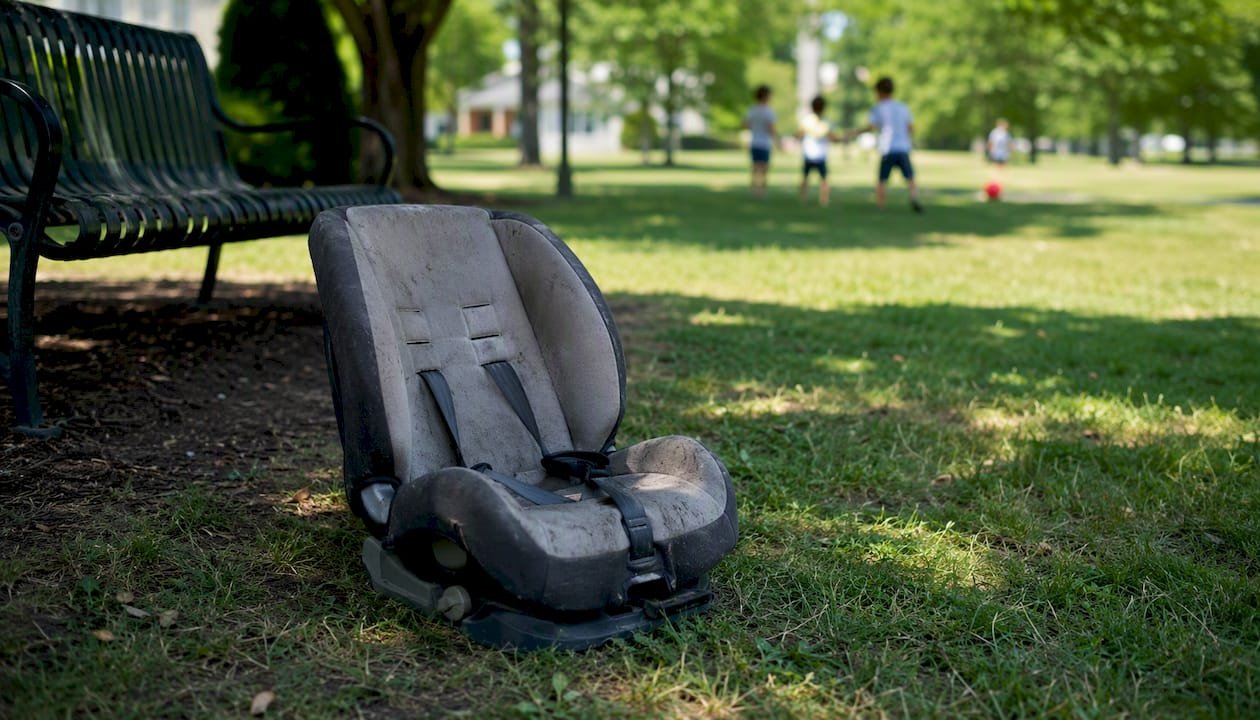
Check two things on any new seat before you buy: the expiration date (usually stamped on the shell, typically 6 to 10 years from manufacture) and whether the model has any open recalls. NHTSA’s recall lookup takes under a minute and can save you from installing a seat with a known defect.
Getting the seat installed correctly matters as much as buying the right one. Certified Child Passenger Safety (CPS) technicians run free inspection events through local fire departments, police stations, and hospitals in most Colorado communities, and they’ll check your installation angle, harness tightness, and LATCH or seatbelt routing on the spot.
- Buy a seat that matches your child’s current size and stage, not a cheaper alternative
- Confirm the manufacture date and expiration window before purchase
- Search the model number against NHTSA’s recall database
- Get the installation checked by a certified CPS technician
- Save the receipt and photograph it immediately alongside the seat’s serial number
Pro Tip: Label the new seat’s box or a sticker on the shell with the purchase date. If you’re ever in a second accident years down the road, that date instantly answers how old the seat was, which speeds up any future claim.
Disposing of the Old Seat Without Losing Your Claim
Call your insurer before you throw anything away. Some companies want to physically inspect the damaged seat, or ask you to hold onto it until the claim closes, and tossing it early can complicate reimbursement.
Once you have the green light to dispose of it, disable the seat so no one else can accidentally reuse it:
- Cut the harness straps completely through
- Remove and discard the foam padding and cover
- Write “DO NOT USE, CRASH DAMAGED” directly on the shell in permanent marker
- Photograph the seat in this disabled state before you put it out for trash pickup
Keep every piece of paper in one folder, physical or digital: the purchase receipt, all photos, the police report number, your claim number, and any manufacturer letter. If a dispute ever resurfaces, that folder is your entire case.
A Claims Adjuster’s View on Car Seat Documentation
Insurers evaluate seat-replacement claims the same way they evaluate any property claim: against the paper trail, not against your account of how bad the crash felt. As a former federal claims adjudicator, I’ve seen straightforward claims get denied purely because the file was missing a serial number or a police report line item, not because the request itself was unreasonable.
If your reimbursement gets denied, if fault is disputed, or if your child was injured and needs ongoing medical care, that’s when this stops being a paperwork problem and becomes a legal one. Preserve every photo, get copies of your child’s medical records if there’s any injury at all, and keep a simple timeline of every call and email with the insurer. That timeline is often what turns a denied claim into a paid one.
— Ryan
Get Help When the Insurance Fight Isn’t About the Car Seat Anymore
A car seat claim is usually simple. It becomes complicated fast when the same crash involves a disputed fault determination, a lowball settlement offer, or an injury to your child that the insurer wants to minimize. That’s where Stubbornattorney steps in, not as another insurance hotline, but as an advocate who negotiates directly with the adjuster on your behalf, using the same documentation standards, photos, serial numbers, police reports, and manufacturer letters, that got your car seat claim approved in the first place.
Stubbornattorney works on contingency, so you pay nothing upfront and nothing at all unless we recover compensation for you. If your family was hurt in the crash or the insurer is fighting you on more than the car seat, start with a free case review and find out where you actually stand.
Sources
- NHTSA — Car seat use after crash
- Graco — Do I need to replace my car seat after an accident
- Consumer Reports — Should you replace your car seat after a crash?
- Progressive — Does insurance cover car seats?
FAQ
Do I have to replace a car seat after a minor fender bender?
Only if the crash fails one of NHTSA’s five minor-crash criteria: the vehicle wasn’t driveable, the nearest door was damaged, anyone was injured, an airbag deployed, or the seat shows visible damage. If all five conditions check out clean, NHTSA does not require replacement.
Does an empty car seat need replacement after a crash?
Yes, in many cases. Crash forces stress the seat’s structure regardless of whether a child was buckled in, and manufacturers like Graco recommend replacement after any crash for this exact reason.
Will my car insurance actually pay for a new car seat?
Usually, yes, under collision coverage, and Progressive notes that insurers often reimburse even without visible seat damage when the crash circumstances support it. Approval speeds up significantly with photos, a police report, and the seat’s serial number on hand.
How fast should I get a replacement car seat after an accident?
Get a new seat installed before you drive with your child again; don’t wait on the insurance claim to resolve first. Reimbursement can take days to weeks, but your child’s safety on the road shouldn’t wait on that timeline.
What if the insurance company denies my car seat replacement claim?
Request the denial reason in writing, then resubmit with a manufacturer letter or published crash policy supporting replacement. If the insurer still refuses and the dispute involves an injury or a larger settlement fight, speaking with an attorney is a reasonable next step.