
How to Handle Minor Accidents: 2026 Safety Guide
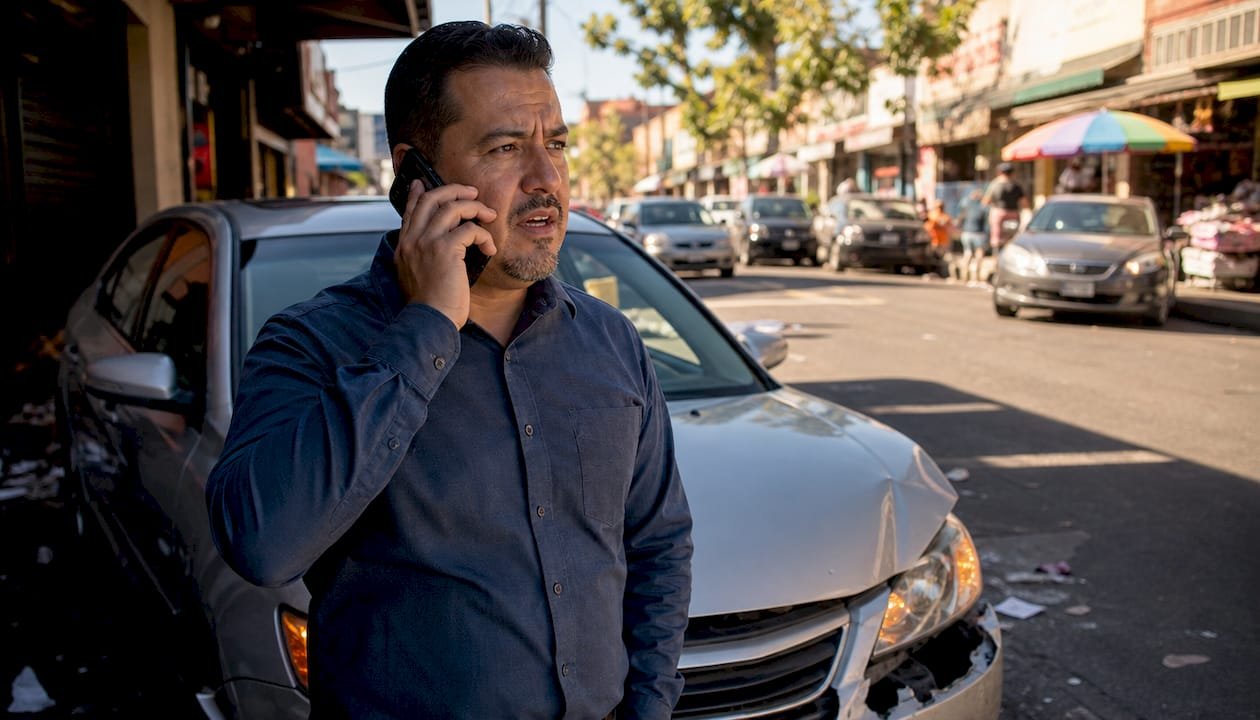
Knowing how to handle minor accidents correctly is the difference between a resolved claim and a legal nightmare. A minor collision, also called a low-impact crash, still carries real legal obligations: you must stop, exchange information, document the scene, and notify your insurer. Delayed injury symptoms like whiplash can appear hours after impact, and hidden structural damage can compromise your vehicle’s safety even when it looks fine. Getting these steps right from the start protects your health, your rights, and your wallet.
How to handle minor accidents: your first moves at the scene
The first two minutes after a collision set the tone for everything that follows. Your actions in that window determine whether your insurance claim goes smoothly or gets disputed.
Stop immediately and activate your hazard lights. Every jurisdiction legally requires drivers to stop after any collision, regardless of how minor it seems. Leaving the scene, even briefly, can result in hit-and-run charges. That is a criminal offense in most states, not just a traffic violation.

Once stopped, check yourself and every passenger for injuries. Pay close attention to neck stiffness, headaches, or dizziness. These are early signs of whiplash or a concussion, both of which are delayed onset injuries that may not fully surface for 24 to 72 hours. Getting checked by a medical professional the same day creates a record that protects your claim later.
If the vehicles are drivable and it is safe to do so, move them to the shoulder or a nearby parking lot. Leaving cars in active traffic lanes creates a secondary hazard. Once you are in a safe spot, place reflective triangles or flares behind your vehicle to warn oncoming drivers.
Before you drive away, inspect for hidden damage including fluid leaks under the vehicle, tire sidewall bulges, warning lights on the dashboard, and any grinding or knocking sounds when you move the car. Surface damage often masks frame misalignment or bumper bracket failures that are invisible to the naked eye.
“Even a low-speed rear-end collision can misalign a bumper’s mounting structure, which only shows up as a handling problem weeks later. Never assume ‘it looks fine’ means it is fine.”
Pro Tip: Take a short video walk-around of both vehicles before anyone moves them. Video captures angles and context that still photos often miss.
What information should you collect at the accident scene?

Collecting the right information at the scene is your single most powerful protection against disputes. Memory fades fast, and the other driver’s account may change by the time your insurer calls.
Gather these five data points from every other driver involved:
- Full legal name and current contact information
- Driver’s license number and issuing state
- Insurance company name and policy number
- Vehicle make, model, year, and license plate number
- Contact details for any passengers in the other vehicle
Witness information is equally valuable. Ask bystanders for their name and phone number. A neutral third-party account carries significant weight with insurers and in court. Write down witness statements on the spot, or ask them to record a brief voice memo on your phone.
Pro Tip: Use your phone’s notes app to type information directly from the other driver’s license and insurance card. Photographs of documents are useful, but typed notes are searchable and easier to share with your insurer.
How to photograph the accident scene effectively
Photos are the foundation of any strong claim. Capture scene context including traffic signs, lane markings, skid marks, debris, and weather conditions. Insurers rely on scene context photos to establish liability, not just close-up damage shots.
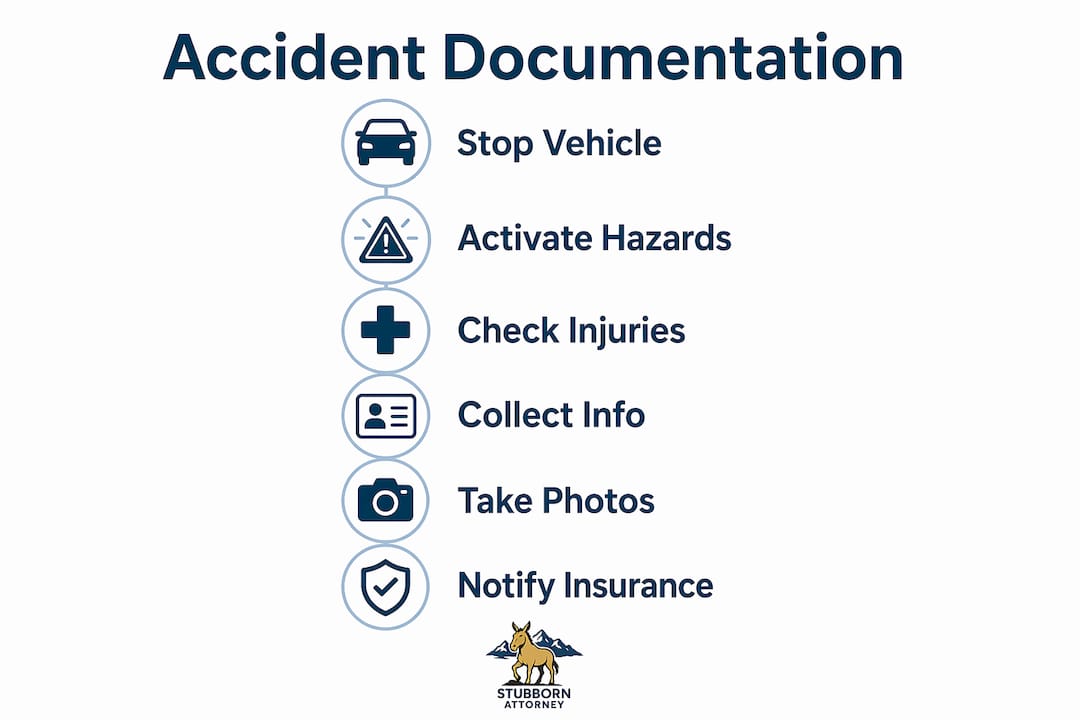
The table below shows what to photograph and why each shot matters.
| Photo type | What to capture | Why it matters |
|---|---|---|
| Wide scene shot | Both vehicles, road layout, signs | Establishes position and fault context |
| Damage close-up | Each point of contact on both cars | Documents the extent of impact |
| License plates | Both vehicles | Confirms identity of cars involved |
| Road conditions | Wet pavement, ice, potholes | Supports liability arguments |
| Injury photos | Visible bruising, cuts | Connects physical harm to the crash |
Documenting accident evidence thoroughly from the start gives your attorney and insurer objective facts to work with, rather than competing memories. Sketch a quick diagram of the collision layout in your notes app, showing vehicle positions and direction of travel. That sketch takes 60 seconds and can resolve a disputed liability claim.
“Legal and insurance professionals consistently stress that objective documentation is more reliable than any witness’s memory, including your own.”
When should you call the police after a minor accident?
Police involvement is not optional in every situation. Knowing when the law requires a report protects you from penalties and strengthens your claim.
You must call the police when:
- Any person involved reports pain or visible injury, even if they say it is minor
- Either vehicle cannot be driven safely from the scene
- The other driver is uncooperative, uninsured, or appears impaired
- Property damage meets or exceeds your state’s mandatory reporting threshold
- A government vehicle, commercial truck, or rental car is involved
State reporting requirements vary significantly. Some states require a police report for any damage above $500, while others set the threshold at $2,500 or higher. Check your state’s Department of Motor Vehicles website for the exact figure. Failing to report when required can result in license suspension or fines.
If police do not respond to a minor property-damage-only crash, most states allow you to file a self-report, sometimes called a Driver’s Exchange of Information form or a citizen’s accident report. File it within the time window your state specifies, which is typically 10 days. Keep a copy for your records and share it with your insurer.
A police report does more than satisfy a legal requirement. It creates an independent, timestamped record of the facts. Insurers treat police reports as credible third-party evidence. Without one, a disputed claim comes down to your word against the other driver’s. The Colorado car accident legal checklist from Stubbornattorney outlines exactly what documentation to gather whether or not police attend the scene.
“A police report is not just paperwork. It is the closest thing to a neutral witness you will ever have at an accident scene.”
How do you notify your insurance company after a minor accident?
Prompt insurance notification is a critical safeguard for drivers, even after minor accidents. Delayed reporting can result in claim denials, reduced settlements, or policy complications. Contact your insurer the same day the accident occurs.
When you call, have the following ready:
- The date, time, and exact location of the accident
- The other driver’s name, license number, and insurance details
- Your photos, witness contact information, and any police report number
- A brief, factual description of what happened, without admitting fault
- A list of any symptoms you or your passengers are experiencing
Your insurer will assign a claims adjuster to evaluate the damage and determine liability. Be factual and consistent in every conversation. Adjusters note discrepancies between your initial report and later statements. Those discrepancies can reduce your payout.
Deciding whether to file a claim is a separate question from notifying your insurer. If the damage is minor and clearly below your deductible, you may choose to pay out of pocket. However, you should still notify your insurer of the incident. If the other driver later files a claim against you, your insurer needs to know the accident occurred.
Pro Tip: Request a copy of your insurer’s recorded statement policy before agreeing to a recorded call. You have the right to review what you said, and that record can protect you if the claim is disputed later.
Monitor your physical condition for at least 72 hours after the crash. Medical evaluation after a minor accident documents injuries that are invisible or delayed, which is critical for validating future claims. If new symptoms appear, see a doctor immediately and report the update to your insurer in writing.
The 10 steps to strengthen injury claims guide from Stubbornattorney walks through exactly how to build a claim file that holds up under insurer scrutiny.
Common mistakes that complicate minor accident claims
Most claim disputes trace back to errors made in the first hour after a crash. Avoiding these mistakes costs nothing and protects everything.
- Admitting fault or apologizing at the scene. A simple “I’m sorry” is treated as an admission of liability by insurers and opposing attorneys. Avoid arguing or admitting fault regardless of how you feel about what happened. Fault is determined by evidence, not by roadside conversation.
- Leaving the scene before exchanging information. Even if the other driver waves you off, document the exchange. Get their information in writing. If they refuse, note their plate number and call the police.
- Relying on memory instead of documentation. Details blur within hours. Write down your account of the accident immediately, including the sequence of events, road conditions, and what each driver said.
- Skipping medical evaluation because you feel fine. Adrenaline masks pain. Injuries like soft tissue damage and concussions are often invisible at the scene. A same-day medical visit creates the paper trail that supports your claim.
- Ignoring state reporting deadlines. Missing a mandatory reporting window can void your right to file a claim or result in a license suspension. Check your state’s deadline and file within it.
The financial consequences of these errors are real. A claim denied for late reporting or an injury dismissed because there is no medical record can cost you thousands of dollars. Injury documentation is the foundation of any successful claim, and it starts at the scene.
What I’ve learned from a decade of accident cases
After more than ten years representing injury victims in Colorado, I can tell you the cases that go sideways share one common thread: the driver tried to handle everything informally at the scene. They shook hands, exchanged numbers, and agreed not to involve insurance. Three weeks later, the other driver filed a claim, and my client had no documentation, no police report, and no medical record.
The biggest misconception I see is that a “minor” accident does not require serious attention. Minor refers to the severity of the collision, not the complexity of what follows. A fender bender can produce a whiplash injury that requires months of physical therapy. A cracked bumper can hide frame damage that totals a vehicle. The steps you take in the first hour determine whether you are protected or exposed.
Staying calm at the scene is not just good advice. It is a legal strategy. When you stay composed, you collect better information, avoid statements that can be used against you, and make clearer decisions. Panic leads to gaps in documentation and conversations you will regret.
My practical advice: treat every accident, no matter how small, as if it will end up in front of an adjuster or a judge. Because sometimes it does. Follow the legal steps, document everything, and get a medical evaluation. If the other party later disputes fault or an injury surfaces, you will be glad you did. And if you are ever unsure whether your situation warrants legal advice, a free consultation costs you nothing and can clarify everything.
— Ryan
When Stubbornattorney can help after a minor accident
Minor accidents do not always stay minor. When a claim gets disputed, an injury surfaces days later, or an insurer pushes back on your documentation, having an attorney in your corner changes the outcome. Stubbornattorney, the brand home of Malnar Injury Law, represents only injured victims across Colorado. Ryan Malnar spent years as a federal claims adjudicator before becoming a personal injury attorney, which means he knows exactly how insurers evaluate claims and where they look for reasons to reduce payouts. Review common personal injury case examples to see whether your situation qualifies, or request a free personal injury case review to get a direct assessment of your options.
FAQ
What are the first steps after a minor accident?
Stop immediately, activate your hazard lights, check all parties for injuries, and move vehicles to safety if possible. Then exchange information, document the scene with photos, and notify your insurer the same day.
Do you have to call the police for a minor accident?
Police involvement is legally required when injuries occur or property damage meets your state’s reporting threshold. If police do not respond, file a self-report with your state’s DMV within the required window, typically 10 days.
How soon should you contact your insurance company?
Notify your insurer the same day the accident occurs, regardless of fault. Delayed reporting can result in claim denials or reduced settlements.
Can you settle a minor accident without involving insurance?
You can pay for minor damage out of pocket, but you should still notify your insurer of the incident. If the other driver files a claim against you later, your insurer needs a record that the accident occurred.
What if injuries appear days after a minor accident?
Delayed onset injuries like whiplash and concussions are common after low-impact crashes. See a doctor immediately when new symptoms appear, and report the update to your insurer in writing to protect your claim.