
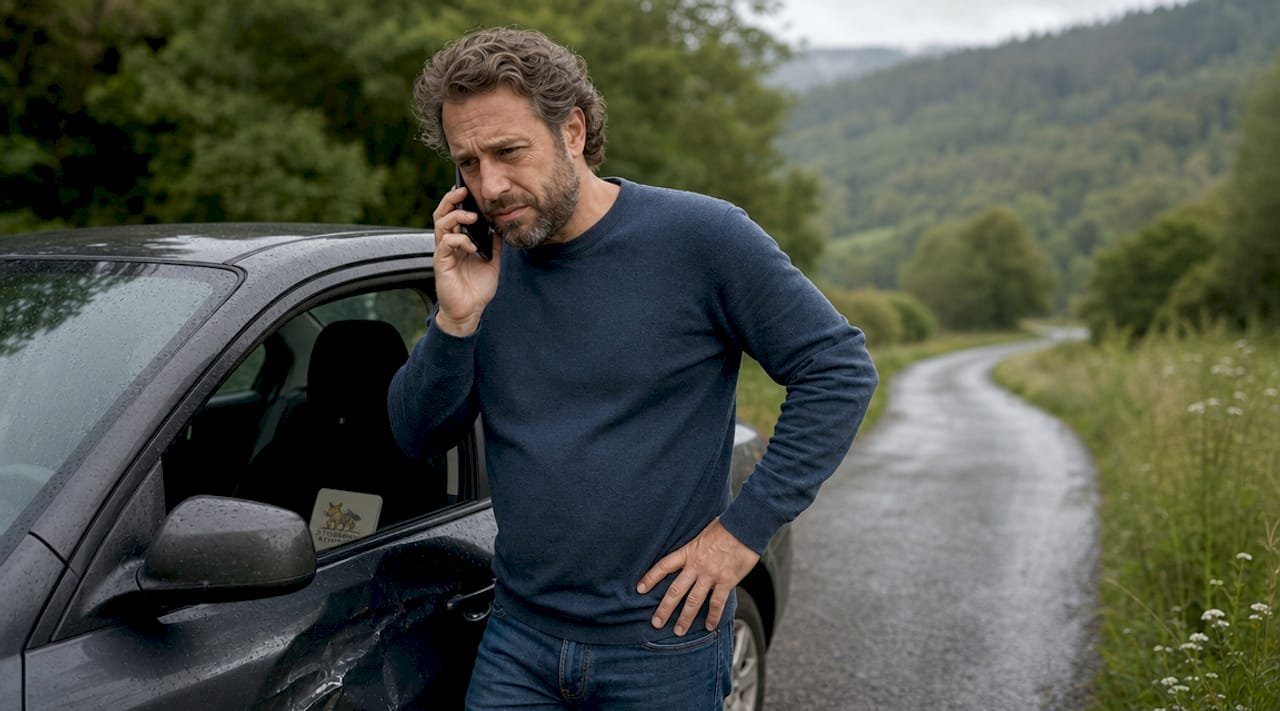
Why Act Quickly After a Car Accident: What You Need to Know
Acting quickly after a car accident is the single most important factor in protecting your health, your evidence, and your legal rights. The decisions you make in the first 30 minutes to 72 hours directly shape whether your insurance claim succeeds or falls apart. Adrenaline masks injuries, witnesses disappear, and insurance adjusters start building their case against you before you’ve even left the scene. This guide walks you through exactly what to do, why timing matters so much, and how prompt action translates into better medical outcomes and stronger compensation.
Why act quickly after a car accident: the critical timeframes
The first 24 to 72 hours after a crash are the most consequential window for your claim. Every hour you wait, physical evidence degrades, memories fade, and the insurance company gains ground. This is not a general caution. It is a structural reality of how personal injury claims work in Colorado and across the United States.
Insurance adjusters operate on a tight internal schedule. They begin investigating claims within 24 to 48 hours of a reported accident, often reaching out to victims while they are still in shock, still in pain, and still without legal counsel. Their goal is to gather recorded statements that limit the company’s liability. Yours should be to protect yourself before that call comes.

The legal term for this body of time-sensitive obligations is “post-accident duty to preserve evidence.” It covers everything from photographing the scene to notifying your insurer to seeking medical care. Understanding this framework is the foundation of any successful personal injury claim.
What are the most important first steps to take after a crash?
The steps you take at the scene set the tone for everything that follows. Here is the sequence that protects you most effectively:
- Call 911 immediately. Even if injuries seem minor, a police report creates an official, objective record that insurance companies and courts accept without dispute. Filing a police report establishes a verified timeline that is nearly impossible for the other party to contradict later.
- Check yourself and others for injuries. Do not assume you are fine because you feel fine. Adrenaline is a powerful painkiller in the short term.
- Move to safety if possible. If the vehicles are drivable and the scene is dangerous, move them to the shoulder. Turn on hazard lights and set up flares or cones if available.
- Photograph everything before anything moves. Capture vehicle damage from multiple angles, skid marks, road conditions, traffic signs, and any visible injuries. Evidence at the scene degrades within 5 to 10 minutes as vehicles are moved and bystanders leave.
- Collect witness information before they leave. Get full names, phone numbers, and email addresses. Witnesses who leave the scene without providing contact details are effectively gone forever.
- Exchange information with the other driver. Name, license number, insurance carrier, policy number, and vehicle registration.
- Do not admit fault or apologize. Even a casual “I’m sorry” can be used as an admission of liability. Stick to factual statements only.
Pro Tip: Take a short video walking around both vehicles and narrating what you see. A 60-second video captures details that a dozen still photos can miss, including the exact position of the cars and any debris on the road.
After leaving the scene, notify your insurance company that the accident occurred. You are not required to give a recorded statement at this stage. Simply report the fact of the accident and say you will follow up.
Why is timely medical evaluation crucial after a car accident?
Medical care after a crash serves two purposes simultaneously: it protects your health and it creates the documentation your claim depends on. These two goals are inseparable.
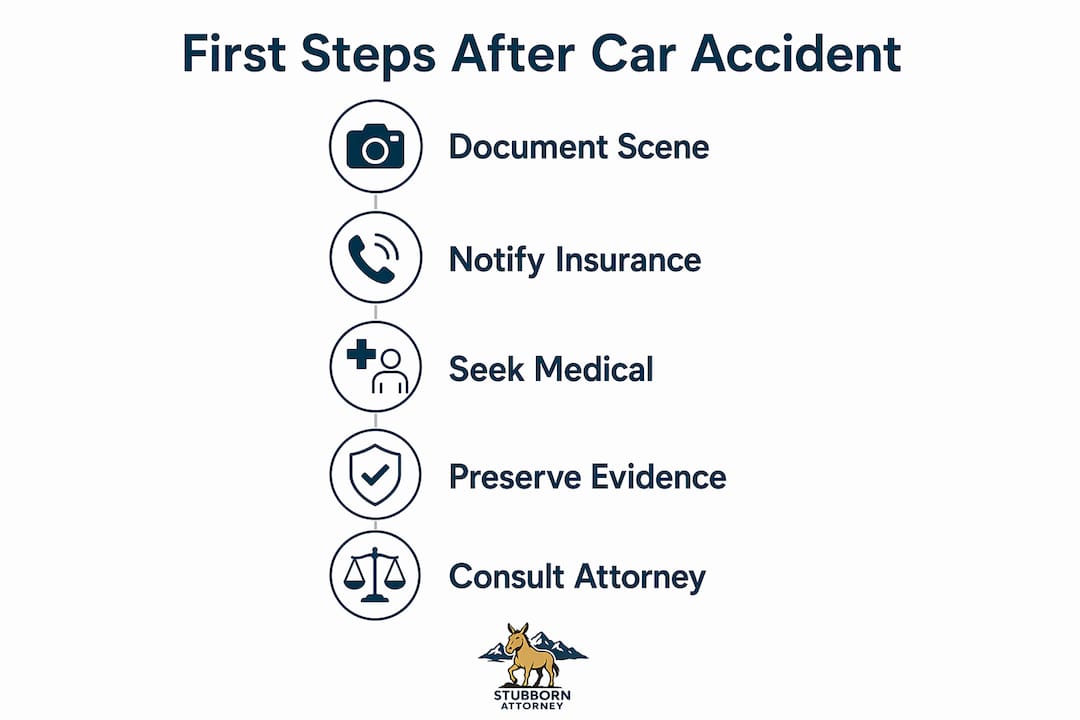
Adrenaline masks injury symptoms immediately after a crash. Whiplash, soft tissue injuries, traumatic brain injuries, and internal bleeding can all present with little or no pain in the first hours after impact. By the time symptoms become undeniable, days may have passed. That gap is exactly what insurance adjusters use to argue that your injuries were not caused by the accident.
Common delayed-onset injuries include:
- Whiplash: Neck stiffness and pain often peak 24 to 48 hours after the collision, not immediately.
- Soft tissue injuries: Muscle tears and ligament damage may not produce significant pain until inflammation sets in.
- Concussion and traumatic brain injury: Headaches, confusion, and memory problems can emerge gradually over days.
- Internal injuries: Abdominal pain, dizziness, and bruising from internal bleeding may not be obvious at the scene.
- Psychological trauma: Anxiety, sleep disruption, and PTSD symptoms often surface weeks after the crash.
Consistent medical treatment and thorough documentation make injury claims significantly harder for insurers to dispute. Missed appointments or unexplained gaps in treatment are routinely cited by adjusters as evidence that injuries were not serious. Every visit, every diagnosis, and every prescribed treatment creates a paper trail that connects your injuries directly to the accident.
Pro Tip: Ask your doctor to explicitly document in your medical records that your injuries are consistent with a motor vehicle accident. That specific language matters when your claim is reviewed.
For a deeper look at how treatment timing affects your claim, Stubbornattorney has a detailed breakdown on why medical treatment matters after an accident.
How does acting quickly protect your legal rights and insurance claim?
Speed is not just about evidence. It is about legal standing. Colorado, like every state, imposes a statute of limitations on personal injury claims. Missing that deadline means losing your right to sue entirely, regardless of how strong your case is. Early legal consultation aligns your actions with these deadlines from day one.
The contrast between acting quickly and waiting is stark:
| Action | Acting within 48 hours | Waiting one week or more |
|---|---|---|
| Evidence availability | Scene photos, witness statements, skid marks intact | Evidence gone, witnesses unavailable or memory faded |
| Medical documentation | Injuries linked directly to accident date | Gap creates causation dispute |
| Insurance statement | Attorney-guided response protects your position | Unguided recorded statement can limit your claim |
| Legal deadlines | Full timeline preserved | Risk of missing critical filing windows |
| Settlement leverage | Full injury picture not yet known, position protected | Early lowball offer may already be on the table |
The recorded statement issue deserves specific attention. Insurance adjusters aggressively seek early statements while victims are still in shock and pain. A single poorly worded sentence, such as saying you “didn’t see the other car coming” or that you “feel okay,” can be used to reduce or deny your claim. You have no legal obligation to provide a recorded statement to the other driver’s insurer.
“Victims who delay action lose ground to insurance companies who begin immediate investigation and claim management.” Source
Early legal guidance also addresses the settlement timing problem. Settlement offers within the first two to four weeks often underestimate injury value because long-term damages, including future medical costs, lost earning capacity, and chronic pain, are not yet fully apparent. Accepting an early offer closes your claim permanently. An attorney helps you recognize a lowball offer for what it is and hold out for fair compensation.
According to Insurance Research Council data, claimants with attorneys receive settlements approximately 3.5 times larger than those without legal representation. That figure reflects the compounded advantage of proper evidence preservation, strategic communication with insurers, and negotiation experience.
For a full breakdown of your legal timeline and deadlines in Colorado, the Stubbornattorney legal timeline guide is a practical starting point.
What evidence and documentation should you secure immediately?
Evidence collection is not a one-time task at the scene. It is an ongoing process that continues through your medical treatment and into your legal proceedings. Here is what you need to gather and preserve:
- Scene photographs and video: Vehicle damage, point of impact, road conditions, weather, traffic controls, and any visible injuries. Capture these before vehicles are moved.
- Witness contact information: Full name, phone number, and email. If a witness is willing, ask them to write down what they saw on the spot.
- Police report: Get the responding officer’s name and badge number. Request a copy of the report as soon as it is filed, typically within a few days. Police reports serve as objective records accepted by all parties in dispute resolution.
- Medical records: Every visit, diagnosis, prescription, and referral. Request copies from each provider and keep them organized chronologically.
- A pain and suffering journal: Documenting daily symptoms, missed activities, emotional impacts, and sleep disruption creates evidence that goes beyond clinical records. This journal is valuable in negotiations and at trial.
- Financial records: Medical bills, prescription receipts, transportation costs to appointments, and documentation of missed work and lost wages.
| Document type | When to collect | Why it matters |
|---|---|---|
| Scene photos/video | Immediately at the scene | Captures perishable physical evidence |
| Witness statements | Before leaving the scene | Memories and availability decline rapidly |
| Police report | Within days of the accident | Official timeline for all parties |
| Medical records | Ongoing from first visit | Links injuries to accident date |
| Pain journal | Daily from day one | Documents non-economic damages |
| Financial records | As expenses occur | Supports full compensation calculation |
Do not delete any photos, texts, or digital files related to the accident. Do not post about the accident on social media. Insurance investigators monitor public profiles, and a photo of you at a family event can be used to argue your injuries are not as serious as claimed.
For a structured checklist of everything you need to document, the Stubbornattorney accident documentation checklist covers Colorado-specific requirements in detail.
What mistakes do people make by delaying action after a crash?
Delay is the most common and most costly mistake accident victims make. The consequences compound quickly.
- Evidence disappears. Skid marks wash away. Debris gets cleared. Surveillance footage from nearby businesses gets overwritten, often within 24 to 72 hours. Once that footage is gone, it cannot be recovered.
- Witness memory fades. A witness who saw the other driver run a red light may remember it clearly on day one. By week two, details blur. By month one, they may not remember enough to be useful.
- Medical causation becomes disputed. When you wait a week to see a doctor, the insurer argues your injuries came from something else entirely. That argument is much harder to defeat without a same-day or next-day medical record.
- Early settlement offers close your claim prematurely. Accepting early settlements before understanding the full scope of your injuries often results in compensation that does not cover future medical costs or long-term disability.
- Missed legal deadlines eliminate your rights. Colorado’s statute of limitations for personal injury claims is three years from the date of the accident. But certain claims, including those against government entities, have much shorter notice requirements. Missing these windows means losing your right to recover anything.
Pro Tip: If you are unsure whether a deadline applies to your situation, consult an attorney before assuming you have time. The cost of a free consultation is zero. The cost of a missed deadline is your entire claim.
Emotional stress compounds every one of these problems. Victims who delay action often feel overwhelmed by the volume of tasks ahead of them. Ironically, taking the first few steps quickly reduces that stress significantly because it creates structure and momentum. You can find a clear starting point for Colorado residents at the Stubbornattorney guide on what to do after an accident.
What I’ve seen happen when people wait too long
I have represented hundreds of injury victims across Colorado, and the pattern I see most often is not recklessness. It is hesitation born from shock, confusion, and misplaced trust in the insurance process. People assume the system will be fair. They assume their own insurer is on their side. They assume a week or two will not matter.
It matters enormously. I have watched strong cases weaken because a client waited five days to see a doctor, or because they gave a recorded statement before calling me, or because they accepted a check for $3,000 without realizing their injuries would require $40,000 in future treatment. These are not rare outcomes. They are the predictable result of delay.
What I tell every client from the first conversation is this: the insurance company is not your partner in this process. They are a business with a financial incentive to pay you as little as possible, as fast as possible. The moment you understand that dynamic, the importance of prompt action becomes obvious.
Quick action does not just improve your legal position. It reduces your stress. When you have documented the scene, seen a doctor, and spoken with an attorney in the first 48 hours, you have a plan. You are no longer reacting. You are in control of your own case. That shift in posture changes everything, both for your recovery and for your claim.
— Ryan
How Stubbornattorney can help you move fast after an accident
If you have been in a car accident, the clock is already running. Stubbornattorney, the brand home of Malnar Injury Law, offers free case evaluations for injury victims across Colorado. Ryan Malnar spent years as a federal claims adjudicator before becoming a personal injury attorney, which means he knows exactly how insurance companies evaluate and minimize claims. That inside knowledge is what his clients get from day one. From preserving critical evidence to negotiating with adjusters to advising on settlement timing, the team handles every step so you do not have to navigate it alone. Explore common personal injury cases to see how cases like yours have been handled, or contact Stubbornattorney today for a free consultation. If you are in the Burlington area, local legal help is available now.
FAQ
Why does acting quickly after a car accident matter so much?
The first 24 to 72 hours determine whether critical evidence is preserved, injuries are properly documented, and legal rights are protected before insurance adjusters begin working against your claim. Delay on any of these fronts directly reduces your compensation potential.
How soon should I see a doctor after a car accident?
See a doctor the same day or within 24 hours, even if you feel fine. Adrenaline masks symptoms like whiplash and soft tissue injuries, and a same-day medical record is the strongest evidence linking your injuries to the accident.
Can I give a recorded statement to the insurance company right away?
Do not provide a recorded statement to the other driver’s insurer without first speaking to an attorney. Adjusters seek early statements specifically to capture admissions that limit their liability while you are still in shock.
What happens if I accept the first settlement offer?
Accepting an early offer permanently closes your claim. Early settlements are typically made before the full extent of injuries is known, meaning you may receive far less than your future medical costs and lost wages actually require.
Do I need an attorney after a car accident in Colorado?
You are not legally required to hire an attorney, but data from the Insurance Research Council shows that represented claimants receive settlements approximately 3.5 times larger than those who handle claims alone. For any injury involving medical treatment, legal consultation is worth pursuing immediately.