
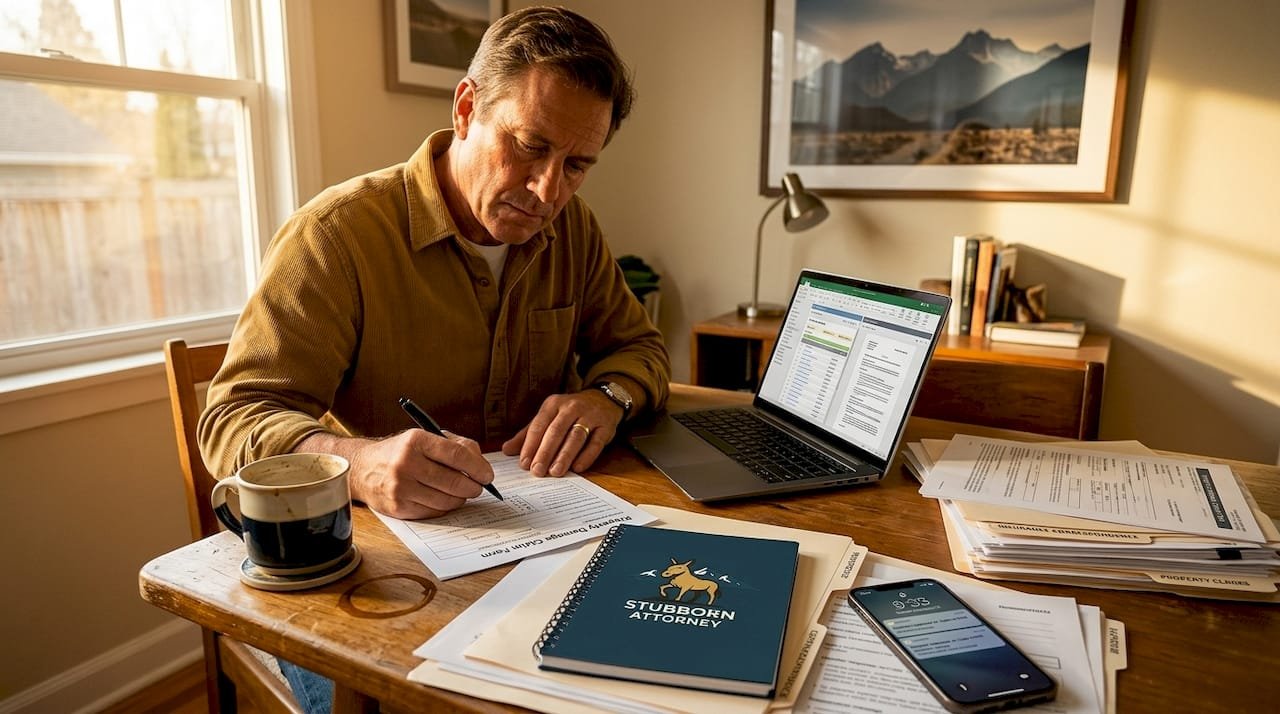
What Is a Property Damage Claim? Your 2026 Guide
A property damage claim is a formal request for financial compensation to repair or replace tangible property that has been physically harmed or rendered unusable by a covered event or responsible party. These claims are filed against insurance carriers, at-fault individuals, businesses, or government entities. The three most common contexts are vehicle collisions, residential property damage, and commercial losses. Understanding how the property damage claim process works, what documentation you need, and how insurers calculate payouts is the difference between a fair settlement and leaving money on the table.
What is a property damage claim, exactly?
A property damage claim covers both visible physical harm and broader impacts like loss of use, with the goal of restoring property to its pre-loss condition. That definition matters because it is wider than most people assume. You are not limited to claiming the cost of a cracked windshield or a flooded basement floor. If a fire forces you out of a rental property and you lose business income as a result, that consequential loss is part of the claim too, provided it was reasonably foreseeable and you can document it.
Claims can run in two directions. You file against your own insurer under a first-party claim, or you file against the at-fault party’s insurer under a third-party claim. In a car accident where another driver rear-ends you in Colorado Springs, for example, you would typically pursue the at-fault driver’s liability policy for your vehicle repairs. In a hail storm that damages your roof, you file directly with your own homeowners carrier.

Three key players appear in almost every claim: the claimant (you), the insurance carrier, and the adjuster assigned to evaluate the loss. Adjusters work for the insurer, not for you. Knowing that distinction from the start shapes how you communicate, document, and negotiate throughout the process.
Common types and examples of property damage claims
Property damage claims span a wide range of events and property types. The most frequently filed categories include:
- Vehicle accident damage: Collision repairs, total loss settlements, and diminished value claims after a crash.
- Water damage: Burst pipes, appliance leaks, flooding, and sewage backups in residential or commercial buildings.
- Fire and smoke damage: Structural repairs, content replacement, and temporary housing costs.
- Theft and vandalism: Stolen vehicles, broken windows, graffiti removal, and forced-entry repairs.
- Natural disasters: Hail, wind, tornado, and wildfire damage to structures and personal property.
- Contamination: Mold growth triggered by a covered water event, or chemical spills affecting commercial property.
The distinction between physical damage and loss of use is one that claimants frequently miss. Physical damage is the broken thing you can see. Loss of use is the cost you incur because you cannot use that thing while it is being repaired. If your car is in the shop for two weeks after a collision, the rental car expense is a loss-of-use claim. If a fire closes your restaurant for a month, lost revenue is a consequential damage claim. Both are recoverable with documentation when the underlying cause is covered.
Diminished value is another category that surprises people. Even after a vehicle is fully repaired following an accident, its resale value is lower than a comparable vehicle with a clean history. In Colorado and many other states, you can claim that difference from the at-fault driver’s insurer. Most adjusters will not volunteer this information.
Hidden damage deserves special attention. Water intrusion behind walls, foundation cracks concealed by finished flooring, and smoke damage inside HVAC systems are all real losses that a surface-level inspection can miss. Document everything before any cleanup or demolition begins.
Pro Tip: Take a full walkthrough video of the damaged property before moving a single piece of debris. Narrate what you see, including dates and times. This footage is far harder for an insurer to dispute than written descriptions alone.
How property damage insurance claims work
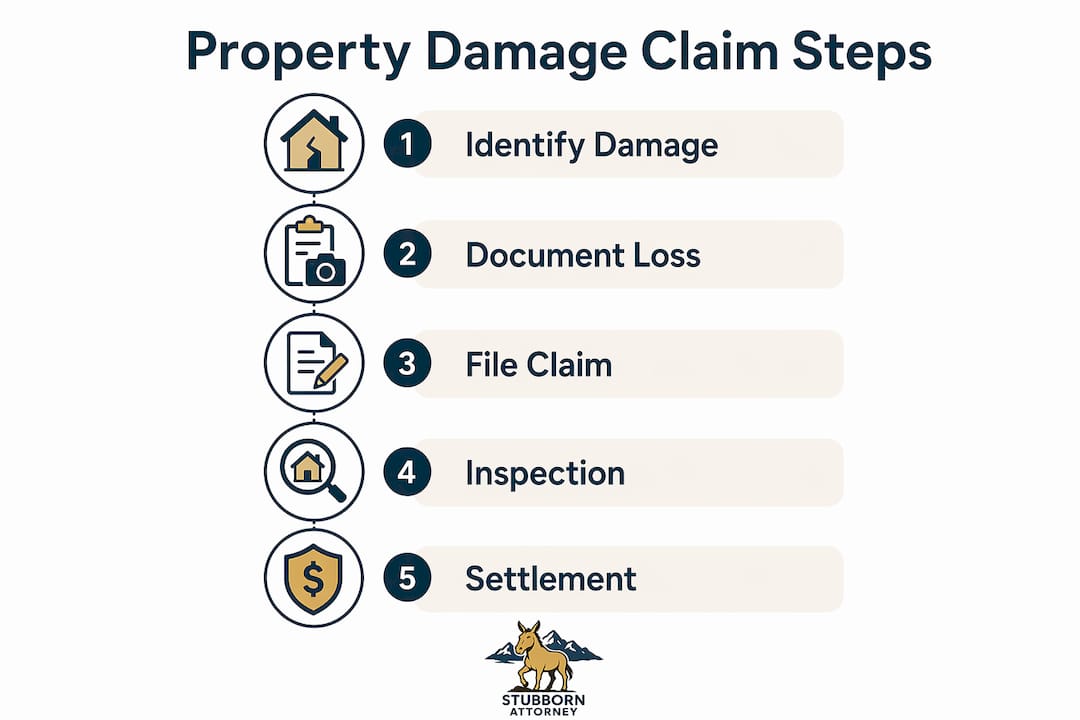
The property damage claim process follows a predictable sequence once you know what to expect. Here is how it typically unfolds:
- Report the loss. Contact your insurer or the at-fault party’s carrier immediately. You will receive a claim number and be assigned an adjuster.
- Adjuster inspection. The adjuster visits the property, documents the damage, and prepares an estimate.
- Initial ACV payment. The insurer issues a check based on Actual Cash Value, which is replacement cost minus depreciation.
- Repairs completed. You hire a contractor, complete repairs, and collect invoices and completion certificates.
- Submit proof of completion. Send documentation to the insurer to release withheld depreciation.
- Final settlement. The insurer pays the remaining balance under Replacement Cost Value if your policy provides it.
Proof of loss is typically required within 60 to 90 days of the event. Missing that deadline can jeopardize your entire claim.
ACV vs. RCV: the settlement method that changes everything
The difference between Actual Cash Value and Replacement Cost Value settlements is significant and often misunderstood.
| Settlement Type | How It Works | Example |
|---|---|---|
| Actual Cash Value (ACV) | Replacement cost minus depreciation | 10-year-old roof worth $8,000 after depreciation on a $20,000 replacement |
| Replacement Cost Value (RCV) | Full replacement cost, no depreciation deducted | Full $20,000 paid after documented repairs |
| Recoverable Depreciation | The gap between ACV and RCV, released after proof of repairs | $12,000 released upon invoice submission |
ACV is paid first, with RCV available only after repairs are documented. This two-step payment structure confuses many policyholders who expect a single check covering the full replacement cost. Insurers routinely withhold recoverable depreciation until you submit invoices and completion certificates. If you never complete the repairs or never submit the paperwork, you never collect that second payment.
Supplements are a normal part of the process. When a contractor discovers hidden damage during repairs, such as rotted sheathing under storm-damaged shingles, you submit a supplement to the insurer for the additional cost. Adjusters expect supplements. Do not let a contractor talk you into absorbing those costs.
Pro Tip: Ask your contractor to provide an itemized estimate that matches the line-item format insurers use. Xactimate is the software most carriers rely on. A contractor familiar with Xactimate formatting reduces disputes and speeds up supplement approvals.
Legal considerations and common pitfalls
Property damage claims carry legal deadlines and procedural requirements that can eliminate your right to recover if ignored. The most critical include:
- Statutes of limitations: Colorado sets a three-year limit for most property damage claims. Miss it and the claim is gone, regardless of how strong your evidence is.
- Discovery rule exceptions: When damage is hidden or not immediately apparent, such as slow foundation settling or concealed water intrusion, the statute of limitations may not begin until you discovered or reasonably should have discovered the damage.
- Duty to mitigate: You are legally required to take reasonable steps to prevent further damage after a loss event. Failing to tarp a storm-damaged roof, for example, can give the insurer grounds to deny coverage for subsequent water damage.
- Policy definitions: The exact language in your insurance contract controls what is covered. “Sudden and accidental” water damage is covered by most homeowners policies; gradual seepage is not. Read the definitions section of your policy before assuming coverage.
- Claim denials and reductions: Common reasons include late reporting, lack of documentation, alleged pre-existing conditions, and policy exclusions. Each denial reason has a specific rebuttal strategy.
“The exact definition of ‘property damage’ in your insurance contract determines coverage scope and payout, making familiarity with your policy essential.” — InsurerBrain
One distinction that trips up claimants in auto accidents is the difference between liability coverage and personal coverage. Liability insurance for property damage covers damage you cause to other people’s property. It does not cover your own vehicle or your own home. If you are the at-fault driver, your liability policy pays for the other person’s car repairs. Your own vehicle repairs require collision coverage under your own policy. For a deeper look at how these coverages interact in Colorado accidents, the breakdown of bodily injury vs. property damage is worth reviewing.
Government entity claims add another layer of complexity. Filing a property damage claim against a city or municipality, such as damage caused by a city vehicle or a poorly maintained road, requires specific procedures, detailed damage descriptions, and strict deadlines that vary by jurisdiction. The City of Boston, for instance, requires hard copy submission with itemized dollar amounts and may charge filing fees. Colorado municipalities have their own rules, and missing a notice deadline can bar recovery entirely.
Practical steps for filing and documenting a claim successfully
Filing a property damage claim correctly from the start protects your recovery and prevents delays. Follow these steps in order:
- Report immediately. Contact the insurer or at-fault party’s carrier as soon as the damage occurs. Delayed reporting is one of the most common reasons insurers reduce or deny claims.
- Document before cleanup. Take time-stamped photos and video of all damage before moving anything. Capture wide shots for context and close-ups for detail.
- Secure the property. Board up broken windows, tarp damaged roofs, and extract standing water. Keep all receipts for emergency expenses because these are reimbursable under most policies.
- Gather supporting records. Collect purchase receipts, prior repair invoices, serial numbers for damaged equipment, and financial records if you are claiming lost income or rental costs.
- Get independent estimates. Do not rely solely on the insurer’s adjuster estimate. Obtain at least one independent contractor estimate to use as a benchmark during negotiations.
- Track every communication. Log the date, time, and content of every call or email with the insurer. Follow up verbal conversations with a written summary sent by email.
- Submit supplements promptly. When contractors find additional damage during repairs, document it immediately and submit a supplement claim with photos and an updated estimate.
The quality of your documentation directly determines the speed and size of your settlement. Adjusters work from evidence. A well-organized claim file with photos, receipts, and independent estimates closes faster and pays more than a vague verbal description of losses.
Understanding what claims adjusters evaluate during inspections helps you prepare. Adjusters look for scope of damage, cause of loss, policy coverage alignment, and pre-existing conditions. Anticipate their questions and have documentation ready before the inspection, not after.
Pro Tip: Create a dedicated folder, physical or digital, for every claim. Label it with the claim number, date of loss, and insurer name. Store every photo, receipt, estimate, and correspondence in one place. Disorganized claimants consistently recover less because they cannot produce evidence on demand.
For auto accident claims specifically, a car accident claim checklist covers the evidence you need to protect both your property damage and injury recovery from day one.
What I’ve learned after a decade of fighting property damage claims
After more than ten years representing injured clients in Colorado and working as a former federal claims adjudicator, I can tell you that the single biggest mistake claimants make is underestimating what they are owed. Most people accept the first number an adjuster puts in front of them. That number is almost always the insurer’s starting position, not the final word.
Hidden and consequential damages are where real money gets left behind. A client whose basement flooded after a pipe burst was initially offered a settlement covering drywall and flooring. What the adjuster’s estimate did not include was the mold remediation behind the walls, the HVAC cleaning, and the three weeks of lost rental income from a tenant who had to vacate. Those items added up to more than the original offer. We recovered them because the client had documented everything before cleanup began.
The discovery rule for statutes of limitations is another area where people lose rights they did not know they had. If you find foundation damage two years after buying a home and can show it was concealed at the time of purchase, you may still have a viable claim. The clock starts when you knew or should have known about the damage, not necessarily when it occurred.
My honest advice: read your policy before you need it. The definitions section controls everything. If you do not understand what “occurrence,” “sudden and accidental,” or “replacement cost” means in your specific contract, you are negotiating blind. And if a claim involves significant money, hidden damage, or a denial, consult an attorney before you sign anything. Signing a release closes the claim permanently.
— Ryan
When a property damage claim needs professional legal support
Property damage claims that involve significant losses, disputed liability, or insurer delays benefit from professional legal review. At Stubbornattorney, Ryan Malnar and his team bring both legal advocacy and direct claims adjudication experience to every case. That combination means we understand exactly how insurers evaluate claims and where they routinely undervalue them. Whether your situation involves a vehicle collision, a storm-damaged home, or a commercial property loss, a free case evaluation can clarify your options before you accept any settlement. For clients dealing with injuries alongside property losses, our personal injury case examples show the range of situations we handle and the results we have achieved for people just like you.
FAQ
What is a property damage claim in simple terms?
A property damage claim is a formal request for money to repair or replace physical property that was damaged or destroyed by a covered event or an at-fault party. It can be filed with your own insurer or against another person’s liability policy.
How much is a property damage claim worth?
The value depends on the type of settlement your policy provides. Actual Cash Value pays replacement cost minus depreciation, while Replacement Cost Value covers the full cost of repairs or replacement without a depreciation deduction. The final amount also depends on documented losses including consequential damages like lost income or rental costs.
What do I need to include in a property damage claim?
You need a description of the loss event, time-stamped photos or video of all damage, independent repair estimates, receipts for emergency expenses, and financial records if you are claiming lost income or rental costs. Proof of loss forms are typically required within 60 to 90 days.
How long do I have to file a property damage claim in Colorado?
Colorado’s statute of limitations for most property damage claims is three years from the date of the loss. The discovery rule may extend this deadline when damage was hidden or not reasonably discoverable at the time it occurred.
What is the difference between property damage liability and my own coverage?
Property damage liability coverage pays for damage you cause to someone else’s property. Your own property damage, such as your vehicle after a crash you caused, requires separate collision or property coverage under your own policy.