

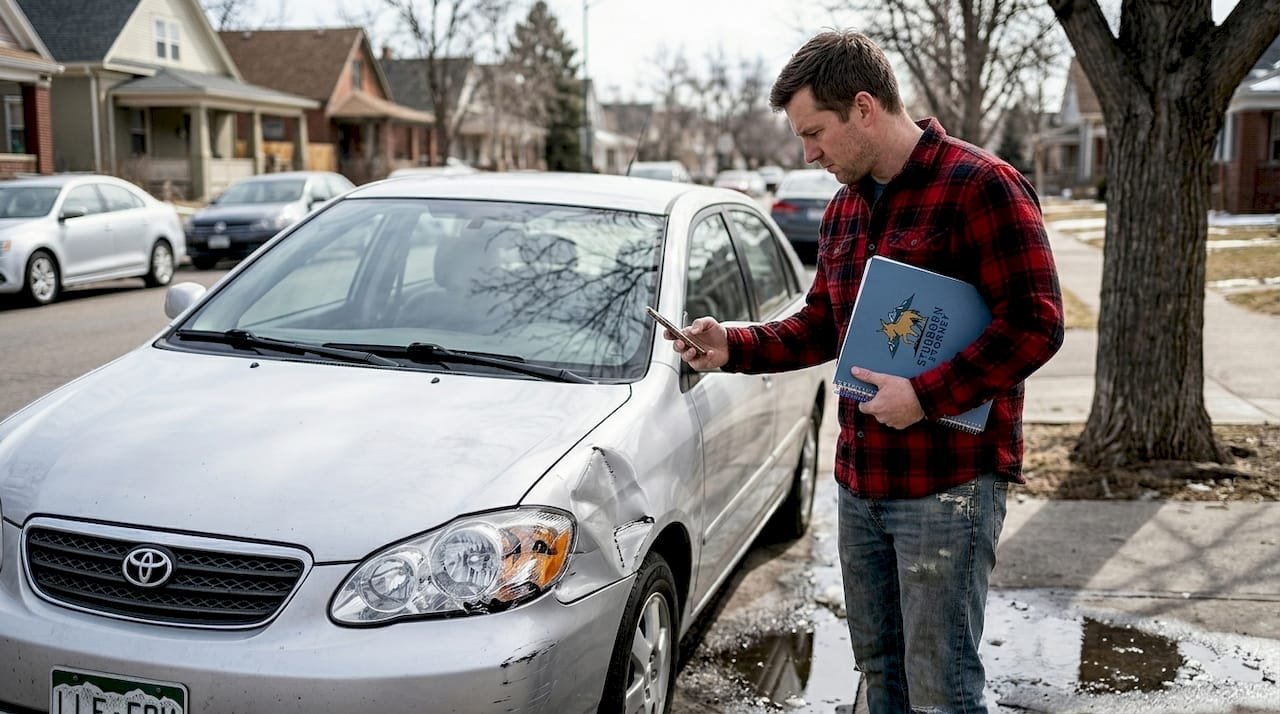
Colorado car accident legal checklist: protect your rights
TL;DR:
- Following legal duties immediately after a Colorado accident protects your rights and avoids penalties.
- Proper documentation within 48 hours is crucial for building a strong injury case.
- Consulting an attorney early is vital for serious injuries, disputed fault, or complex claims.
A car accident in Colorado can flip your world upside down in seconds. The shock, the pain, the confusion about what to do next — it’s a lot to process all at once. And here’s the problem: the decisions you make in the hours and days right after a crash can either protect your legal rights or silently undermine them. Many people miss critical steps simply because nobody told them what those steps were. This checklist walks you through every mandatory and recommended action after a Colorado car accident, from what you must do at the scene to when you need an attorney in your corner. Follow it carefully, and you’ll protect both your health and your legal future.
Table of Contents
- Legal requirements at the scene of a Colorado accident
- How to document and report your accident
- Contacting insurance and beginning your claim
- When and why to consult a Colorado personal injury attorney
- Why most accident victims in Colorado overlook crucial legal steps
- Connect with Colorado car accident legal support
- Frequently asked questions
Key Takeaways
| Point | Details |
|---|---|
| Report promptly | You must report injury or damage accidents to Colorado law enforcement immediately to avoid fines or penalties. |
| Document everything | Gather comprehensive evidence and complete all official reports to support your case. |
| Insurance steps matter | Quickly notify your insurer and keep detailed records to protect your claim. |
| Know when to get help | Legal counsel can prevent costly mistakes and help you recover more for your injuries. |
Legal requirements at the scene of a Colorado accident
The moment a crash happens, the law immediately places specific duties on you as a driver. Understanding those duties before an accident occurs is the smartest thing you can do. Missing even one of them can lead to fines, criminal charges, or a weakened legal case.
Here’s what you are legally required to do at the scene:
- Stop your vehicle immediately. Do not drive away from the scene, even if the damage looks minor. Leaving the scene of an accident is a criminal offense in Colorado.
- Check for injuries. Assess yourself, your passengers, and anyone in other vehicles. Call 911 immediately if anyone is hurt.
- Move to safety if possible. If your vehicle is drivable and staying in the roadway creates a hazard, move it to the shoulder. Turn on your hazard lights.
- Exchange information. You are required to share your name, address, vehicle registration number, and insurance information with every other driver involved.
- Call law enforcement. Colorado law requires drivers to immediately report any car accident resulting in injury, death, or property damage. Do not assume someone else will make that call.
- Cooperate with police. When officers arrive, provide factual information. Stick to what you observed and experienced. Avoid speculating about fault.
Here’s what’s at stake if you skip any of these steps. Failing to report an accident involving injury or death is a class 1 misdemeanor in Colorado under Colorado accident laws. That means possible jail time and serious fines. Even a property-damage-only accident carries reporting obligations you can’t ignore.
“The law does not give you a pass because you were shaken up. Reporting is not optional — it is the foundation of your legal protection after a crash.”
While you’re waiting for police to arrive, start collecting information beyond the basics. Write down or photograph the other driver’s license plate, the make and model of every vehicle involved, and the exact location of the crash including street names and cross streets. Note the time and weather conditions. If there are witnesses nearby, ask for their names and phone numbers. These details often disappear quickly once everyone leaves the scene.
One thing many drivers don’t realize: you generally do not need to move your vehicle before police arrive unless it poses an active safety risk. Leaving vehicles in place preserves the physical evidence that helps reconstruct exactly what happened. That evidence can become central to how the lawsuit timeline steps unfold if your case goes further.
Knowing your legal obligations at the scene isn’t just about avoiding penalties. It’s about starting your case on solid ground from the very first moment.
How to document and report your accident
Once you’ve fulfilled legal duties at the scene, your next priority is documenting the incident and making sure the report process is airtight. Evidence is fragile. Skid marks fade. Witnesses forget details. That means the work you do in the first 24 to 48 hours is often the most valuable.
Follow these steps to document your accident properly:
- Photograph everything. Take wide shots of the overall scene and close-up shots of vehicle damage, road conditions, traffic signs, and any visible injuries. More is always better.
- Write a personal account. As soon as you can, write down exactly what happened from your point of view. Include every detail you remember, even if it seems minor.
- Collect witness information. Get names, phone numbers, and if possible, a brief written or recorded statement from anyone who saw the crash.
- Document vehicle positions. Sketch or photograph where each vehicle ended up after impact. This helps reconstruct the sequence of events.
- Request the police report. Ask the responding officer for the report number so you can obtain a copy. If police didn’t respond, you’ll need to handle the reporting yourself.
If no police responded to your accident, you must file a counter report with the Colorado DMV. This is done using the DR 2559 form, and submitting it is your responsibility, not optional. The DMV recommends doing this as soon as possible after the crash.
Here’s a comparison to clarify the difference between police reports and DMV counter reports:
| Feature | Police report | DMV counter report |
|---|---|---|
| Who files it | Law enforcement officer | You (the driver) |
| When required | When police respond | When police do not respond |
| Deadline | Filed at scene | As soon as possible after crash |
| Primary use | Legal record, insurance | Official DMV record |
| Processing time | Varies by agency | Up to 90 days by DMV |
Note that the DMV can take up to 90 days to process a counter report. That’s not a reason to delay. Filing quickly protects your timeline and ensures the record exists when insurance adjusters or attorneys need it. You can access the official accident report process directly through the Colorado DMV website.
Pro Tip: Create a dedicated folder, either physical or digital, the day of your accident. Store every photo, form, receipt, and piece of correspondence related to the crash in one place. This simple habit saves enormous time later and makes your case easier to build when you’re already dealing with recovery. Understanding why pursue an injury case becomes much clearer when you have organized evidence supporting your claim.

Contacting insurance and beginning your claim
With your documentation in order, it’s time to start the process of notifying your insurance and understanding what to expect. Many accident victims wait too long to contact their insurer, which can actually complicate the claim process.
Follow this sequence when starting your insurance claim:
- Notify your insurer promptly. Most policies require you to report an accident within a specific time frame, sometimes as short as 24 hours. Check your policy and call as soon as you reasonably can.
- Provide factual information only. Give your insurer the basic facts: date, location, vehicles involved, and whether police responded. This is not the time for detailed narratives.
- Share your documentation. Provide your photos, the police report number, and witness contact information when the adjuster asks.
- Request a claim number. Get this in writing or save the email confirmation so you can track every communication.
- Understand the adjuster’s role. The adjuster works for the insurance company, not for you. Their job is to evaluate the claim, not to maximize your payout.
Here’s what most people get wrong in those first conversations with an adjuster. They over-explain. They speculate about what caused the crash. Sometimes they even apologize, which can be interpreted as an admission of fault. Stick to the facts. Answer what’s asked. Nothing more.
Pro Tip: Do not sign any release or accept any settlement offer before you know the full extent of your injuries and damages. Initial offers are almost always lower than what you’re entitled to. Once you sign, you typically waive your right to seek additional compensation, even if your injuries turn out to be more serious than first thought.
While insurance requirements in Colorado mandate certain minimum coverage levels, the police report is not always required to file a claim but is strongly recommended because it provides an objective record that supports your version of events.
Keep a running log of everything related to your claim:
- Every phone call: date, time, name of the person you spoke with, and a summary of what was discussed
- Every document you receive or submit
- Every settlement offer made, even informal ones
- Medical appointments and expenses connected to the accident
- Time missed from work due to injuries
This paper trail is valuable whether you handle your claim independently or decide to bring in legal help. Review the insurance claim steps to understand how this stage connects to the broader legal process.
When and why to consult a Colorado personal injury attorney
So, you’ve started your claim, but is this the point where you should call a lawyer? This section breaks down when expert legal help is vital.
Not every fender bender requires an attorney. But many situations absolutely do. Here are the clear signs you should not handle this alone:
- Serious injuries. If you or anyone else suffered injuries requiring hospitalization, surgery, or ongoing treatment, the stakes are too high to navigate without legal guidance.
- Disputed fault. When the other driver, their insurance company, or police reports suggest you were at fault, you need someone who knows how to fight that narrative.
- Lowball settlement offers. If the insurer’s offer doesn’t come close to covering your medical bills, lost income, or pain and suffering, an attorney can negotiate from a position of real leverage.
- Uninsured or underinsured drivers. These situations involve your own policy and specific Colorado statutes that can be difficult to navigate without experience.
- Government vehicles or complex liability. Accidents involving commercial trucks, rideshare vehicles, or government-owned cars involve additional legal layers.
Early involvement from an attorney does more than just improve your settlement number. Attorney involvement early prevents lowball settlements, especially with disputed fault or serious injuries, and free consultations are common.
“Most people wait until they feel overwhelmed before calling an attorney. By then, some evidence is gone, deadlines are close, and the insurer has already shaped the narrative. Earlier is always better.”
When you meet with a personal injury attorney, bring the following:
- The police report number and any copies you have
- Photos from the scene
- All insurance correspondence and your claim number
- Medical records and bills related to the accident
- A written account of the crash and your injuries
- Pay stubs or income records if you’ve missed work
Here’s a clear comparison of your options:
| Factor | Self-advocacy | Attorney representation |
|---|---|---|
| Settlement amount | Often lower | Typically higher |
| Legal knowledge | Limited | Full Colorado law expertise |
| Negotiating power | Weak against insurers | Strong, proven strategies |
| Time commitment | High, DIY research needed | Handled by legal team |
| Cost | No upfront attorney fees | Contingency fee (no win, no fee) |
Most Colorado personal injury attorneys, including our team, work on a contingency basis. You pay nothing unless you win. That means consulting early costs you nothing and can change everything about your outcome. You can learn more about what to expect through the full injury lawsuit timeline.
Why most accident victims in Colorado overlook crucial legal steps
Here’s the uncomfortable truth from years of representing injured Coloradans: the people who miss critical legal steps after a crash are rarely careless. They’re overwhelmed. The human brain under acute stress does not process and retain information the way it does on a normal day. Shock is real. Adrenaline is real. And the pressure from the other driver, bystanders, or even well-meaning family members can push you toward decisions that hurt your case.
The most commonly missed steps are not the obvious ones. Everyone knows to call 911. What gets skipped is quieter: forgetting to photograph the vehicle positions before moving cars, waiting too long to file the DMV counter report, giving a recorded statement to an adjuster before understanding the implications, or failing to track every medical visit from day one.
These are not failures of intelligence. They are failures of context. Nobody hands you this checklist when you buy car insurance.
Our experience has shown one pattern consistently: the clients who come to us with organized documentation, even imperfect documentation, get better results than those who come with strong cases but missing records. It is not about being perfect in a chaotic moment. It is about building the habit of preservation immediately. Set a calendar reminder on your phone after any accident. Write down what you remember before you sleep that night. The notes you take in hour two are worth more than the ones you write in week two.
Pursuing a fair outcome starts with pursuing a claim with the right foundation in place.
Connect with Colorado car accident legal support
If these steps feel overwhelming, expert help is just a click away. Colorado’s injury laws are detailed, and the difference between a well-handled claim and a missed opportunity often comes down to knowing exactly what to do and when.
Our team at Malnar Injury Law, now at StubbornAttorney.com, has settled hundreds of injury cases and recovered millions of dollars for people across Colorado. We represent only injured victims because that’s where our full commitment belongs. We’ve built in-depth guides on injury case reasons and the full accident claim steps so you can understand what’s ahead before you commit to anything.
A free consultation costs you nothing and gives you a clear picture of where your case stands. When you’re ready to talk, speak with a Colorado injury attorney who won’t let go of your case until the fight is done.
Frequently asked questions
Do I have to report all car accidents in Colorado?
Colorado law (C.R.S. § 42-4-1606) requires you to report any car accident involving injury, death, or property damage to law enforcement right away. Minor incidents with no damage and no injuries may not trigger this requirement, but when in doubt, report it.
What if the police don’t respond to my accident?
If no police respond, file a counter report online with the Colorado DMV using the DR 2559 form as soon as possible after the crash. This creates an official record and protects your legal standing.
Is a police report required to file an insurance claim in Colorado?
A police report is not always required for all insurance claims, but insurers and attorneys strongly recommend having one because it provides an objective third-party record that supports your account of the accident.
How soon after a car accident should I contact an attorney?
Contact an attorney as soon as possible if there are serious injuries, disputed fault, or complex insurance issues because early involvement can prevent lowball settlements and preserve critical evidence before it disappears.