

Colorado Bus Accident Claims: Who Pays and How to File
A bus accident claim in Colorado depends on one question before any other: who owns and operates the bus? If it is a public bus, such as a city transit or school district vehicle, a special state law applies, and it comes with a written-notice deadline of 182 days that is far shorter than most injury deadlines. If it is a private charter, tour or shuttle company, the claim looks more like a standard injury case against a business and its insurer. Either way, the first weeks decide a great deal.
This guide explains how bus claims work in Colorado, who can be held responsible, what you can seek, and what to do in the days after a crash. It is written for passengers, drivers of other vehicles, pedestrians and families dealing with a bus collision.
This article is general information, not legal advice for your situation. Deadlines depend on the facts, so if you were hurt, speak with a Colorado personal injury attorney promptly.
Table of Contents
- Why bus claims are not like ordinary car claims
- Step one: find out who owns and operates the bus
- Who can be held responsible
- What to do in the first days after a bus crash
- What a bus accident claim can include
- How a bus claim usually unfolds
- How Colorado crash data frames the risk
- Our perspective: why we take bus cases personally
- Choosing a lawyer for a Colorado bus claim
- If you are in Colorado Springs, Pueblo or eastern Colorado
- Talk to us about your bus accident
- FAQ
- Sources
Why bus claims are not like ordinary car claims
In a typical two-car crash, you deal with the other driver’s insurance company. A bus crash adds layers:
- More people. A bus may carry dozens of passengers, so several injured people can be competing for the same insurance coverage.
- More possible defendants. The driver, the company that employs the driver, the owner of the bus, a maintenance contractor, a manufacturer and another motorist can all share fault.
- Government owners. Many Colorado buses belong to school districts, transit agencies or other public entities. Suing them is governed by a different set of rules.
- Corporate records. Commercial operators keep driver files, inspection logs, maintenance records and often onboard video. That evidence helps you, but it can also disappear if nobody asks for it early.
The news that tends to follow a major bus crash, such as a school bus leaving the road or a charter bus crash on a mountain highway, shows how quickly the questions pile up: what happened, who was driving, who inspected the vehicle, and who is responsible. Early reports are often incomplete, and the cause can take months to establish.
Step one: find out who owns and operates the bus
You cannot choose the right legal route until you know the answer. Look at:
- The name or logo painted on the bus.
- The crash report, which should list the vehicle owner and carrier.
- Your ticket, fare receipt, reservation or trip confirmation.
- Any school district or agency notice sent to parents after a student incident.
This matters because ignorance of which entity runs a bus does not pause the clock. The Legislative Council Staff memo on the Colorado Governmental Immunity Act explains that the law balances accountability of government against the need to avoid endless taxpayer-funded litigation. In practice, that means an injured person is expected to figure out whether a public body is involved and to act on time.
Public buses: school districts, transit agencies and other government operators
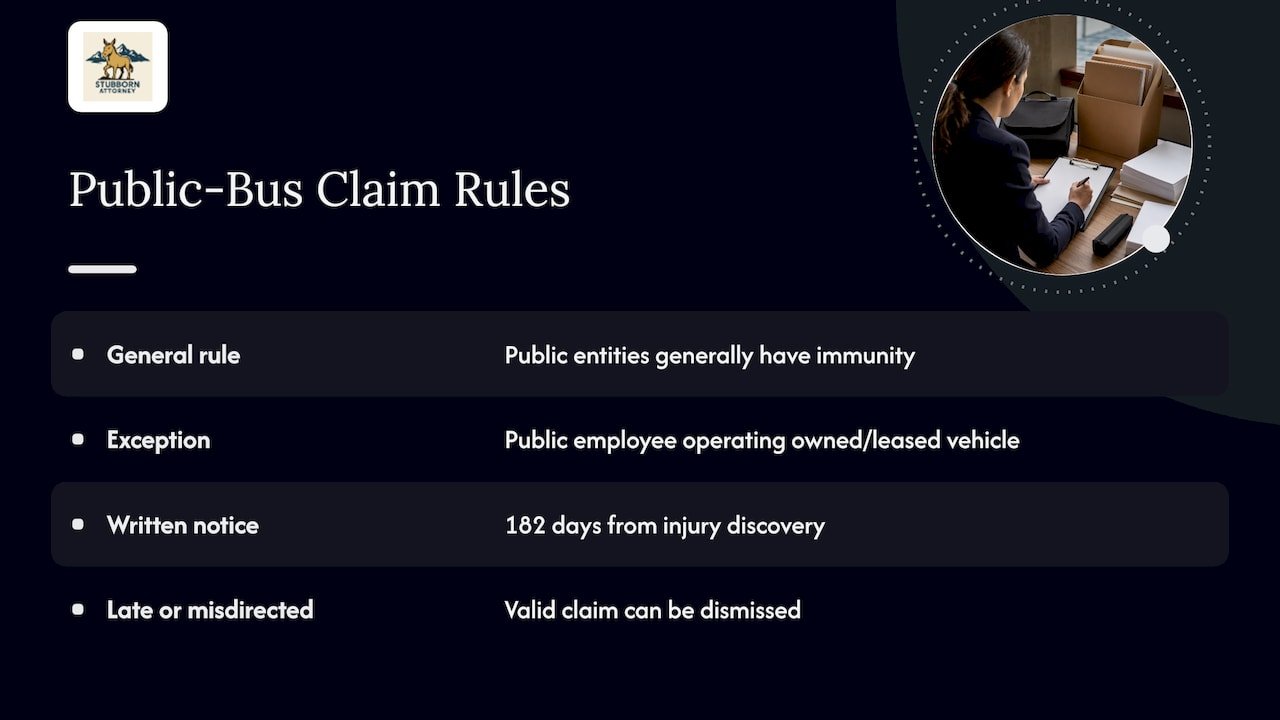
Colorado’s Governmental Immunity Act (CGIA) generally protects public entities from injury lawsuits, but it lists exceptions. One of them covers injuries resulting from the operation of a motor vehicle owned or leased by a public entity by a public employee. A crash caused by a public bus driver’s negligence can therefore support a claim, but only if you follow the statute’s procedures.
The most important procedure is written notice. The research we reviewed for this guide points to a 182-day deadline from the date you discovered your injury. Courts treat compliance as a threshold requirement, not a courtesy. A 2026 ruling involving the City of Colorado Springs, Mostellar v. City of Colorado Springs, is an example cited by practitioners of how strictly judges apply it. If notice is late or goes to the wrong place, a valid claim can be dismissed before anyone looks at the facts.
For the step-by-step, we have written two detailed guides: what to do within 182 days on a Colorado government claim and an attorney-vetted checklist for Colorado Governmental Immunity Act claims. Read them if a school bus, a city bus or any other public vehicle was involved.
Private buses: charter, tour, shuttle and church or camp buses
Private operators do not get governmental immunity. Your claim is built on negligence, the same legal foundation as a car crash, and the main contest is usually between you and the company’s liability insurer. Our overview of negligence in car accidents covers the four elements: duty, breach, causation and damages. All four apply to bus cases.
The notice rule does not apply to private buses, but that is no reason to wait. Evidence disappears quickly and insurers start building their own file on day one. For general filing deadlines on non-government claims, see our key deadlines guide for Colorado injury claims.
Mixed cases
Some crashes involve both. A private contractor may drive a bus under contract for a school district, or a public transit agency may use a private maintenance company. These cases are where early legal review pays off most, because the right defendants and the right deadlines can differ for each.
Who can be held responsible
Bus drivers are not always at fault. Fault in a bus crash is often shared, and a thorough claim looks at every link in the chain.
| Possible responsible party | Typical theory of fault |
|---|---|
| Bus driver | Speeding, distraction, fatigue, failing to yield, unsafe lane changes, driving too fast for road or weather conditions |
| Bus company or operator | Poor hiring or training, ignoring hours-of-service rules, pressure to keep schedules, skipped maintenance |
| Public entity (school district, transit agency) | Negligent operation of the vehicle by a public employee, within the limits of the CGIA |
| Other motorist | Collision with the bus or causing the bus to swerve or brake suddenly |
| Maintenance contractor | Faulty brake, tire, steering or inspection work |
| Manufacturer or parts maker | Defective design or part that failed |
| Road owner | Dangerous road condition, which is also subject to notice rules when the owner is a government |
Road conditions deserve a separate note. Mountain passes, icy curves and poorly marked work zones are part of Colorado driving. If a hazard on a state or local road contributed, our guide to Colorado road hazard claims and the 182-day notice explains the separate process.
Common factors that surface in bus crash investigations include:
- Driver fatigue or distraction.
- Speed too fast for conditions, especially on snow, ice or steep grades.
- Brake or tire failure from inadequate maintenance.
- Overloaded or poorly secured vehicles.
- Another driver cutting off or rear-ending the bus.
- Missing seat belts or poor restraint, which can worsen injuries.
Our car accident liability factors guide walks through how fault is assigned, and fault in multi-car accidents is useful when a bus crash involves several vehicles.
What to do in the first days after a bus crash
The steps below apply to passengers, other drivers and pedestrians alike.
- Get medical care right away. Some injuries, such as concussion, whiplash and internal injuries, may not show their full severity for hours or days. Medical records also create the link between the crash and your injuries.
- Call 911 and make sure a crash report is filed. The report records who was involved and what the responding officer observed.
- Identify the bus and operator. Photograph the bus number, license plate, company name and driver, if you can do so safely.
- Collect names and phone numbers. Other passengers are witnesses, and they scatter fast after a crash.
- Photograph the scene and your injuries. Include road conditions, vehicle positions, skid marks and visible damage.
- Keep records. Tickets, receipts, medical bills, missed work days and a short daily note on your pain and limits.
- Do not give a recorded statement to any insurer until you understand your rights. An adjuster’s job is to evaluate and limit the claim. Do not sign releases or accept a quick offer before you know the full extent of your injuries.
- Calendar the notice deadline if any public entity may be involved. Treat 182 days as the outer limit, not a target.
- Talk to an injury attorney early. Early involvement helps preserve video, driver logs and maintenance records.
Our article on the biggest mistakes after car accidents lists missteps that apply equally well to bus crashes, including posting about the crash on social media and delaying treatment.
A note about seat belts
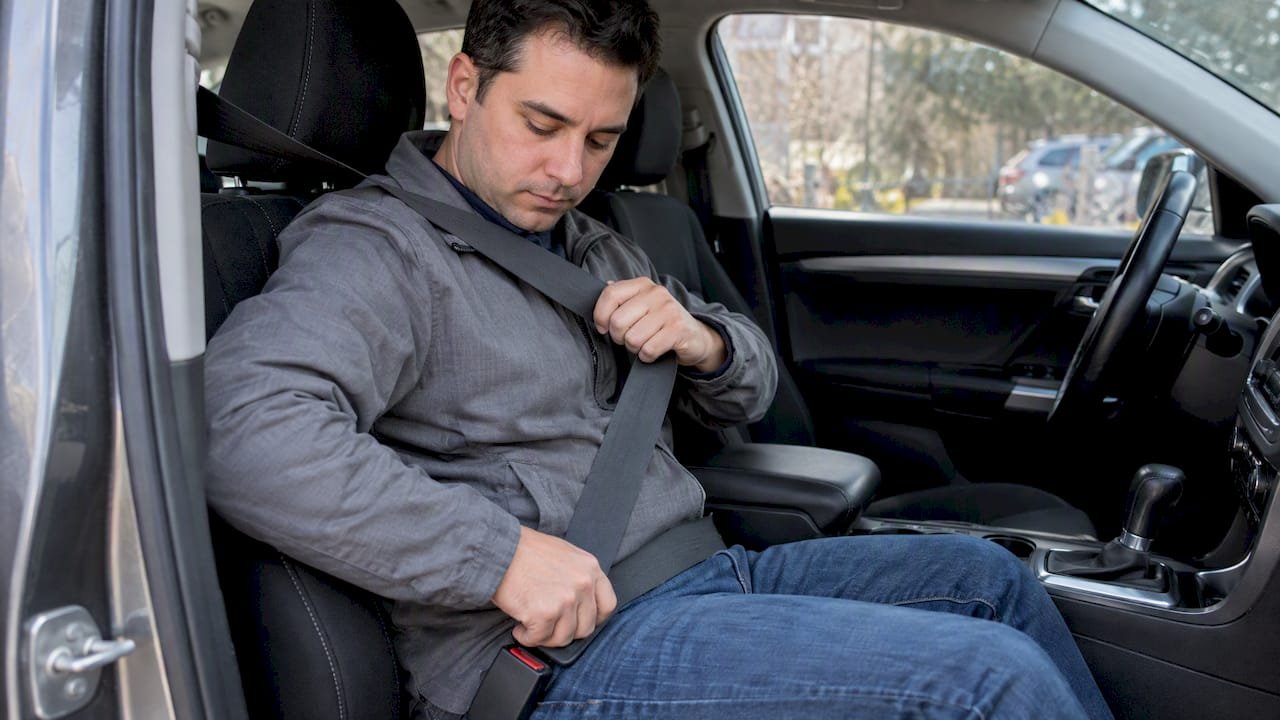
Many Colorado buses, especially school buses and transit buses, are not equipped with the same restraints as passenger cars, so your own situation may differ. If you were in a passenger vehicle that collided with a bus, belt use can matter to the claim. The Colorado Department of Transportation reports that the state’s average seat belt use rate is 90.7%, yet those who do not buckle up account for more than half of passenger vehicle fatalities. Wearing a belt protects you first and your claim second.
What a bus accident claim can include
Colorado injury claims seek compensation for losses caused by the crash. Depending on the facts, these can include:
- Medical expenses, past and future: emergency care, surgery, imaging, therapy, medication and ongoing treatment.
- Lost income and reduced earning capacity if you cannot return to the same work.
- Pain and suffering, including physical pain, emotional distress and loss of enjoyment of life.
- Property damage, if your own vehicle was hit.
- Wrongful death damages for families who lose a loved one. See our overview of Colorado wrongful death claims, rights and damages.
The type of defendant changes the ceiling. Claims against public entities under the CGIA are subject to statutory limits on how much can be recovered, which is one reason the strategy for a public bus claim differs from a private one. Because those limits are adjusted over time, confirm the current figures with an attorney rather than relying on an old article.
If a defective part such as brakes, tires or steering played a role, there may also be a separate product claim against a manufacturer. For a general look at how defective-vehicle claims work (written for California vehicle owners, so Colorado rules will differ), see this reference on what injured vehicle owners can recover after a recall.
How a bus claim usually unfolds
Every case differs, but most follow this path:
- Intake and investigation. Your attorney gathers the crash report, medical records, photos and witness details, and sends preservation letters asking the operator to keep video, driver logs, dispatch records and maintenance files.
- Notice, where required. For public buses, a written notice that follows the statute is prepared and delivered to the correct party within the deadline.
- Treatment and documentation. Your claim cannot be valued fairly until your doctors have a clear view of your recovery. Settling too early is a common and costly mistake.
- Demand. Your attorney presents the evidence and the total losses to the insurer or public entity.
- Negotiation. Insurers often counter low. Strong documentation and a credible willingness to go to court change the conversation.
- Litigation, if needed. If a fair settlement is not offered, a lawsuit is filed and the case moves through discovery toward trial or a negotiated resolution.
The deadline to file a lawsuit is separate from the notice deadline and depends on the claim type. Do not assume you have plenty of time. Check our deadlines guide and speak with a lawyer.
How Colorado crash data frames the risk
Buses are involved in a small share of crashes compared with passenger vehicles, but the consequences can be large because of the number of people aboard. If you want to see how crash numbers have moved over time, the Colorado Department of Transportation publishes statewide crash data from 2007 onward. CDOT notes that the most recent years are preliminary and subject to revision, so treat the latest figures as provisional.
Our perspective: why we take bus cases personally
Before starting this firm’s work under the Stubbornattorney name, I spent time as a claims adjudicator for the federal government. That experience taught me how large institutions evaluate a claim: by the paperwork, by the deadlines, and by whether the injured person’s file gives them any reason to pay more. Bus cases magnify all three. The defendant is often a large company or a public agency with trained claims staff, and the rules reward people who act quickly and document carefully.
Here is what we tell people who call about a bus crash:
- Do not wait to find out who owns the bus. That question controls everything that follows.
- Treat the 182-day notice period as a hard stop for any claim that might involve a public entity. It is a trap for people who assume they have years.
- Do not let an adjuster set the pace. Quick offers usually arrive before the full cost of an injury is known.
- Get care first. We work with clients to help them reach medical treatment regardless of their financial situation.
Our firm, Malnar Injury Law, represents only injured people. Cases are handled directly by attorneys, not passed through a high-volume process. We have settled hundreds of injury cases and recovered millions of dollars for clients. The mule that gave this brand its name is a fitting symbol: patient, steady, and not inclined to let go once it has made up its mind. That is how we handle your claim.
— Ryan
Choosing a lawyer for a Colorado bus claim
When you compare attorneys, look for specifics rather than slogans. Ask:
- Have you handled claims against public entities and the notice requirements that come with them?
- Who will actually work on my case, and who will I speak with?
- How are fees structured? In contingency fee representation, you pay no attorney fee unless there is a monetary recovery in your case.
- What will you do in the first week to preserve evidence?
- How do you handle medical care and bills while the case is pending?
Our guides on hiring a car accident lawyer and proving negligence and what Colorado auto accident victims must know give a fuller checklist. To understand how the claim categories differ, see types of car accident claims in Colorado.
If you are in Colorado Springs, Pueblo or eastern Colorado
Our clients come from across the state. If you are near Colorado Springs, our personal injury page for Colorado Springs explains how we work with local clients. We also serve people through our Pueblo, Burlington and Simla pages.
Talk to us about your bus accident
If you or a family member was hurt in a bus crash, we can review what happened, work out whether a public entity is involved, and tell you what the deadlines look like for your situation. Malnar Injury Law, now at Stubbornattorney, handles car, truck, motorcycle, bicycle, semi-truck and pedestrian cases, as well as wrongful death. You can see the full range on our services page or start from our home page. Representation is contingency-based, so you pay no attorney fee unless we recover money in your case.
FAQ
What happens if you get injured on a city bus in Colorado?
First, get medical care and report the incident to the transit operator. If the bus is run by a public entity, a claim generally falls under the Colorado Governmental Immunity Act, which allows claims for injuries caused by a public employee operating a public vehicle but requires written notice within 182 days. Missing that deadline can end the claim. Speak with an attorney soon so the notice is prepared correctly.
Can I sue a school district after a school bus crash?
In many situations, yes, if a district employee’s negligent operation of the bus caused the injuries. The same notice rules apply, and a parent or guardian typically acts on behalf of an injured child. Because claims involving minors have their own rules, ask a lawyer how the deadlines apply to your child.
Do private charter bus claims have the 182-day deadline?
No. The 182-day notice applies to claims against public entities. Private charter and tour companies are treated like other businesses under negligence law. Even so, you should act quickly, because the company may overwrite video and the memories of witnesses fade. Our deadlines guide explains the filing limits.
How much does it cost to hire a bus accident lawyer?
At our firm, representation in injury cases is on a contingency basis, which means you pay no attorney fee unless there is a monetary recovery in your case. We explain the terms in writing before you sign anything, and a free case review is the place to ask about costs.
Sources
- The Colorado Governmental Immunity Act and State Risk Management Funding Memo, Colorado Legislative Council Staff
- Statewide Click It or Ticket enforcement begins today, Colorado Department of Transportation
- Crash Data, Colorado Department of Transportation